Singapore – Singapore will place the ASEAN Power Grid (APG) at the centre of its regional agenda when it assumes the ASEAN Chairmanship in 2027, as Southeast Asia seeks to strengthen energy security, support economic growth, and accelerate the transition to cleaner energy sources.
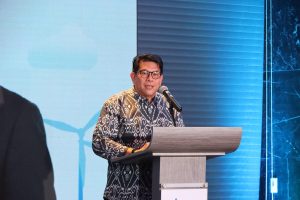
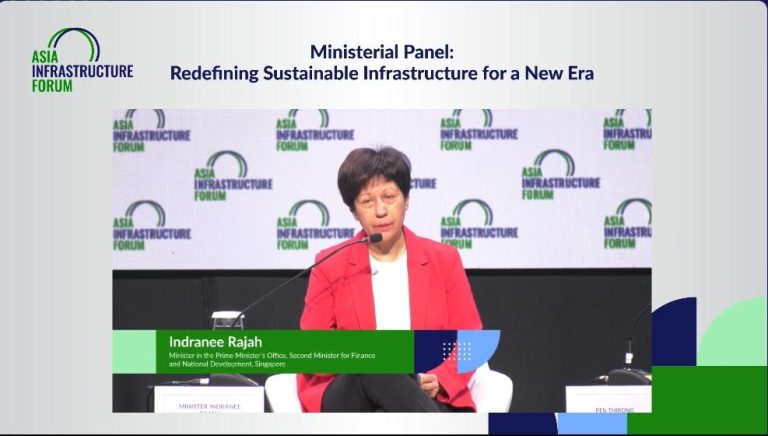
Speaking at the first panel discussion at the Asia Infrastructure Forum in Singapore, Tuesday, June 16, Indranee Rajah, Singapore’s Minister in the Prime Minister’s Office and Second Minister for Finance and National Development, described the ASEAN Power Grid as one of the most important regional initiatives on the horizon.
“The biggest thing on the horizon is really the ASEAN Power Grid, which is something that Singapore will be putting front and centre of the agenda when we become ASEAN Chair next year,” Rajah said.
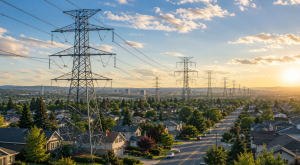
The ASEAN Power Grid is a long-standing regional initiative aimed at connecting the electricity systems of ASEAN member states through cross-border transmission lines. The network would allow countries with abundant renewable energy resources and excess generation capacity to export electricity to neighbouring countries with growing energy needs.
Rajah said the interconnected grid would help diversify energy supplies and reduce dependence on imported fuels from outside the region.
“There are member countries of ASEAN who have resources for energy generation and excess capacity; there are other members of ASEAN who would need to import energy,” she said. “Having a grid like this helps in several respects. One, it means that we can have energy generation in the region; it reduces some of the need to import from the Middle East, for example, so it helps with diversification.”
She added that the project would also encourage investment and strengthen regional cooperation.
“It gives ASEAN member states a common goal, a common reason to invest. And at the same time, I think what it also does is it introduces that element of stability in the region, reduces volatility,” Rajah said.
Southeast Asia’s electricity demand is expected to grow rapidly over the coming decades as populations expand, urbanisation accelerates, and economies continue to industrialise. According to regional energy outlooks, ASEAN’s energy consumption could more than double by 2050, requiring massive investments in both generation and transmission infrastructure.
The region is also pursuing ambitious renewable energy targets. Countries such as Laos, Vietnam, Indonesia, Malaysia and the Philippines are developing large-scale hydropower, solar and wind projects, creating opportunities for cross-border electricity trade.
Rajah pointed to the successful Lao PDR-Thailand-Malaysia-Singapore Power Integration Project (LTMS-PIP) as evidence that regional electricity trading can work in practice.
“We tested out, for example, a pilot where we had a project that went through from energy from Laos to Thailand, down Malaysia to Singapore, and that was kind of like a proof of concept,” she said. “That has, I think, provided a good case study on which the ASEAN Power Grid is developed.”
However, Rajah cautioned that building generation capacity alone will not be enough. Significant investments will also be required in transmission networks to transport renewable electricity across borders.
“The other thing that we have to work on, though, with respect to the ASEAN Power Grid is—I think there’s a lot of focus and emphasis on the power generation part, but we also need to look at the transmission part,” she said.
“Because if you cannot get those clean electrons from the source to the countries that need them, then you will have a problem. So that is being studied and looked at quite intensively, but we do need to keep the momentum on this.”
The ASEAN Power Grid has gained renewed momentum in recent years as governments seek to enhance energy security, reduce carbon emissions and strengthen regional integration. Analysts say a fully interconnected regional grid could unlock significant renewable energy resources across Southeast Asia while lowering costs and improving resilience against supply disruptions. (nsh)
Banner photo: Indranee Rajah, Singapore’s Minister in the Prime Minister’s Office and Second Minister for Finance and National Development