by Nabiha Shahab
Singapore – Facing mounting pressure from overflowing landfills and tightening environmental regulations, three Indonesian government representatives used the Asia Infrastructure Forum (AIF) 2026 in Singapore on Wednesday, June 17, to pitch major waste management projects to international investors, signalling a growing shift from landfill-dependent disposal toward regional processing facilities, refuse-derived fuel (RDF) production and waste-to-energy plants.
The projects, presented by East Java Vice Governor Emil Dardak, PT Jakarta Propertindo (Jakpro) President Director Iwan Takwin, and West Java infrastructure official Gunawan, collectively represent more than USD90 million in planned investment and target some of Java’s most acute waste management challenges.
Their presentations come at a critical time. Indonesia generates more than 30 million tonnes of waste annually, with Java accounting for the largest share due to its dense population and rapid urbanisation. In March 2026, a catastrophic landslide at the Bantar Gebang landfill in Bekasi claimed seven lives when a 50-meter-high mountain of waste collapsed. Beyond the physical danger, Indonesian landfills are major contributors to the climate crisis; methane gas produced by decomposing organic waste is nearly 28 to 34 times more destructive than CO2 over 100 years.
Many municipalities still rely on ageing landfills, while the Ministry of Environment has intensified efforts to phase out open dumping practices and improve waste treatment standards. Regional leaders are now looking to global partners to bridge the infrastructure gap.
Jakarta bets on waste-to-energy
Jakarta’s presentation centred on the long-delayed Intermediate Treatment Facility (ITF) Sunter, one of Indonesia’s most ambitious urban waste-to-energy projects. Iwan Takwin, President Director of PT Jakarta Propertindo (Jakpro), said Jakarta currently produces about 7,800 tonnes of household waste daily, with most of it still ending up at the Bantar Gebang landfill. Existing RDF facilities have helped reduce waste volumes, but roughly 4,300 tonnes per day continue to be transported to the landfill.
The proposed ITF Sunter facility in North Jakarta, would process 2,200 tonnes of waste per day and generate 35 megawatts of electricity through an incineration-based waste-to-energy system that meets strict European emission standards (EC Directive 2010/75/EU). The project offers a dual revenue stream through tipping fees paid by the Jakarta government and a Power Purchase Agreement (PPA) already signed with the state electricity company, PLN.
Jakpro is seeking engineering, procurement, construction and financing (EPC+F) partners, with revenues expected from tipping fees and electricity sales. The facility is designed to meet European Union emission standards and is projected to process up to 720,000 tonnes of waste annually.
East Java seeks regional solution
Emil Dardak, Vice Governor of East Java, highlighted the scale of the challenge in East Java, Indonesia’s second-most populous province. The province generates approximately 5.9 million tonnes of waste annually, yet only about half is formally managed.
“We have 42 million people, and it’s also the second largest economic contributor to Indonesia’s economy. So, with that size comes lots of waste, and we need to be able to deal with them in the most efficient and effective manner,” Emil said.
Most of the managed waste is transported directly to disposal sites, while only a small portion is reduced or recycled. He noted that many landfill sites are struggling with capacity constraints and that several continue to operate under outdated dumping systems.
His pitch focused on the Cendoro Complex in Mojokerto, a 50-hectare integrated waste treatment site designed to serve the Greater Surabaya (Gerbangkertasusila) region. The Gerbangkertosusila Regional Waste Management Project will serve the Greater Surabaya region and convert waste into RDF for industrial use. The Cendoro project is estimated to cost between USD9.6 million and USD11.6 million, with a capacity of 333 tons per day and an offtaker already identified for the RDF produced.
The government has secured land and is preparing feasibility studies with support from the Japan International Cooperation Agency (JICA). The facility is expected to process waste from Gresik, Sidoarjo, Lamongan, Mojokerto and Mojokerto City.
The province is also evaluating additional waste-to-energy facilities to supplement Surabaya’s existing 11-megawatt waste-to-energy operations, which are no longer sufficient to serve the wider metropolitan population of around 10 million people.
West Java markets RDF model
Meanwhile, West Java presented a regional public-private partnership project aimed at serving five municipalities in Greater Cirebon.
Gunawan, Head of Infrastructure and Regional Affairs Division at the West Java Development Planning Agency, said the region currently generates around 2,100 tonnes of waste daily, a figure expected to rise to more than 2,300 tonnes by 2030. Existing landfill facilities are projected to reach capacity by 2033.
The proposed facility would process between 800 and 1,200 tonnes of waste per day using mechanical-biological treatment (MBT) technology to produce RDF, while diverting at least 80% of incoming waste away from landfill disposal. The project carries an estimated capital cost of USD45.5 million to USD51.5 million and is targeting an internal rate of return of up to 15%.
Unlike Jakarta’s incineration-based approach, West Java has opted for RDF production, citing lower tipping fees, available land, and strong demand from nearby cement plants seeking alternative fuels.
Holding a National Strategic Project (PSN) status, ensuring regulatory and political support, Gunawan highlighted a competitive Internal Rate of Return (IRR) of 12.75% to 15%, bolstered by potential Viability Gap Funding (VGF) that could cover up to 53% of costs, significantly lowering tipping fees for local governments.
A test of investor confidence
Taken together, the three projects illustrate how Indonesian provinces are increasingly packaging waste infrastructure as bankable investment opportunities rather than purely municipal services.
Yet challenges remain. Waste segregation rates remain low, landfill dependency persists across much of Java, and many local governments struggle to finance modern facilities without central government support. The success of projects such as ITF Sunter, Gerbangkertosusila and Greater Cirebon will depend not only on attracting investors but also on ensuring reliable waste supply, regulatory certainty and long-term tipping fee commitments.
Indonesia is sending a message that the country’s waste crisis is becoming an infrastructure market in its own right, with billions of rupiah in future investment opportunities tied to the urgent need to modernise waste management across Java.
*tanahair.net is a media partner of the Asia Infrastructure Forum 2026
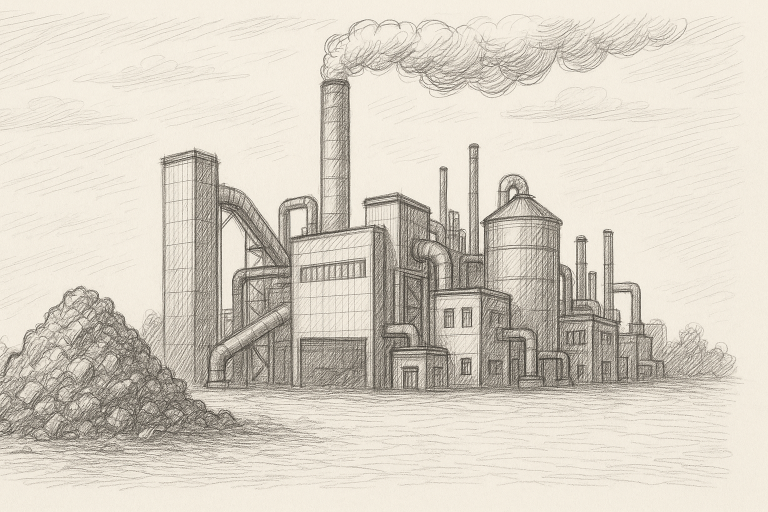
Banner image is generated by OpenAI’s DALL·E via ChatGPT (2025)