by: Nabiha Shahab
Jakarta’s waste problem is often framed as a question of disposal: where can the city send the mountains of rubbish it produces every day? But a growing number of businesses are challenging that logic by asking a different question: what if some of that waste never needed to become rubbish in the first place?
Axel Tilaar, CEO of Terra Maggot, demonstrated one possible answer: let insects do the work. Terra Maggot uses black soldier fly larvae to process food waste collected from hotels, restaurants and other businesses. The larvae grow through several stages over roughly a month, before becoming flies and restarting the cycle. The larvae themselves can then be dried or processed into animal feed, while other material can be turned into fertiliser.
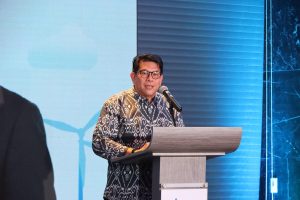
“Because all of this comes from food waste taken from hotels and restaurants, the advantage is that it has high protein,” Tilaar told tanahair.net on the sidelines of the Indonesia Net-Zero Summit 2026, in Jakarta, on Saturday, August 1.
Axel Tilaar, CEO of Terra Maggot, explains how maggot farming can turn organic waste into an opportunity for more sustainable waste management.
That protein creates an economic incentive for dealing with waste. The larvae can be processed into feed for poultry, pigs and cattle, or pelletised for fish such as catfish. Terra Maggot says its operations can currently process around 100 kilograms a day at one partner site.
For Jakarta, however, the most important part of the model may not be the maggots themselves. It is the principle behind them: organic waste can become a productive input rather than a disposal problem.
The challenge is that this only works efficiently when the waste is properly sorted.
“Food waste is not necessarily clean,” Axel said. “We have to sort it first for the maggots, so that the composition is good and the protein content is high.”
That requirement exposes one of the fundamental weaknesses in Jakarta’s existing waste system. Once food scraps, plastic, packaging and other materials are mixed, recovering their value becomes considerably more difficult. A maggot farm cannot simply be treated as a destination for whatever comes out of a household or commercial rubbish bin.
The solution, therefore, is not simply to build more maggot farms. Jakarta needs to build the system around them.
Hotels, restaurants, markets, food courts and other large producers of organic waste could be required or strongly incentivised to separate food waste at source. That material could then be collected through dedicated systems and supplied to processors such as Terra Maggot. In return, businesses would receive a more predictable waste-management service, while the processors gain a reliable raw material.
The opportunity extends beyond waste reduction. Terra Maggot is developing different models for expansion, including operating complete waste-processing facilities, investment in waste processing, and “maggot blocks” that enable others to cultivate the larvae themselves. The company is also considering sites of between 1,000 and 3,000 square metres.
But Jakarta should be careful not to present maggot farming as a silver bullet. It cannot replace waste reduction, recycling or better collection systems. Its effectiveness depends on a disciplined upstream system that delivers the right material in the right condition.
Tilaar says the ideal organic waste depends on its composition, including vegetables and carbohydrates such as rice and bread, as well as meat.
This is where public policy can make the difference.
Rather than leaving such enterprises to develop at the margins of the waste sector, Jakarta could actively integrate them into its waste-management strategy. The city could support source separation, provide suitable locations, facilitate partnerships between waste producers and processors, and create standards to ensure that processed insect-based feed and fertiliser meet safety requirements.
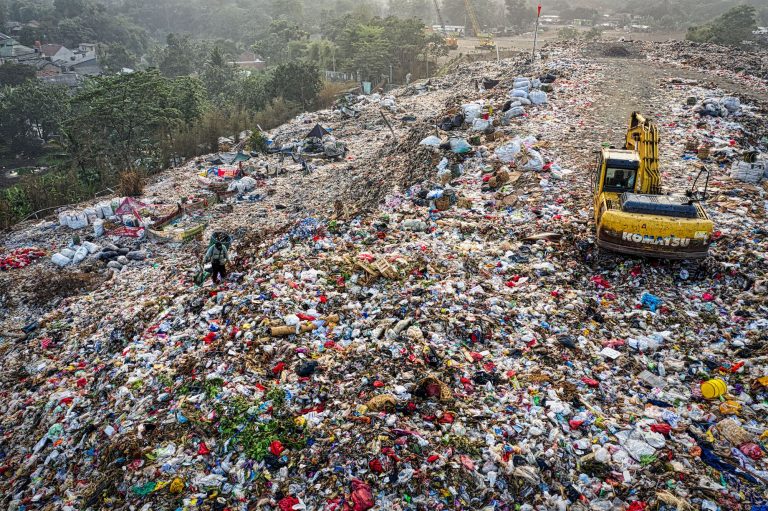
Banner photo: Aerial shot of a waste landfill in South Tangerang, Banten, Indonesia. Oct 19, 2019. Tom Fisk/Pexels.com