The COP31 Presidency has released a new draft cover decision that proposes tripling adaptation finance by 2035 and accelerating electrification, but drops explicit references to transitioning away from fossil fuels, raising concerns among climate advocates.
The nine-page draft, issued on Thursday, November 19, following consultations led by the COP31 Presidency, outlines a series of measures to accelerate implementation of the Paris Agreement. However, it leaves several contentious issues unresolved ahead of the final days of negotiations.
One of the most notable changes is the removal of language on transitioning away from fossil fuels and references to roadmaps for the transition. Instead, the text focuses on accelerating the global shift towards low-greenhouse-gas emissions, including through renewable energy and other zero- and low-carbon technologies.
The draft also welcomes efforts to scale up carbon capture, utilisation and storage (CCUS), a provision that has drawn criticism from environmental campaigners.
Romain Ioualalen, global policy campaign manager at Oil Change International, warned that the CCUS paragraph could legitimise technologies that fossil fuel interests could use to prolong dependence on fossil fuels.
He called for the paragraph to be removed and said that including the paragraph in the text “legitimises a failed technology that fossil fuel interests will grab onto with all their might as the lifeline to keep the world dependent on the volatile fossil fuel economy for decades to come”.
On energy, the draft recognises the benefits of electrification for emissions reductions, energy security, efficiency, economic development and energy access. It also proposes increasing electricity’s share of global final energy consumption to 35 per cent by 2035, alongside efforts to triple renewable energy capacity by 2030 and double the annual rate of energy efficiency improvements.
On climate finance, the text reiterates the call to at least triple adaptation finance by 2035 and proposes an implementation pathway under the climate finance work programme. It also launches an “Antalya-to-Addis Ababa Roadmap on Adaptation and Resilience Finance” to identify predictable and scaled-up funding sources, including innovative financing mechanisms.
However, the draft does not establish a clear baseline for measuring the proposed increase.
Sandra Guzman, director of the Climate Finance Group for Latin America and the Caribbean (GFLAC), said the adaptation finance proposal was an important development but lacked clarity on implementation.
She warned that the Presidency’s draft was incorporating substantive issues that had not been resolved in technical negotiations, increasing political pressure on countries to reach agreement in the final two days.
“Tripling adaptation finance, a key outcome of this COP31, is now there, but with little clarity in its implementation. Unfortunately, we are running out of time,” she said.
Linda Kalcher, executive director of Strategic Perspectives, said the latest text demonstrated genuine progress towards an agreement but did not adequately reflect advances in clean electrification and reductions in oil and gas use globally.
“After a turbulent geopolitical year, this may be close to what we can get,” she said, describing COP31 as an implementation COP that could reaffirm the benefits of multilateral climate cooperation.
The draft also recognises the risk of global warming exceeding 1.5°C, calls for efforts to limit the magnitude and duration of temperature overshoot, and highlights the role of the Intergovernmental Panel on Climate Change (IPCC) in informing the next global stocktake. It invites contributions from all three IPCC Working Groups under its Seventh Assessment Report cycle.
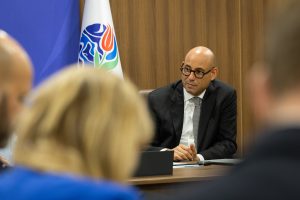
Speaking at a COP31 Presidency press conference on Thursday, UN Climate Change Executive Secretary Simon Stiell stressed the importance of reaching balanced outcomes across the negotiations.
He noted that nearly 200 countries were involved in the process, with 165 mandated agenda items being negotiated across different rooms.
“Getting to strong and balanced outcomes across all the issues will also be very complex. But it is essential, so that COP31, like all recent COPs, can take another serious step forward in the world’s climate fight,” Stiell said.
“These are crucial days ahead for climate cooperation. And we have no time to lose.”
Negotiations are expected to intensify as countries work towards a final agreement before the conclusion of COP31. (nsh)
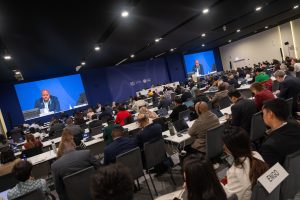
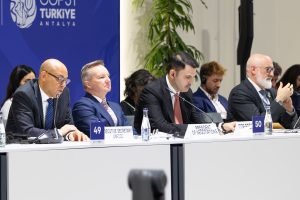
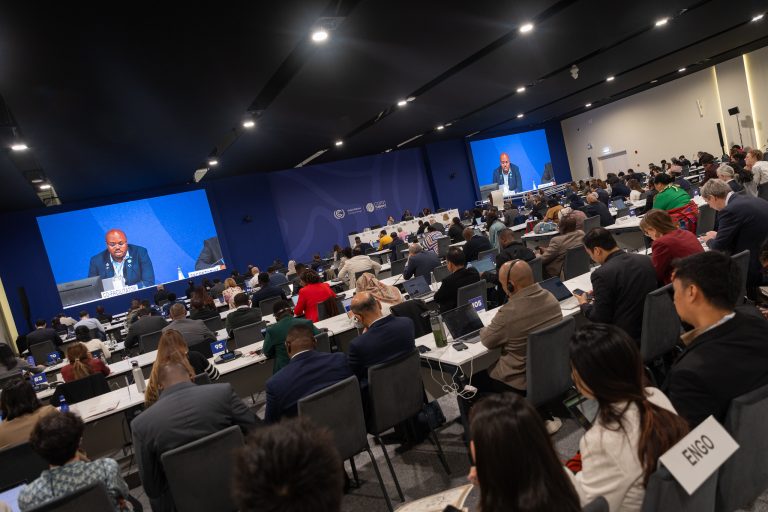
Banner photo: Delegates participate in formal and informal consultations throughout the day as negotiations enter their final stage (Photo: © UN Climate Change – Kiara Worth)