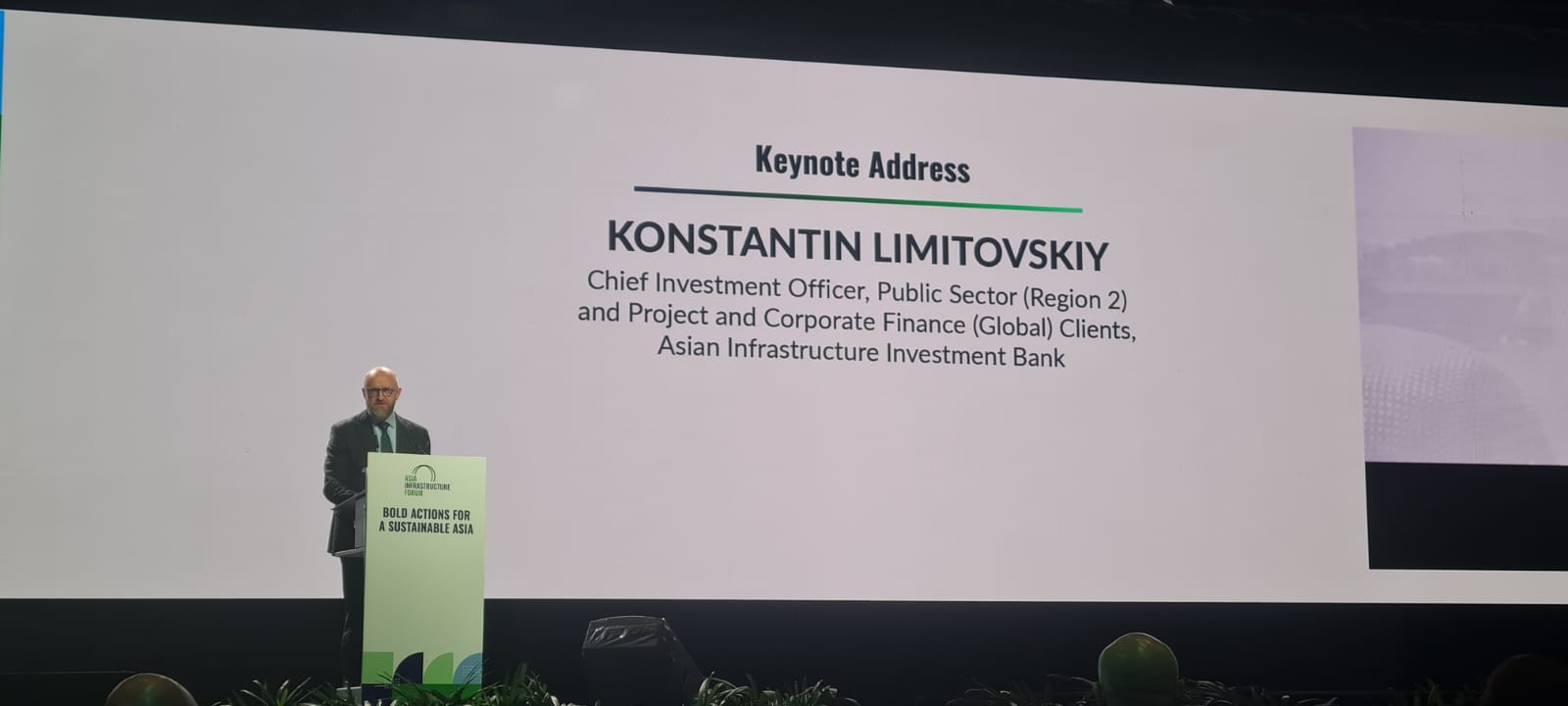
Singapore – Asia must accelerate investment in green infrastructure, cross-border connectivity and digital networks if it is to withstand mounting geopolitical tensions, climate risks and economic uncertainty, according to a senior executive of the Asian Infrastructure Investment Bank (AIIB).
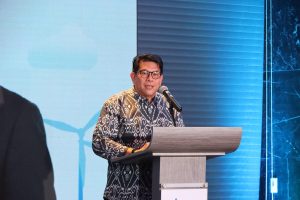
Speaking at the Asia Infrastructure Forum (AIF) 2026 in Singapore on Wednesday, June 17, Konstantin Limitovskiy, AIIB’s Chief Investment Officer for Public Sector and Project and Corporate Finance clients, said the region continues to face a chronic shortage of infrastructure investment despite growing demand.
“Yet there is one constant in this changing world which stubbornly remains: there never seems to be enough investment at pace and scale to meet the demand,” Limitovskiy told delegates.
His remarks came as Asian economies grapple with the combined effects of geopolitical tensions, fiscal constraints, trade disruptions and increasingly severe climate impacts.
“Since COVID, Asia has been continuously impacted by macroeconomic headwinds, geopolitical tensions, fiscal constraints, trade disruptions, and a growing urgency to address the mounting impacts of climate change,” he said. “This demonstrated the critical role of infrastructure and the challenges in maintaining an adequate level of infrastructure investments.”
Connectivity beyond roads and ports
Limitovskiy identified connectivity as one of AIIB’s four strategic priorities, arguing that regional infrastructure must extend beyond traditional transport networks.
“The ongoing geopolitical situation reminds us of the need to improve resilience and ensure the security of supply chains,” he said. “To AIIB, this means investing in infrastructure to enhance connectivity, to boost economic development, facilitate trade, and achieve more efficient economic cooperation.”
He highlighted projects such as the ASEAN Power Grid, submarine cable networks and satellite infrastructure as examples of next-generation connectivity that can strengthen regional resilience.
“This connectivity is not only about transport, although we also finance cross-border highways, ports and airports, but also projects such as the ASEAN power grid or digital connectivity through submarine cables and satellites,” he said.
However, he acknowledged that multinational infrastructure projects remain challenging due to their complexity and the need for technical assistance, knowledge sharing and capacity building.
Infrastructure as a climate solution
On green infrastructure, Limitovskiy argued that infrastructure should no longer be viewed solely as a contributor to climate change.
“We often complain about the negative impact of infrastructure on our climate. This is often true,” he said. “But AIIB’s green infrastructure thematic priority also recognises the potential of infrastructure as a solution.”
The bank is supporting both large-scale renewable energy deployment and innovation through venture capital investments in clean-energy and technology-enabled infrastructure startups.
AIIB has financed around USD2 billion in renewable energy and battery energy storage system (BESS) projects across South, Southeast and Central Asia, helping to create jobs and attract private-sector investment.
The energy transition, he said, presents significant economic opportunities despite disruptions to traditional industries.
“We recognise that it will have a negative impact on traditional sectors, but it also creates new opportunities,” he said. “Asia is now dominating global clean energy employment, for instance, where it supports over 10 million jobs in the region.”
“Our strategic challenge is now about scaling these high-growth sunrise industries to fully offset the decline of legacy industrial sectors,” he added.
Digital divide remains a challenge
Technology integration was another major theme of the speech. While digital infrastructure has become a key driver of economic growth, Limitovskiy warned that access remains uneven across Asia.
AIIB has approved 12 digital infrastructure projects worth USD1 billion, including financing for a green hyperscale data centre in Malaysia.
“But much needs to be done to provide equitable digital access to all in the region,” he said.
He also noted that traditional infrastructure sectors have been slower to adopt digital technologies that could improve efficiency and climate resilience.
Mobilising private capital
A lack of financing remains one of the biggest barriers to infrastructure development, according to Limitovskiy.
“As part of AIIB’s focus, we look at using our limited capital to mobilise private sector resources,” he said.
The bank is employing a range of tools, including risk-sharing mechanisms, longer financing tenors and local-currency financing, to attract institutional investors into infrastructure projects.
He cited Singapore-based Bayfront Infrastructure Capital as an example of how innovative financing structures can channel private capital into Asian infrastructure assets and greenfield projects.
ASEAN Power Grid: A model for the future
In closing, Limitovskiy pointed to the ASEAN Power Grid as a model that brings together connectivity, clean energy, technology and innovative financing.
“The ASEAN power grid is a great example of how technologies are making it possible to harness clean energy in countries with an excess of resources, share it regionally, use clean energy to power traditional and new infrastructure, and seek innovative ways to mobilise private and public capital to share costs in the grid,” he said.
With demand for infrastructure continuing to rise across the region, Limitovskiy urged governments, development banks and investors to pursue not only ambitious projects but also innovative solutions.
“It remains for us to be not only bold but also innovative in seeking solutions,” he said. (nsh)
*tanahair.net is a media partner of the Asia Infrastructure Forum 2026