by Roffie Kurniawan
Jakarta – Indonesia embarks on a significant new chapter in LNG production with the start of construction on the Masela LNG Project. After nearly thirty years since the natural gas reserves were discovered in the Abadi Field in 2000, the project has officially commenced. The project, valued at USD 20.9 billion, promises a transformation of Indonesia’s industrial landscape.
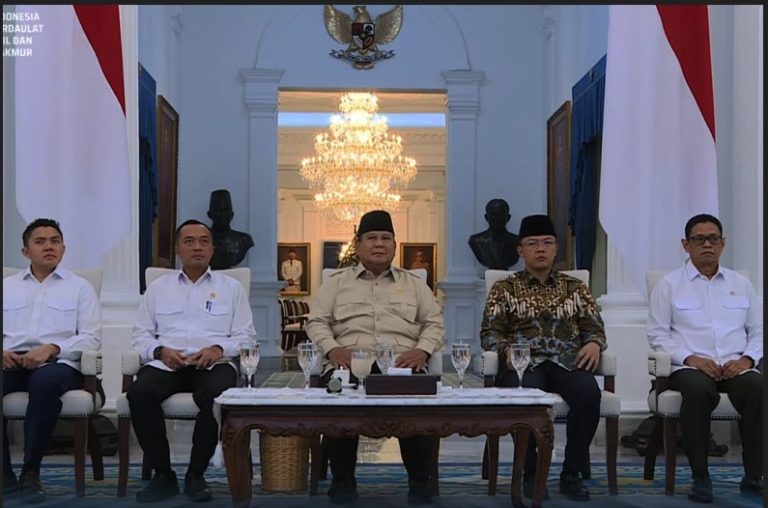
The ground-breaking ceremony for the Masela LNG Project was held on July 16, 2026, on Yamdena Island in the Tanimbar Islands Regency, Maluku. President Prabowo Subianto, attending the virtual launch from Jakarta’s State Palace, highlighted the importance of this monumental Strategic National Project (PSN), stressing its necessity to proceed without delay for bolstered national energy security.
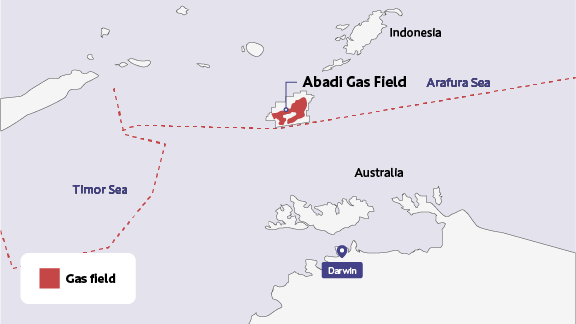
The project will process gas from the Abadi Gas Field in the Masela Block, which is located approximately 180 km offshore from Yamdena Island in the Arafura Sea, at a water depth of 400-800 meters. The gas extracted from the Abadi Gas Field will then be sent to onshore production facilities on Yamdena Island.
The Masela LNG project is designed to produce 9.5 million tonnes per annum (MTPA) of LNG, 150 million standard cubic feet per day (MMSCFD) of pipeline gas, and 35,000 barrels of condensate daily.
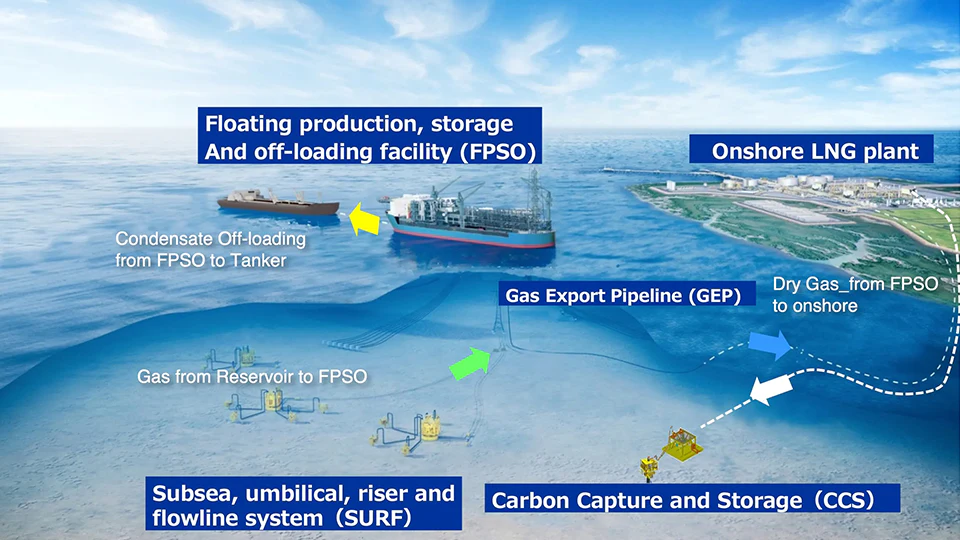
The Masela LNG project development includes a subsea drilling and production system, a Floating Production Storage and Offloading (FPSO) facility, a 175-kilometre export gas pipeline, and an onshore LNG plant.
The project also plans to implement Carbon Capture and Storage (CCS) technology in LNG production to support carbon emission reductions and the government’s efforts to implement the energy transition.
Masela Block is operated by Inpex Corporation of Japan, through its subsidiary Inpex Masela Ltd, which holds 65 per cent participating interest. The remaining co-owners are PT Pertamina Hulu Energi, a subsidiary of state-owned oil and gas company PT Pertamina, with 20 per cent participating interest and Petronas Malaysia with 15 per cent interest.
The Production Sharing Contract (PSC) for the Masela Working Area is valid from 1998 to 2055.
With the prepared allocation composition, the Masela Block’s gas production is expected to meet the needs of several domestic sectors without precluding export opportunities. Implementation remains dependent on project readiness, the realisation of processing facilities, and gas absorption by potential domestic users.
The Ministry of Energy and Mineral Resources, along with the Upstream Oil and Gas Regulatory Special Task Force (SKK Migas), has ensured that domestic gas allocations have been included in the field development plan (PoD) to meet increasing natural gas demand, particularly in the industrial, fertiliser, and power generation sectors.
Minister of Energy and Mineral Resources Bahlil Lahdalia introduced a policy ensuring that no less than 60 per cent of the project’s gas production will cater to domestic needs, limiting exports to a maximum of 40 per cent.
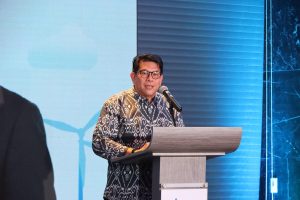
“We will allocate a minimum of 60 per cent of the Masela Block’s gas production to meet domestic needs and a maximum of 40 per cent for export. Some of this will be used for downstream processing, including PT Pupuk Indonesia, which plans to build a downstream industry here (Tanimbar),” Bahlil said at the ground-breaking ceremony.
In addition to supporting the fertiliser industry, some of the Masela Block’s gas will also be allocated to state electricity company PT PLN, PT Perusahaan Gas Negara (PGN) and several private companies. The use of this gas is aimed at increasing added value and stimulating regional economic growth.
Significance of Masela LNG project
The ground-breaking of the Abadi Masela LNG Project signifies a monumental shift, positioning itself as the cornerstone of Indonesia’s energy security and industrial advancement. This project is not only pivotal for the nation’s energy landscape but also promises substantial economic and industrial benefits.
At its core, the Masela LNG Project addresses crucial challenges facing Indonesia’s LNG production. For years, the country has witnessed a steep decline in output due to depleting gas wells, with Bontang’s production plummeting from 22 million tonnes in 2010 to a mere 0.8 million tonnes projected for 2026.
The Masela LNG project emerges as a crucial buffer, preventing a potential energy crisis by 2030 and serving as a guardian against future production declines.
In terms of global standing, the Masela Project will catapult Indonesia back into the top 10 global LNG exporters, producing a combined national output of 14 million tonnes per annum (MTPA) from 4.5 million tons this year. This jump would enable the country to restore its reputation and competitiveness against regional heavyweights such as Malaysia.
To contextualise this transformative venture, envision national LNG production as a glass currently almost empty, retaining just 20 per cent of its capacity. The Masela LNG Project arrives as a force that refills about 70 per cent of that glass. Without it, Indonesia faces the likelihood of having to import LNG between 2028 and 2030. With it, however, the nation ensures a stable gas surplus extending well beyond 2035.
Observers say the Masela LNG Project is set to surpass the combined output of existing facilities like Bontang, Donggi, and Tangguh by 2026. It stands not as a mere addition but as an essential element driving Indonesia’s economic prosperity, regional transformation, and sustainable growth into the future.
Additionally, this substantial export capacity will generate an estimated US$6–7 billion annually, based on a price of US$13/MMBTU, contributing significantly to Indonesia’s foreign exchange reserves. ‘
Domestically, the project’s allocation of 150 MMSCFD of pipeline gas will support local industries, including fertiliser, petrochemical, and power generation sectors, thereby reducing the reliance on expensive LNG imports.
LNG off-takers
With domestic supply adequately addressed, the focus of the Masela LNG Project is now on finalising its commitments for global exports. Securing Sales and Purchase Agreements (SPAs) with one or two of these export buyers, along with completing the Land Deed Agreement (LDA), is essential for obtaining international financial backing for this ambitious mega-project.
As reported by national media earlier, the talks on the export off-takers are entering price negotiations. From an initial pool of 66 interested parties, the potential international off-takers had been narrowed down to five final contenders.
These include Osaka Gas (Japan), Kyushu Electric Power (Japan), Shell Trading (Global), BP Trading (Global) and Chevron Trading (Global). As reported by several national media, negotiations are being conducted in Tokyo and at the BP and Shell offices in Singapore.
The discussions are centred around an average buying offer pegged at approximately 12 per cent of the Brent crude price. The negotiations are particularly intense, with the difference between seller and buyer expectations being as narrow as ±0.2 per cent.
Driving local economy
Beyond serving national industries, this mega-project is set to significantly enhance local economic development in Maluku and the Tanimbar Islands, promoting regional growth in Eastern Indonesia.
The energy ministry said during peak construction periods, over 12,000 jobs are expected to materialise, with a strict requirement that 30 per cent of the workforce comes from local communities. This is similar to the number of workers created when the Tangguh LNG project Train 3 was developed several years ago.
Moreover, a 10 per cent Participating Interest (PI) of the Masela LNG project has been granted to the Regional-Owned Enterprise (BUMD) of Maluku Province. This ensures regional fiscal capacity and empowers local governments to invest in areas such as poverty alleviation, infrastructure development, and healthcare improvements.
With advancements such as drilling systems, a Floating Production Storage and Offloading (FPSO) facility, and an onshore LNG refinery taking shape, the Masela LNG project symbolises perseverance—transforming decades of anticipation into a powerful engine for regional transformation, job creation, and sustained national growth.
As the government tries to tap into domestic resources and reduce oil and gas imports to slash dependence on overseas oil and gas imports, this Masela LNG project could serve as a major shift and ‘game changer’ to domestic natural gas production.
Banner photo: Groundbreaking and project concept development (Source: SKK Migas)