Jakarta – The government faces the daunting task of plugging a tax revenue shortfall of around Rp514 trillion ((USD 28.10 billion) by the end of 2026. At the same time, the State Budget (APBN) had recorded a deficit of Rp379.3 trillion (USD 20.76 billion) as at 31 October 2026 and must cover disaster relief costs amounting to Rp59.35 trillion (USD 3.24 billion).
Amid this fiscal pressure, 350 Indonesia, on Friday 20 November, questioned the failure to implement a number of levy mechanisms on the extractive sector, particularly coal and nickel. Yet the potential revenue from export duties and royalty adjustments for these two commodities had previously been estimated to exceed Rp200 trillion (USD 10.94 billion).
Conversely, the debate on broadening the tax base actually highlights the economic activities of the public, including day-to-day services and small businesses. This situation is seen as revealing an imbalance in the government’s priorities when determining sources of state revenue.
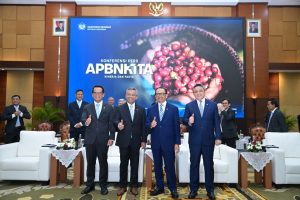
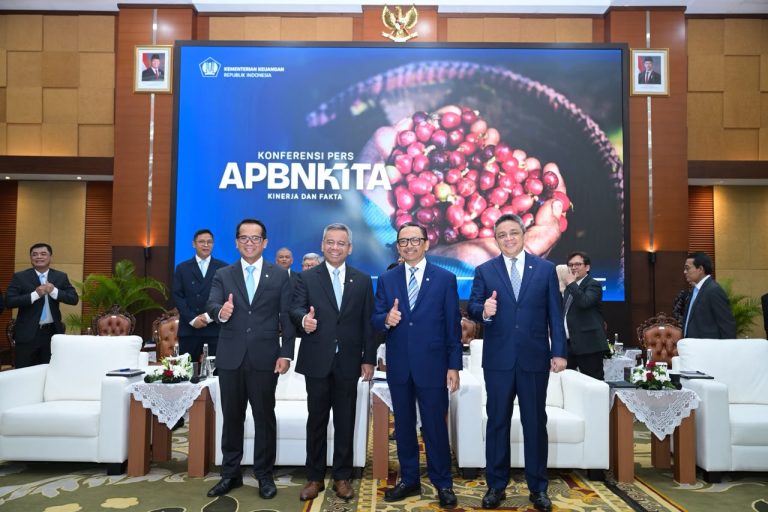
At the press conference on the November 2026 edition of the APBN KiTa, Deputy Minister of Finance Suahasil Nazara announced that tax revenue as at 31 October had reached Rp1,796.8 trillion (USD 98.29 billion). Consequently, the government still needs to make up a shortfall of around Rp514 trillion (USD 28.12 billion) by the end of the year.
“I ask for the support of the whole community and all the media so that we can collect tax revenue, as this will also be used for government spending,” said Suahasil on 13 November 2026.
However, according to the Country Manager of 350 Indonesia, Sisilia Nurmala Dewi, the government should not rely solely on public contributions when there is still significant revenue potential from industries that utilise natural resources.
He cited the government’s decision on 12 May 2026 to postpone plans to introduce export duties on coal and nickel, as well as adjustments to mining royalties. These policies had previously been discussed by the then Minister of Finance, Purbaya Yudhi Sadewa, together with the Minister of Energy and Mineral Resources, Bahlil Lahadalia.
Purbaya had previously suggested that the potential revenue from this policy could exceed Rp200 trillion. However, its implementation has been postponed on the grounds that the government is still working out the details with the business community.
“At a time when the state budget is under pressure from a deficit and has to bear nearly hundreds of trillions in disaster recovery costs, levies on coal and nickel worth more than Rp200 trillion (USD 10.94 billion) have in fact been postponed to accommodate the wishes of business operators,” said Sisilia.
In addition to export duties and royalties, 350 Indonesia highlights the fact that a windfall tax scheme—a tax on excess commodity profits—has not yet been implemented. This measure had previously been included in the planning documents of the Ministry of National Development Planning/Bappenas, but has not yet been implemented to bolster state revenue.
The burden of disaster recovery
Pressure on the State Budget is mounting as the government must fund disaster response and recovery efforts. Of the total allocation of Rp59.35 trillion (USD 3.24 billion) in 2026, Rp50.84 trillion (USD 2.78 billion) has been earmarked for post-disaster rehabilitation and reconstruction in the Sumatra region. Meanwhile, Rp5.11 trillion (USD 279.33 million) is being used to tackle forest and land fires.
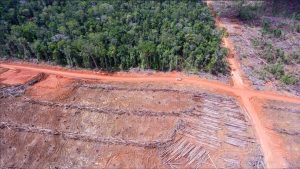
According to Sisilia, the costs of ecological damage and disaster recovery should not continue to be borne by the state budget, the main source of which is taxation of the general public. The extractive industries, which profit from the exploitation of natural resources and are considered to contribute to environmental pressure, should share the burden through fiscal instruments.
Criticism from 350 Indonesia was also directed at a statement made by the President’s Special Envoy for Climate and Energy, Hashim Djojohadikusumo, at the Indonesian Chamber of Commerce and Industry’s (Kadin) National Executive Meeting on 29 October 2026. Hashim highlighted economic activities which he described as the ‘grey market’, with a value of around Rp10,000 trillion (USD 546.63 billion), which he claimed were neither recorded nor taxed.
In his speech, Hashim cited examples of everyday service transactions, such as mobile barbers, masseurs who do not issue receipts, small local eateries and beauty salons. He also called for the implementation of digital taxation through banks, fintech companies and online marketplaces.
350 Indonesia believes that this expansion of taxation risks putting further pressure on the purchasing power of the public and small businesses, particularly whilst the government has yet to maximise revenue potential from the extractive sector.
Highlights on the COP31 delegation
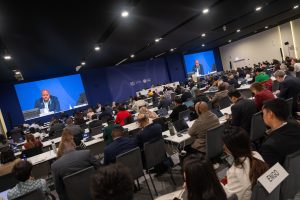
350 Indonesia has linked these fiscal issues to Indonesia’s climate diplomacy at COP31. The appointment of Hashim Djojohadikusumo as head of the Indonesian delegation has attracted attention due to his role as the President’s Special Envoy for Climate and Energy and, simultaneously, as Chair of the Advisory Board of the Indonesian Chamber of Commerce and Industry (Kadin).
According to Sisilia, Hashim’s background and business affiliations in the fossil fuel sector pose a risk of a conflict of interest in the formulation and negotiation of climate policy. It is considered that this situation could undermine the credibility of Indonesia’s commitment to promoting a just energy transition.
This criticism was also linked to the warning issued by UN Secretary-General António Guterres at COP31 regarding the need to tax fossil fuel companies on their excess profits. Guterres cautioned that the public’s future should not be determined by those who profit from the climate crisis.
“It is difficult to convince the public or the international community that Indonesia is serious about implementing a just energy transition and the ‘polluter pays’ principle if levies on the coal and nickel sectors are postponed, the windfall tax remains at a standstill, and the leadership of the COP31 climate delegation is in the hands of figures with ties to the fossil fuel industry,” Sisilia emphasised.
In light of this situation, 350 Indonesia is urging the government and the House of Representatives to make adjustments to fiscal policy and climate governance. The organisation is calling on the government to immediately introduce a windfall tax, optimise export duties and royalties on coal, nickel and oil and gas, whilst avoiding tax policies that stifle household consumption and small businesses.
Furthermore, the government has been called upon to ensure that the disaster management budget is utilised in a transparent and accountable manner. The organisation is also urging the implementation of conflict-of-interest prevention protocols for public officials and climate negotiation delegations, so that national policies prioritise public safety and accelerate the transition to clean energy. (Hartatik)
Banner photo: Ministry of Finance