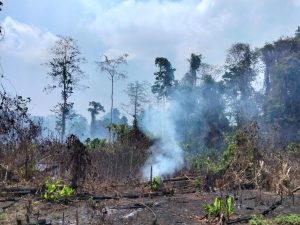
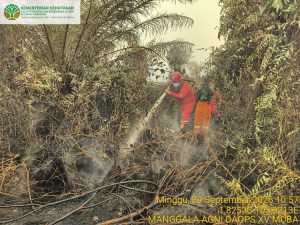
Jakarta – Indonesia is facing an early and sharp surge in forest and land fires, with tens of thousands of hectares burned in the first three months of 2026, raising concerns over the country’s ability to meet its climate commitments.
Environmental group MADANI Berkelanjutan on Wednesday, April 22, shared that the total indicative burned area reached 71,000 hectares between January and March, a steep increase from just 4,100 hectares during the same period last year. Around 94% of the burned area was newly affected land, indicating an expanding environmental impact.
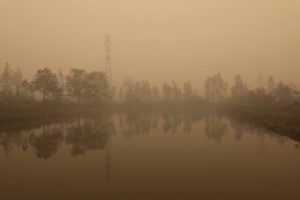
The spike comes ahead of the dry season, which the Meteorology, Climatology and Geophysics Agency (BMKG) has warned could arrive earlier, last longer, and be intensified by a weak-to-moderate El Niño later this year.
“The rise in the number of fires at the start of this year is extremely worrying,” said Nadia Hadad, Executive Director of MADANI Berkelanjutan, warning that worsening climate conditions could further accelerate the outbreak of fires.
West Kalimantan recorded the largest burned area at 23,850 hectares, followed by Riau with 16,670 hectares, with a sharp escalation seen in March.
A major concern is the extent of fires on peatlands, which store significant amounts of carbon. The analysis found that 65.1% of the burned area, or equivalent to 43,900 hectares, occurred in peat ecosystems, risking massive carbon emissions. This directly threatens Indonesia’s target to achieve a net carbon sink in its Forest and Other Land Use (FOLU) sector by 2030.
Notably, more than half of the burned land—around 36,000 hectares—was located within areas designated under the FOLU Net Sink operational plan, suggesting that existing climate frameworks may not yet provide adequate protection.
The report also highlights governance challenges. Over 52% of the burned area overlaps with licensed concessions, with oil palm plantations accounting for the largest share at 19,000 hectares. The findings suggest that land management practices within concession areas remain a key driver of fire risks.
Meanwhile, nearly half of the burned area was located within Indonesia’s forest moratorium zones, raising questions over the effectiveness of the policy. Fires were also detected in key biodiversity areas, further threatening critical ecosystems.
Fadli Ahmad Naufal, a GIS specialist at MADANI Berkelanjutan, said the recurrence of fires in protected and regulated zones should serve as a warning for authorities.
“With the dry season ahead, this must become an alarm for the Ministry of Forestry,” he said.
The group is urging the government to strengthen enforcement against companies operating in fire-prone areas, tighten the implementation of forest moratoriums, and accelerate peatland restoration efforts.
“The forest and land fires at the start of this year serve as a stark warning to us all,” said Hadad. “If Indonesia is serious about its climate commitments, preventing forest and land fires is no longer an option.” (nsh)
Banner photo: Forest fire fighting. Source: BRGM