Jakarta — Global efforts to decarbonise the buildings and construction sector are slowing, threatening climate targets even as energy efficiency improves, according to a new report by the UN Environment Programme (UNEP) and the Global Alliance for Buildings and Construction, released on Tuesday, May 19.
The latest Global Status Report for Buildings and Construction (2025–2026) finds that operational emissions from buildings rose by 1 per cent to 9.9 gigatonnes of CO₂ in 2024, underscoring the sector’s continued role as a major source of greenhouse gases.
The report comes amid a global housing affordability and energy crisis, highlighting that climate action in buildings could help reduce energy bills, improve living conditions, and strengthen resilience to climate shocks.
“Buildings can either lock in climate risks or deliver safer, healthier, and more affordable living conditions,” said UNEP Executive Director Inger Andersen, noting that with half of the world’s buildings yet to be constructed or renovated by 2050, governments face a critical window to act.
The sector’s footprint continues to expand rapidly. In 2024, global floor area grew by 1.7 per cent to 273 billion square metres, driven largely by construction in emerging economies, including in Southeast Asia. Buildings and construction now account for nearly 37 per cent of global emissions and 28 per cent of energy use.
While energy intensity has improved by 8.5 per cent since 2015 and green building certifications have nearly tripled, progress has slowed since 2020 as construction outpaces decarbonisation efforts. Renewables supplied just 17.3 per cent of buildings’ energy demand in 2024—far below what is required for a net-zero pathway.
Investment also remains insufficient. Although energy efficiency investments reached USD 275 billion last year, the report estimates that USD 5.9 trillion will be needed by 2030 to align the sector with climate goals.
The report calls for accelerated policy action, including stronger building codes, increased financing, and a faster phase-out of fossil fuels in construction and operations, to bring the sector in line with a net-zero emissions trajectory by mid-century. (nsh)
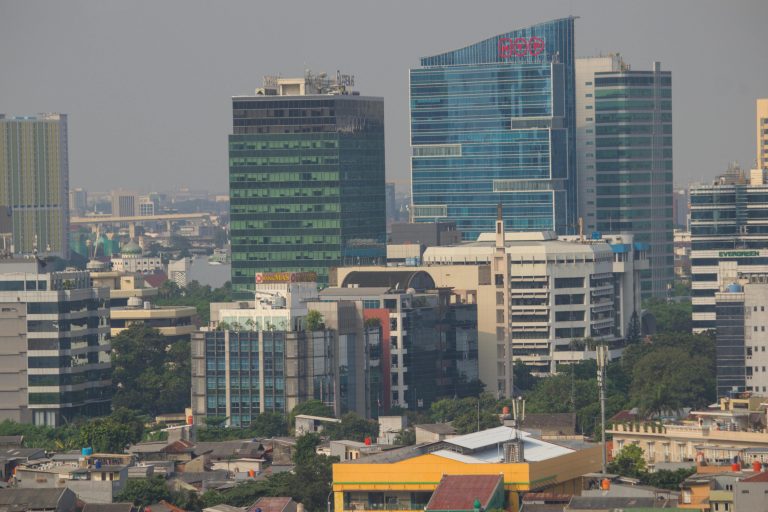
Foto banner: Jakarta skyline. Dapur Melodi/Pexels.com