Jakarta – Institute for Essential Services Reform (IESR) has urged the Indonesian government to focus on measurable “quick wins” and regulatory reforms to ensure the successful rollout of President Prabowo Subianto’s ambitious 100 gigawatt (GW) solar power programme, warning that strong coordination and clear implementation mechanisms will be crucial in the early stages.
IESR recommended the establishment of a national solar energy task force to coordinate the implementation of the 100 GW solar programme across ministries, state utility PLN, regional governments and private sector stakeholders, the group said on Friday, May 29. The think tank also called for a five-year implementation roadmap covering annual targets, financing models, procurement mechanisms and priority locations.
Other short-term recommendations for 2026–2027 include accelerating tariff regulations for hybrid solar and battery energy storage system (BESS) projects, revising rooftop solar rules to provide incentives for BESS users, improving transparency in solar procurement, and conducting village-level feasibility studies for community solar projects.
The recommendations come as President Prabowo reaffirmed Indonesia’s commitment to developing 100 GW of solar power capacity as part of the country’s broader energy transition and energy independence agenda. The target, which includes 80 GW of distributed solar and 20 GW of utility-scale solar, is expected to support Indonesia’s goal of achieving net-zero emissions by 2060 or sooner.
IESR said the programme’s success would depend not only on the scale of installed capacity, but also on the government’s ability to create a “rapid, measurable and replicable” implementation framework.
The organisation identified three priority areas for the initial phase of implementation: accelerating the replacement of diesel-fired power plants, expanding rooftop solar and BESS deployment, and developing village-level solar management models through village cooperatives or village-owned enterprises.
IESR described the diesel phase-down programme as one of the most strategic entry points for accelerating solar deployment, noting that PLN still operates nearly 4,000 diesel generators across more than 1,200 remote locations. However, the think tank noted that past procurement efforts had faced challenges, including limited investor interest and delays in tariff approvals for hybrid solar and BESS projects.
To improve investor confidence, IESR suggested revising procurement mechanisms and selectively bundling projects to improve economies of scale and project bankability. It also highlighted opportunities to reduce diesel fuel consumption in larger power systems through “fat burning” programmes that integrate solar PV and battery storage into existing diesel-heavy grids.
For the longer term, IESR recommended that Indonesia adopt competitive reverse auctions for solar procurement, establish a centralised financing platform for solar and battery investments, develop national maintenance and spare-parts supply networks, and expand workforce training programmes for the solar industry. (nsh)
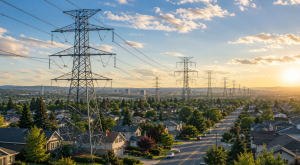
Banner photo: Kelly/Pexels.com