Jakarta – The Coral Triangle Center renewed calls on Friday, May 29, for stronger protection of dugongs (Dugong dugon) and seagrass ecosystems in Indonesia. Indonesia is home to some of the world’s largest dugong populations and extensive seagrass habitats, placing the country in a key position for the conservation of the species and coastal ecosystems, according to the organisation.
As the country marked World Dugong Day on May 28, the Coral Triangle Center said dugongs, often referred to as “sea cows”, remain among the least-recognised marine mammals despite their important ecological role in maintaining healthy seagrass meadows.
Dugongs depend entirely on seagrass for survival, while their grazing activity helps sustain ecosystems that support fisheries, store blue carbon and strengthen coastal resilience. However, dugongs face increasing threats from habitat degradation, coastal development, accidental entanglement in fishing gear, marine pollution and declining seagrass coverage. Their slow reproductive cycle also makes population recovery difficult once numbers fall.
“Indonesia has taken important steps to protect dugongs through national regulations and the National Dugong Conservation Strategy and Action Plan introduced in 2009,” said Rili Djohani, executive director of the Coral Triangle Center. “But conservation cannot rely on policy alone. Limited resources and capacity remain challenges in strengthening protection efforts on the ground.”
The organisation highlighted its Kalesang Dugong Project in the Lease Islands Marine Protected Area in Maluku, which focuses on community engagement, citizen science and habitat monitoring. Surveys conducted under the programme have documented 54 dugong sightings and identified eight seagrass species.
According to the Coral Triangle Center, the initiative has helped shift local perceptions of dugongs from being viewed as disturbances to fishing activities into valuable indicators of healthy marine ecosystems. Fishers have begun adapting practices to avoid dugong feeding areas, while local conservation regulations have also been strengthened.
The organisation said the programme recorded a 21% increase in community knowledge about dugongs and an 18% increase in understanding of seagrass ecosystems. In Mahu Village, dugong protection and waste management measures were formalised through a village regulation.
To support long-term conservation efforts, the Coral Triangle Center has also launched an “Adopt-A-Dugong” initiative, inviting public participation in funding citizen science activities, habitat protection and education programmes in Maluku. (nsh)
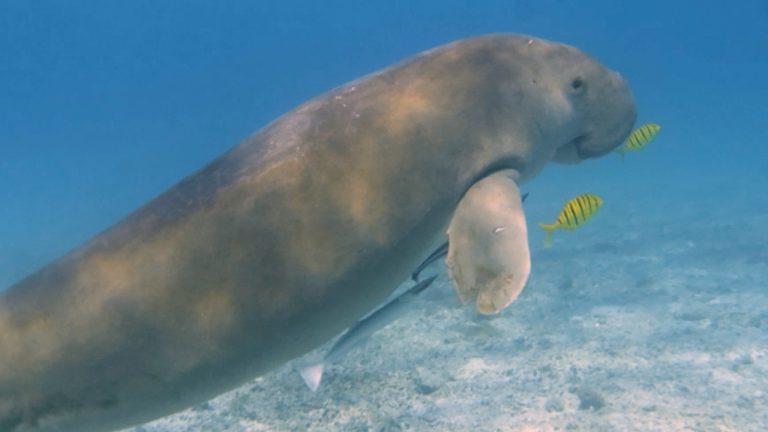
Banner photo: Dugong by Casper Kuijper/CTC