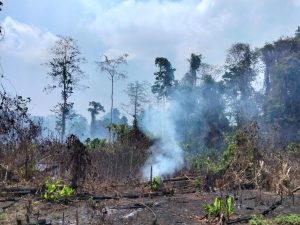
Jakarta — Indonesia’s Sulawesi island has exceeded its environmental carrying capacity as nickel mining and processing expand, according to a recent study by the Center of Economic and Law Studies (CELIOS).
The study assessed air and water quality, land use, social impacts and regulatory enforcement, giving Sulawesi an overall score of 4.5 out of 5 for ecological pressure and classifying the region as facing severe environmental degradation.
CELIOS said on Tuesday, September 15, existing environmental and spatial planning rules have failed to keep pace with the expansion of mining and related industries.
Between 2014 and 2024, authorities issued 574 mining permits covering about 819,000 hectares across Sulawesi, the study said. About 60% of those permits were issued in 2023 and 2024, with 194 permits granted in 2024 alone.
On average, mining permits transferred about 224 hectares of land a day to mining operators during the 10 years, the study said.
“The problem is not only the intensifying ecological pressure, but the complete failure of regulatory mechanisms to translate environmental limits into binding legal actions,” said Muhamad Saleh, the study’s lead researcher.
CELIOS said 277 new mining permits covering about 441,000 hectares were issued in areas already classified as ecologically critical. It said this showed a disconnect between environmental assessments and government licensing decisions.
Coal plants fuel nickel processing
Nickel processing has expanded rapidly in Central and Southeast Sulawesi, which together host 78% of the island’s nickel smelters, according to the study.
The smelters are powered in large part by captive coal-fired power plants. Sulawesi has 55 such units with a combined capacity of about 9,800 megawatts, accounting for nearly 94% of the island’s captive coal capacity.
The plants operate outside the public electricity grid, supplying industrial estates while nearby communities are exposed to their emissions.
Satellite data cited by CELIOS showed nitrogen dioxide pollution in Morowali, a major nickel-processing area, was about 12 times higher than in neighbouring Luwu Timur.
Nickel processing also generates an estimated 33 million tons of hazardous waste each year, including ferronickel slag and waste from high-pressure acid leaching, the study said.
Tests of coastal water near smelters in Morowali found concentrations of hexavalent chromium, a toxic form of chromium, between about six and 200 times above safety standards for marine life.
Mining concessions also overlap with or border areas where seven endemic species have been recorded, including anoa, babirusa and the crested black macaque, the study said.
Health and land conflicts
CELIOS said communities near mining and smelting areas were also facing higher health risks.
Districts with industrial activity recorded an average of about 5,350 cases of respiratory infections and pneumonia a year, compared with about 2,630 cases in areas without such industries.
Dengue cases averaged about 48 a year in mining districts, roughly three times the level recorded in non-extractive areas.
At the same time, industrial areas had about 27% fewer hospitals than non-industrial regions, the study said.
The report also identified 95 agrarian conflicts across Sulawesi. Forty-six involved alleged coercion by state or corporate actors, resulting in 93 arrests, four injuries and one death, it said. Fifty-one cases remained unresolved.
CELIOS estimated the cumulative economic value of environmental damage from forest degradation, coastal erosion and water pollution at more than 100 trillion rupiah.
“There is a profound inequality in how benefits and burdens are distributed,” said CELIOS researcher Fiorentina Refani. “Financial profits accumulate among corporate entities and investors, while residents suffer from chronic illness, loss of livelihoods, and environmental destruction.”
CELIOS called for a moratorium on new mining permits and captive coal plants, legal audits of existing licenses, environmental restoration and greater public access to environmental data. (nsh)
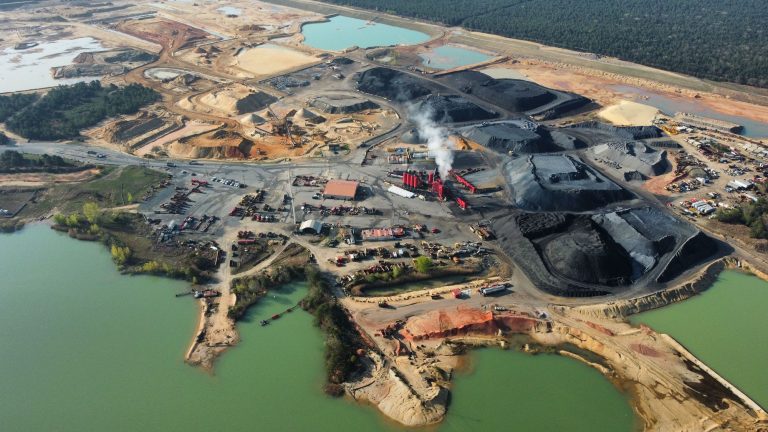
Banner photo: Industrial mining. Timothy Jordan/Pexels.com