Jakarta — Indonesia needs to overhaul its energy subsidy policy while accelerating the transition to renewable energy as shrinking fiscal space creates difficult choices for the government, speakers at a public discussion said.
Maintaining energy subsidies risks putting further pressure on the state budget, while cutting them could weaken purchasing power, particularly among lower- and middle-income households, according to a discussion organised by the Yayasan Kesejahteraan Berkelanjutan Indonesia (SUSTAIN) and LaporIklim on Thursday, August 20.
Telisa Aulia Falianty, a professor at the University of Indonesia’s Faculty of Economics and Business, said energy policy should be viewed not simply through the lens of short-term fiscal savings but as part of a longer-term strategy to strengthen energy security and ensure a fair transition.
“Energy transition in Indonesia is no longer merely seen as an effort to reduce short-term fiscal burdens, but as a long-term strategy to achieve equitable energy security,” Telisa said.
She said geopolitical uncertainty was increasing the need for the government to use the state budget as a “shock absorber” against external shocks while ensuring energy availability for consumers.
“Therefore, diversifying the energy mix toward renewable energy is a very solution-oriented step for current needs,” she said.
Telisa stressed that the transition should be gradual, inclusive and participatory, supported by effective public communication and the involvement of communities and other stakeholders.
She also called for targeted subsidies based on integrated socioeconomic data, including the national socioeconomic single data system (DTSEN), to ensure assistance reaches households that need it most.
“This approach is important so that transition policies do not sacrifice the actual socioeconomic conditions of the people. Poor and vulnerable groups must receive adequate protection, while the purchasing power of the middle class must remain protected amid the ongoing economic pressures,” Telisa said.
The impact of subsidy cuts on workers was highlighted by Nining Elitos of the PP FSBB KASBI/DBN KASBI.
“Reducing energy subsidies has a significant impact on lowering workers’ real incomes, while spending on basic needs does not decline and even tends to increase,” Nining said.
She said higher energy costs could force workers to cut spending further, increase household debt and reduce their ability to meet basic needs. Subsidy reductions could also contribute to shortages and long queues, consuming workers’ time and energy that could otherwise be used for productive activities.
In an already difficult economic environment, she warned that these pressures could increase the risk of social unrest.
Nining called for affected communities to have a meaningful role in policymaking and urged the government to establish clear and consistent implementation stages while strengthening socioeconomic data used to determine subsidy recipients.
“People also need to be protected from environmental impacts, resource-management conflicts and development practices that sacrifice their living spaces,” she said.
The discussion also examined the potential shift from subsidies for goods, such as fuel and LPG, toward direct assistance to households. Tata Mustasya cautioned that using welfare deciles to determine beneficiaries could exclude vulnerable parts of the middle class.
He proposed including households in deciles 5 to 8 in the subsidy reform, arguing that rising living costs have made the middle class increasingly vulnerable to falling into lower welfare categories.
Tata also proposed full subsidies for rooftop solar installations for households in deciles 5 and 6, saying the measure could reduce energy subsidy costs while improving household welfare. In the longer term, he called for structural reforms, including electrification of transportation and households and faster renewable energy deployment, particularly under Indonesia’s 100-gigawatt solar ambition.
Ahmad Ashov Birry, program director at Trend Asia, said the subsidy and energy-transition debate needed to be considered over a longer time horizon.
Indonesia’s dependence on fossil fuels leaves the country vulnerable to global price volatility and can intensify economic pressures during crises, he said. At the same time, climate policies should not focus solely on meeting decarbonization targets without considering who bears the costs.
Poor communities, including those in urban areas, face both climate impacts and economic pressures, Ashov said.
“Energy transition and changes in fiscal policy are unavoidable. However, society must not once again become the party that bears the costs, from energy costs and environmental damage to the accompanying social impacts,” he said.
Ashov stressed the importance of data transparency and public discussion to build trust and ensure future energy policies are developed fairly.
“If we talk about the long term, we have to think about how to prevent deeper impoverishment in society from one cycle of crisis to the next. And fiscal space can be expanded by imposing taxes on extractive industries,” he said.
The speakers broadly agreed that reforming energy subsidies and accelerating renewable energy deployment need to go hand in hand, with safeguards to prevent the costs of the transition from falling disproportionately on vulnerable households and workers. (nsh)
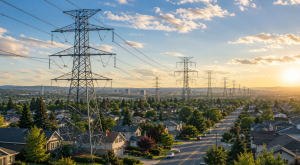
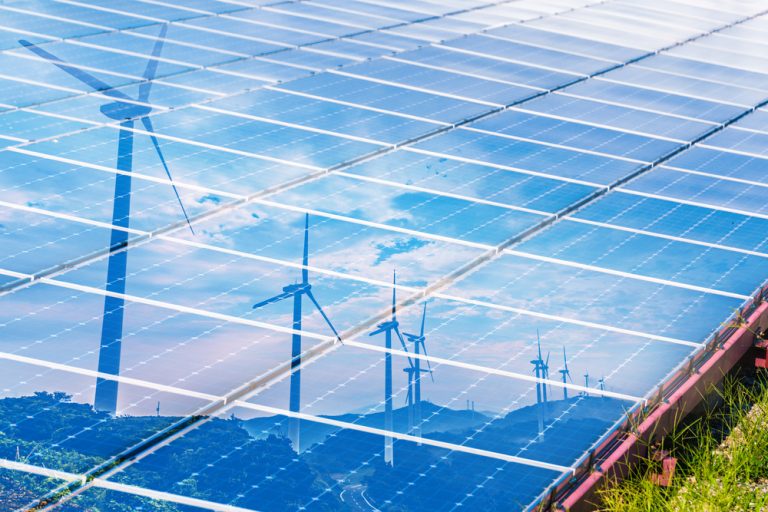
Banner photo: metamorworks/shutterstock.com