Jakarta — Forest and land fires in Indonesia were estimated to have caused about 1,700 deaths from air pollution in August, while pollution from power generation, industry, transport and other non-fire sources was linked to another 2,000 deaths, according to a recent analysis by the Centre for Research on Energy and Clean Air (CREA).
The analysis, published on September 14, estimated that air pollution contributed to about 3,700 deaths across 15 provinces during the month, highlighting the health burden from both seasonal fires and persistent pollution from economic activity.
CREA said the figures show that the smoke from forest and land fires, which drew widespread attention during August, was only part of Indonesia’s air pollution problem.
“Smoky skies and transboundary haze from forest and land fires can easily obscure the deadly air pollution crisis that Indonesians face almost year-round,” the CREA analysis lead by Katherine Hasan said.
The analysis found that residents of Central Kalimantan, West Kalimantan and South Kalimantan faced an estimated risk of death from air pollution three to four times higher than residents of Java.
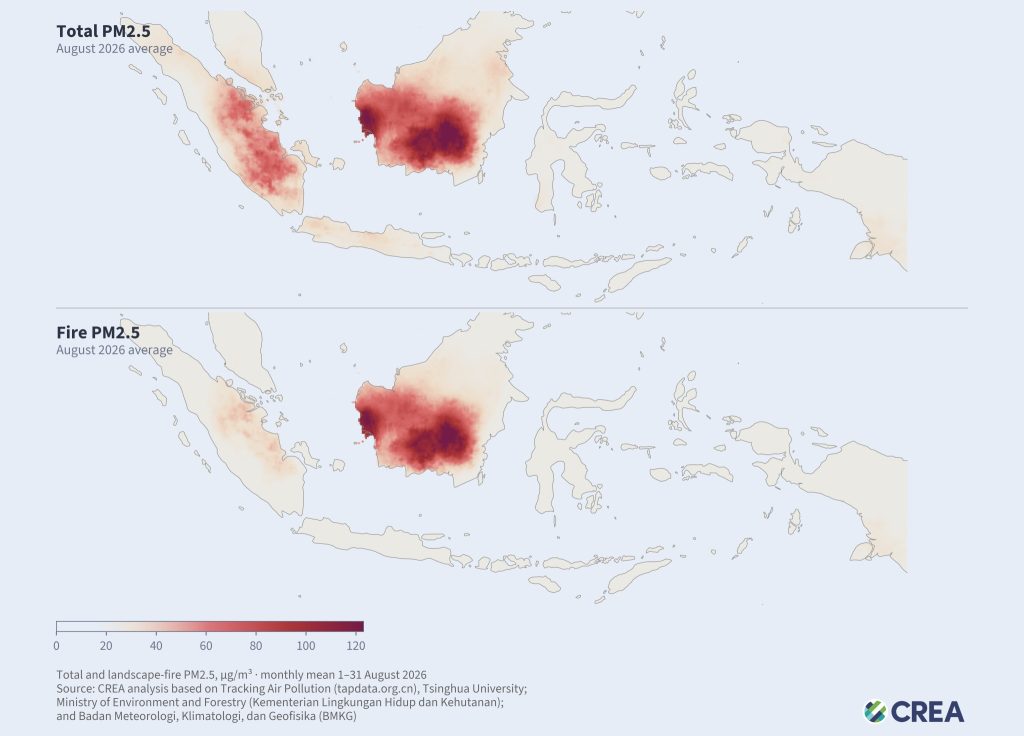
Source: CREA analysis based on Tracking Air Pollution (tapdata.org.cn), Tsinghua University; Ministry of Environment and Forestry (Kementerian Lingkungan Hidup dan Kehutanan); and Badan Meteorologi, Klimatologi, dan Geofisika (BMKG)
Fire activity also sharply worsened air quality in Kalimantan. CREA estimated that average PM2.5 concentrations in the region rose sixfold in August, from about 20 micrograms per cubic metre to 120 micrograms per cubic metre.
About 69% of Kalimantan’s population was exposed to air classified as unhealthy or worse during the month, according to the analysis.
PM2.5 refers to fine particulate matter that can penetrate deep into the respiratory system and is associated with a range of health risks.
Pollution beyond the fires
While Kalimantan experienced the sharpest deterioration during the fire season, Java recorded the largest estimated number of pollution-related deaths, at about 1,600 in August.
CREA estimated that around 90% of those deaths were associated with year-round pollution from fossil-fuel power plants, industry, transport and other non-fire sources.
At the peak of the August pollution episode, about 41 million Indonesians were exposed to unhealthy or worse air on August 18, according to CREA. The figure remained high at about 36.4 million people by the end of the month.
The findings are based on CREA’s analysis of air-quality and population exposure data. Its Indonesia air-quality tracker combines government monitoring stations with satellite-based fire activity and PM2.5 exposure estimates. CREA says its exposure estimates are adjusted against readings from Indonesian monitoring stations.
The analysis also comes as Indonesia faces heightened fire risks during a dry period. CREA noted that El Niño conditions can worsen air pollution by reducing rainfall, allowing pollutants to accumulate, while also increasing the risk of forest and peatland fires.
The findings suggest that addressing Indonesia’s air pollution health burden requires measures extending beyond fire prevention, including reductions in emissions from fossil-fuel power generation, industry and transport.
Separately, a recent study by Indonesian economic research group CELIOS estimated that the economic and health costs of forest and land fires from January to August 2026 could reach 39.29 trillion rupiah to 123.1 trillion rupiah.
CREA’s findings are estimates rather than official mortality counts, and the figures cover the 15 provinces identified as most affected in its analysis. (nsh)
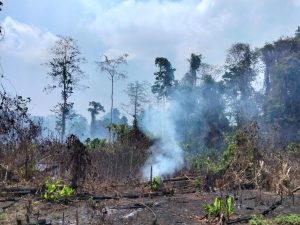
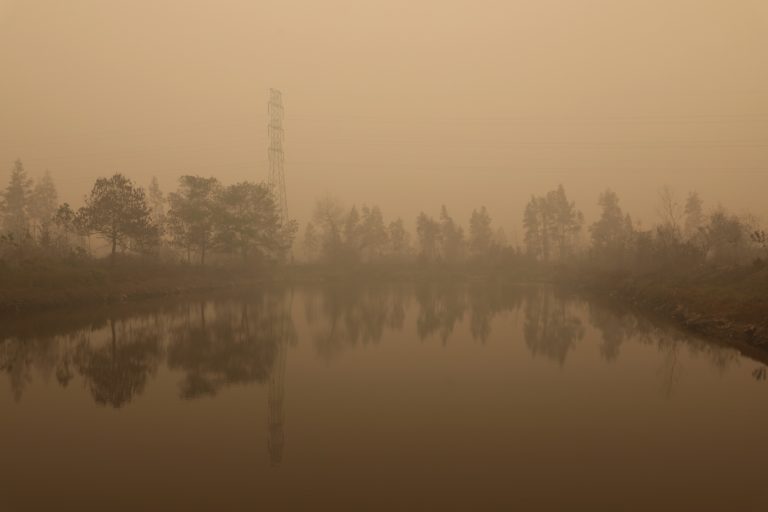
Banner photo: Thick smoke shrouded the area around the Pulang Pisau Forest and Land Fire Alert Field Post, Jabieren Sub-district, Pulang Pisau Regency, South Kalimantan, on Monday, 21 September 2026, circa 2pm WIB. (Source: BNPB)