Jakarta — Riau has taken a step toward establishing Indonesia’s first provincial jurisdictional forest carbon programme aligned with the Architecture for REDD+ Transactions’ (ART) TREES standard, as the province seeks to strengthen forest protection while attracting climate finance.
The United Nations REDD Programme (UN-REDD) said on Monday, September 7, that the Ministry of Forestry had endorsed its efforts to strengthen readiness for jurisdictional REDD+, including technical requirements, institutional arrangements, safeguards and governance.
The initiative, known as GREEN for Riau, aims to establish a province-wide framework for reducing emissions from deforestation and forest degradation and potentially accessing results-based finance and carbon markets.
“Our ambition is to protect forests and peatlands while creating real opportunities for communities,” Acting Riau Governor S.F. Hariyanto said in a statement. “By building one transparent provincial system, we aim to ensure that climate finance rewards measurable results, upholds strong safeguards and the people whose stewardship makes those results possible.”
The province is developing a Forest Reference Emission Level (FREL) consistent with Indonesia’s national framework and a provincial monitoring, reporting and verification (MRV) system. It is also working on social and environmental safeguards, benefit-sharing arrangements and rules for integrating carbon projects and community-led initiatives into a single jurisdictional accounting framework.
The arrangements are intended to prevent overlapping claims and double counting of emissions reductions across projects operating at different levels.
Haruni Krisnawati, an expert staff member to the forestry minister for climate change, said environmental and social integrity needed to be built into the programme from the beginning.
“This includes a reference level and MRV system consistent with the national framework, robust social and environmental safeguards, and clear benefit-sharing,” she said.
Riau has about 4.9 million hectares of peatland as well as extensive forest areas, making it a key province for Indonesia’s efforts to reduce land-use emissions and achieve its Forest and Other Land Use (FOLU) Net Sink 2030 target.
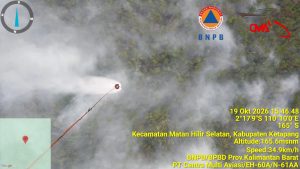
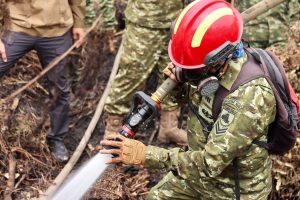
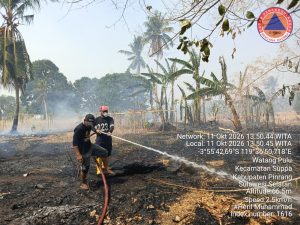
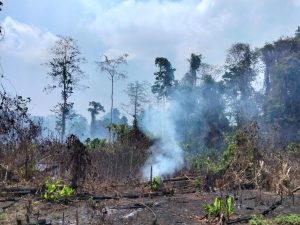
The province’s push also comes as Sumatra enters its dry season, when forest and peatland fires and haze risks typically increase. The initiative says long-term emissions reductions will depend not only on responding to fires but also on preventing them through improved water management, peatland rewetting and restoration, and better land and water governance.
“Protecting these forests is about far more than carbon; it is about water, public health, and long-term resilience for the people of Riau,” said Gita Sabharwal, United Nations Resident Coordinator in Indonesia.
The province is also seeking to ensure that women and vulnerable groups participate in decision-making and benefit from climate finance, in line with Indonesia’s national action plan on gender mainstreaming and social inclusion in climate change.
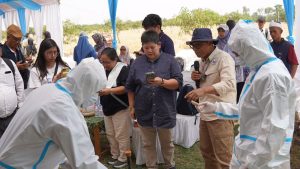
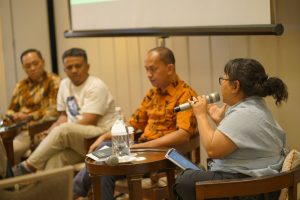
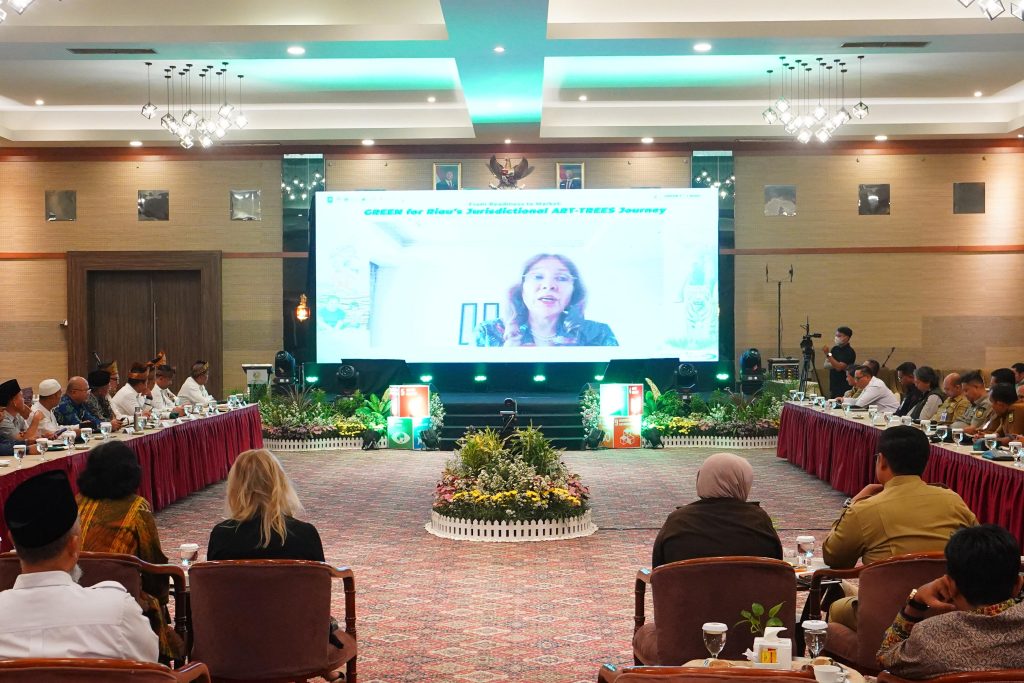
Over September 7-8, Riau is holding consultations involving provincial and national authorities, the United Nations, development partners, foreign governments, communities, technical experts and potential carbon buyers.
The meetings include consultations on Riau’s FREL, a visit to the Imbo Putui Customary Forest, discussions on benefit-sharing and a draft framework for integrating jurisdictional, project, concession and community-level carbon accounting.
The UK, which funds the initiative through its Foreign, Commonwealth & Development Office, said the province could provide a model for attracting private investment into forest protection.
“Riau has the opportunity to demonstrate how robust peatland emissions accounting and effective nesting can align private sector projects within a credible jurisdictional framework,” said Peter Rajadiston, Minister-Counsellor for Development at the British Embassy in Jakarta. The approach, he said, could help strengthen the integrity of carbon credits, investor confidence and potentially support premium pricing for high-quality credits.
However, Riau has not yet secured approval to issue ART-TREES credits. Its pathway remains subject to completion and validation of technical requirements, stakeholder consultations and the applicable ART-TREES registration, validation and verification processes.
The GREEN for Riau Initiative is supported by the UN-REDD Programme and the Food and Agriculture Organization, with funding from the UK government. (nsh)
Banner photo: Image generated by OpenAI’s DALL·E via ChatGPT (2024)