Jakarta – Indonesia’s deforestation reached 433,751 hectares in 2025, marking a sharp 66% increase from 261,575 hectares recorded the previous year, according to the State of Deforestation (STADI) 2025 report.
The report describes the spike as a “very loud alarm” for the new administration under President Prabowo Subianto, with analysts pointing to government policy and large-scale land allocation programs as key drivers. Around 18% of total forest loss—equivalent to 78,213 hectares—occurred within the 20.6 million hectares designated for food, energy, and water reserve programs.
Auriga Nusantara Managing Director Timer Manurung on Tuesday, March 31, said the findings indicate that state policy is playing a central role in accelerating forest loss. “Government policy is the main driver of our deforestation record,” he said, noting that approximately 58% of deforestation in 2025 occurred legally within concessions or designated development areas.
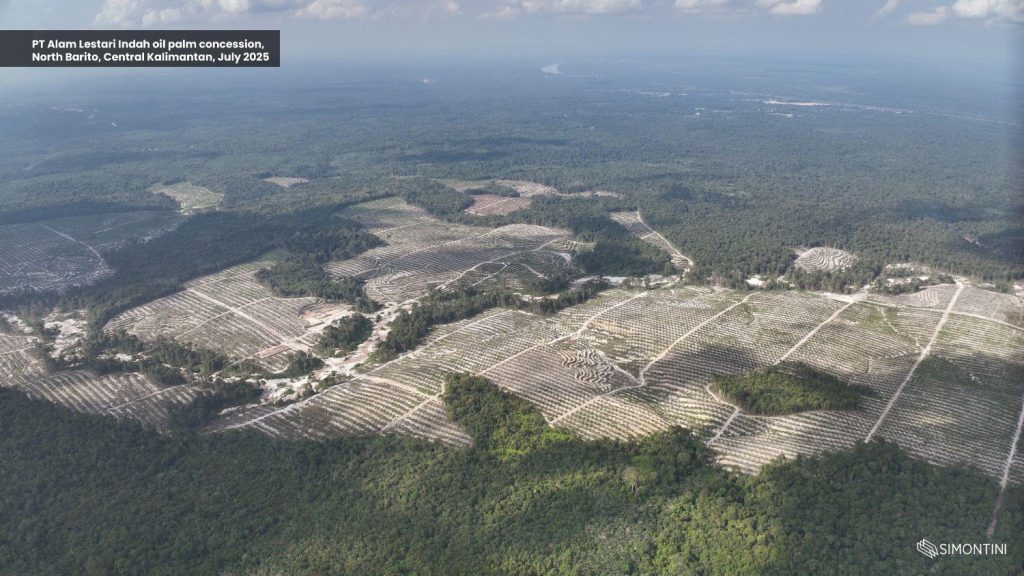
Regionally, Kalimantan remained the largest contributor to deforestation, continuing a trend observed since 2013. Papua recorded the largest increase in forest loss in absolute terms, while Java experienced the highest percentage surge at 440%. Northern Sumatra provinces, including West Sumatra, Aceh, and North Sumatra, saw dramatic increases following recent ecological disasters, with forest loss rising by over 1,000% in some areas.
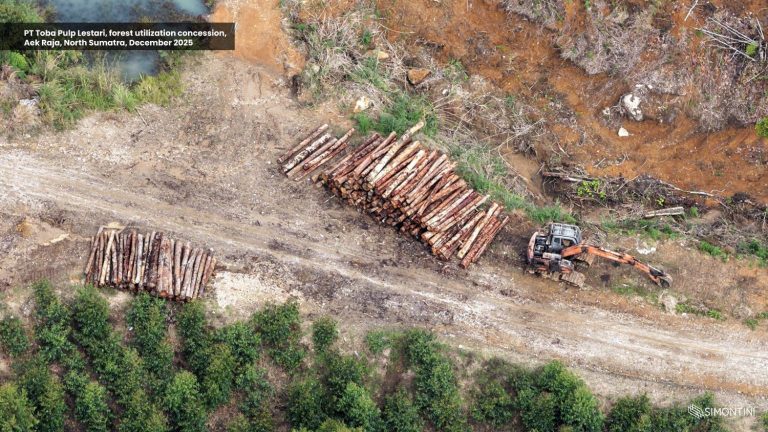
The report also highlights ongoing pressure from commodity expansion, particularly nickel mining in Sulawesi and Maluku, as well as oil palm and industrial timber plantations in Kalimantan and Papua. Approximately 71% of deforestation occurred within forest estate areas managed by the government, while the remaining 29% took place in other land-use zones.
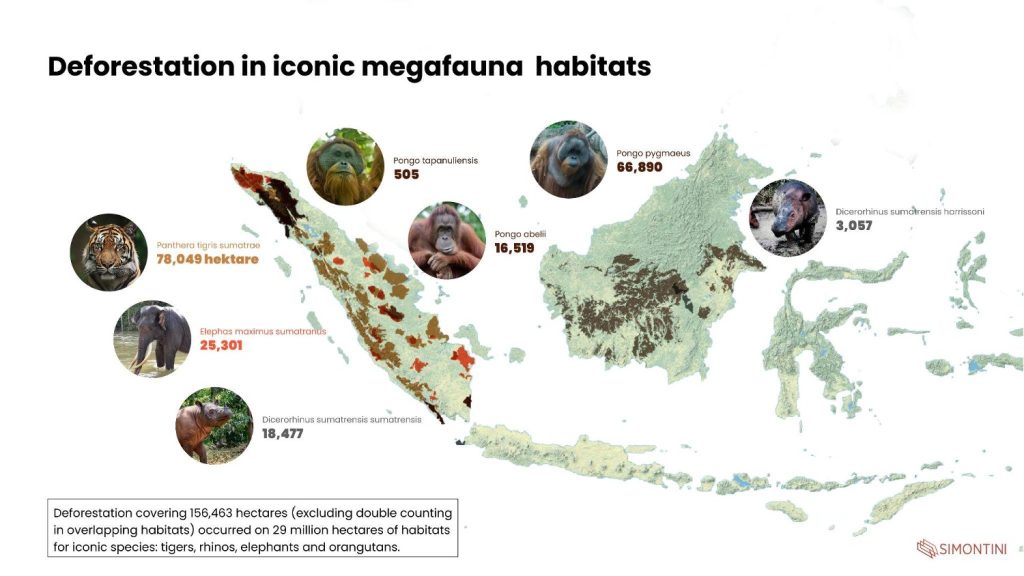
Beyond climate implications, the report warns of severe biodiversity impacts. Deforestation in 2025 affected 156,463 hectares of habitats for critically endangered species. The Sumatran tiger lost 78,049 hectares of habitat, followed by the Bornean orangutan at 66,890 hectares. Smaller but significant losses were also recorded for the Sumatran elephant, Sumatran rhino, and the critically endangered Tapanuli orangutan, which lost 505 hectares of its already limited range.
Researchers used a combination of satellite imagery, deep learning models, and field verification across 16 provinces to produce the analysis, achieving an estimated accuracy of 89%.
The findings underscore growing concerns that Indonesia’s development agenda—particularly under national strategic programs—may be increasingly at odds with forest protection commitments, raising questions about the country’s ability to balance economic expansion with environmental sustainability. (nsh)
Banner photo: Deforestation in North Sumatra. Source: State of Deforestation (STADI) 2025 report/Auriga Nusantara