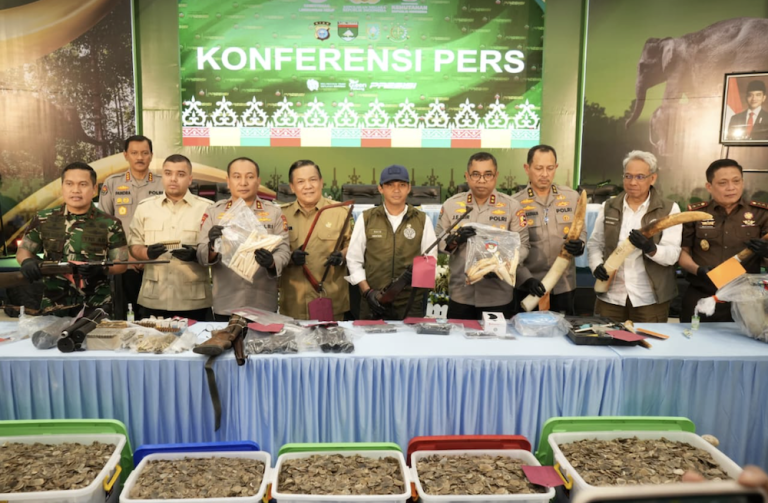
Jakarta – The Riau Regional Police (Polda Riau) have dismantled a professional cross-province syndicate responsible for the gruesome killing of a Sumatran elephant in Pelalawan Regency, the local Riau government stated on Tuesday, March 3. During a large-scale operation, authorities arrested 15 suspects across Riau, West Sumatra, and Java, while three others remain at large.
The arrests follow the discovery of a 40-year-old male elephant found dead and beheaded in early February 2026 near Desa Lubuk Kembang Bunga. The animal’s tusks, which can fetch up to Rp 130 million (approx. USD 8,300) on the black market, had been removed. Investigators recovered six elephant tusks, homemade firearms, ammunition, and even a machine used to carve ivory into smoking pipes to disguise their origin for collectors.
“The suspects held specific, supporting roles, ranging from financiers and field executors to intermediaries and fences,” stated Riau Police Chief Inspector General Herry Heryawan. Beyond ivory, the syndicate was also found in possession of hundreds of kilograms of pangolin scales and tiger parts, highlighting a broad assault on Indonesia’s endangered species.
A “systemic failure” in conservation
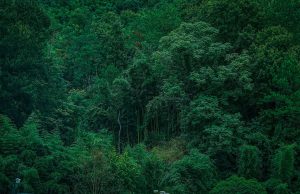
The killing took place within an industrial forest concession managed by PT Riau Andalan Pulp and Paper (RAPP), a subsidiary of the APRIL Group. The location is part of a high-conservation-value buffer zone and an elephant movement corridor bordering the Tesso Nilo ecosystem.
Environmental group Jikalahari has condemned the incident as a “systemic failure” of wildlife protection within corporate concessions. While the company reported the finding on February 2, forensic examinations revealed that the elephant had been shot twice in the head before being mutilated. Jikalahari has called for the government to hold concession holders accountable for illegal activities occurring on their land.
Government pledges reform
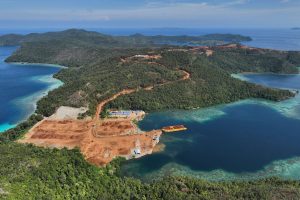
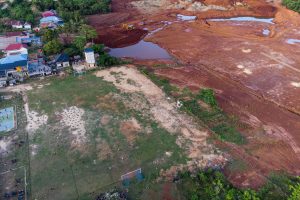
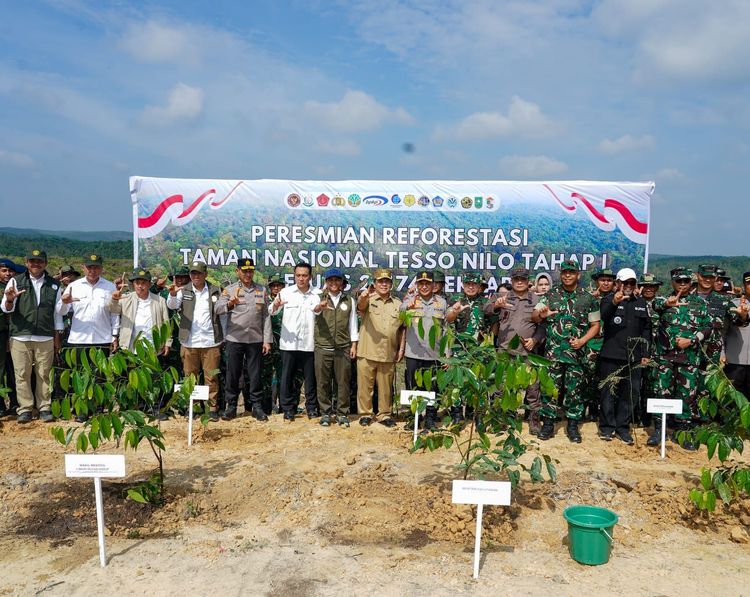
The Ministry of Forestry has officially launched a reforestation program in Tesso Nilo National Park, Riau, as part of a broader effort to restore degraded forest ecosystems in the province. The initiative was inaugurated on March 3, 2026, by Forestry Minister Raja Juli Antoni and attended by representatives from the central and regional governments as well as law enforcement authorities. The program follows a government policy to restore forest functions in areas that have experienced significant pressure from land conversion, including oil palm cultivation.
Speaking at the launch, Raja Juli Antoni said the recovery of Tesso Nilo is a national priority due to its ecological importance as a key habitat for the Sumatran elephant and other wildlife. The first phase of restoration in 2026 will focus on 2,574 hectares, with a long-term target of rehabilitating 66,704 hectares by 2028. Initial planting began on around 400 hectares of former oil palm land with 2,000 forest seedlings selected through scientific assessments to support wildlife habitat and food sources. The government said the program will also involve strengthened law enforcement, clarification of land status, and community engagement to ensure the restoration process proceeds effectively.
However, critics like Jikalahari remain sceptical, labelling the government’s response as “reactive”. They argue that without strict compliance audits of corporations and a fundamental shift in how peatlands and wildlife corridors are managed, Riau’s natural heritage—and its iconic elephants—will remain under constant threat. (nsh)
Banner photo: mediacenter.riau.go.id