Jakarta — Global temperatures are likely to exceed the 1.5°C warming threshold within the next few years, increasing the risk of severe climate impacts and irreversible changes, but governments can still limit the extent of the overshoot and eventually bring warming back below the Paris Agreement goal, a new United Nations report said.
The report by the UN Environment Programme (UNEP), *Limiting Overshoot*, launched on Wednesday, September 2, identifies an “overshoot, peak and decline” pathway as the best remaining option for minimising the duration and magnitude of warming above 1.5°C.
Under the most optimistic scenario, global temperatures would peak at around 1.8°C above pre-industrial levels, while most other scenarios project higher levels of warming.
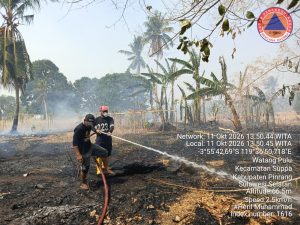
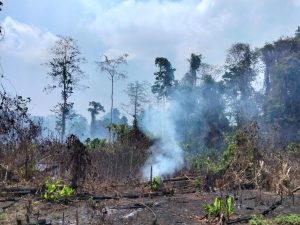
“This summer’s scorching heat, raging wildfires and deadly floods are a warning of what lies ahead. We must make the overshoot above 1.5 degrees as small and short as possible,” UN Secretary-General António Guterres said. “That demands an overshoot of ambition.”
The Paris Agreement calls for limiting the increase in global average temperature to well below 2°C above pre-industrial levels while pursuing efforts to limit it to 1.5°C.
Risks grow with every fraction of a degree
UNEP said climate impacts would intensify with every additional fraction of a degree above 1.5°C and with every year temperatures remain elevated.
The consequences could include more intense heatwaves and other extreme weather, accelerating ecosystem loss and increasing threats to small island states and low-lying coastal cities. Food and water security, human health, infrastructure and economies would also face growing damage.
Higher and prolonged warming would also increase the likelihood of crossing climate tipping points, the report said. These include destabilisation of major ice sheets, degradation of the Amazon rainforest and disruption of the Atlantic Meridional Overturning Circulation, a major system of ocean currents that helps regulate the climate.
Some changes could occur abruptly, while others would accumulate gradually, UNEP said.
“There are no good outcomes if we remain above 1.5°C,” UNEP Executive Director Inger Andersen said. “Across the globe, extreme heatwaves are already proving that climate impacts will strike faster, hit harder, and last longer – costing more lives and causing deeper disruption.”
Emissions cuts remain critical
The report says the only way to keep the temperature peak as low as possible is through immediate and sustained cuts in greenhouse gas emissions, including methane, followed by net-zero emissions and eventually net-negative emissions.
Carbon dioxide removal (CDR), which involves removing carbon dioxide from the atmosphere and storing it through measures such as afforestation, will be needed to help bring temperatures down, UNEP said.
But the agency stressed that CDR cannot substitute for deep emissions reductions. It said a return below 1.5°C would only be credible if peak warming remains well below 2°C and residual emissions are reduced.
Strong governance will also be needed to ensure that carbon removal is deployed responsibly and does not undermine environmental integrity or worsen inequalities.
The report also calls for mitigation and adaptation to advance together. Measures that can deliver both benefits, including nature-based cooling, should be prioritised, while adaptation efforts need to become more transformational as climate risks evolve.
COP31 seen as opportunity for action
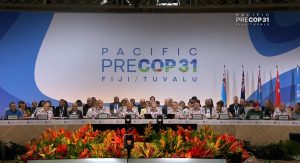
The findings come as countries prepare for COP31, the UN climate summit due to take place in Türkiye in November.
Chris Bowen, Australia’s climate change and energy minister and president of negotiations for COP31, said every fraction of a degree above 1.5°C would bring increasingly severe impacts, particularly for Pacific nations.
“The recent energy crisis has reminded the world of the need to reduce our dependence on fossil fuels, accelerate the transition to renewable energy and bolster climate cooperation,” Bowen said.
COP31 should be an opportunity to turn ambition into action, he said, including accelerating the shift to renewable energy and strengthening climate cooperation.
COP31 President-Designate Murat Kurum said exceeding 1.5°C should not be treated as a permanent new target.
“The Overshoot Report makes clear that exceeding 1.5°C should not be seen as a new destination, but as a pathway we must urgently work to minimise and reverse,” Kurum said.
He called for faster electrification, reductions in methane emissions from waste and stronger climate resilience in cities and marine and coastal ecosystems.
A hotter world may leave permanent changes
Even if temperatures can eventually be brought back below 1.5°C, UNEP warned that years of higher warming will leave lasting consequences.
Some communities could be forced to relocate or change their livelihoods, while governments and societies will have to manage the consequences of permanently altered environmental and economic conditions.
Those changes raise difficult questions around justice, political legitimacy and the distribution of power and resources, the report said. UNEP therefore described an “overshoot, peak and decline” pathway as a next-generation climate challenge that cannot be postponed. Immediate action, the report said, will determine how high temperatures peak, how long they remain elevated and whether the world can eventually return to below 1.5°C. (nsh)
Banner photo: Image generated by OpenAI’s DALL·E via ChatGPT (2024)