The push to develop carbon capture, utilisation and storage (CCUS) technology to a gigatonne scale by 2035 has become one of the controversial points in the draft main decision of the 31st United Nations Climate Change Conference (COP31). The proposal is seen as risking the creation of scope for the continued production of oil and gas without a firm commitment to reducing the use of fossil fuels.
The controversy also contributed to the failure of more than 190 countries to reach a consensus on the main document, or ‘decision text’, proposed by the COP31 Presidency. The negotiations, which continued until Sunday 22 November, ultimately concluded without the document being adopted.
In the final draft, comprising 94 paragraphs, the terms “fossil fuels”, “oil” and “coal” do not even appear. The phrase “transition away from” fossil fuels does not appear either, even though the document acknowledges the risk of the world exceeding the 1.5-degree Celsius global warming threshold.
Conversely, the proposal explicitly calls for the accelerated development of CCUS to a gigatonne scale by 2035. For a number of civil society groups, this approach does not sufficiently address the root causes of the climate crisis unless it is accompanied by a reduction in the use of fossil fuels.
Stela Herschmann, Head of International Policy at the Climate Observatory, believes the draft could in fact represent a step backwards for global climate action.
“It’s fortunate that it wasn’t approved, because the text opened the door to CCUS and would have been a setback,”she said.
According to Herschmann, the drafting of the decision cover also diverted attention and time away from the main negotiating room. The document, he said, was not a request from the participating countries, but rather an initiative of the COP Presidency which ultimately failed to secure collective support.
Countries rejected the compromise
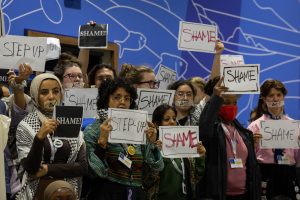
Opposition to the draft Antalya Pact has come from a number of countries, including the Marshall Islands, Norway, Panama, Vanuatu and the European Union. The differences of opinion centre primarily on calls for the agreement to set out a path towards reducing dependence on fossil fuels and to provide clearer funding support for vulnerable countries.
Ireland’s Climate Minister, Darragh O’Brien, who co-led the European Union’s negotiations, stated that the bloc could not support an agreement that did not even mention fossil fuels.
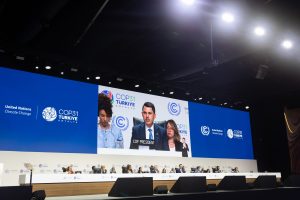
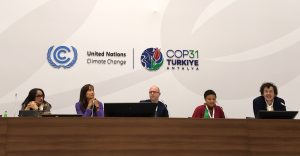
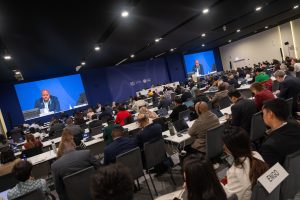
COP31 President Murat Kurum acknowledged that not all countries accepted the draft. As no consensus was reached, the decisions set out in the document could not be adopted at the closing plenary session.
“I understand that there is no agreement on this text. For that reason, these decisions have not been adopted,” said Kurum.
A deadlock has also arisen over the issue of adaptation funding. Developing countries and groups of countries most affected by climate change have emphasised the commitment to at least double adaptation funding by 2035. However, the draft does not specify a baseline figure or a clear nominal target.
The document acknowledges that any rise in global temperatures will increase the risk of loss and damage caused by climate change. The lack of clarity regarding financial support leaves vulnerable countries questioning the sincerity of developed nations’ commitments to help them cope with the impacts of the climate crisis.
Leadership failure
The Climate Observatory believes that the failure to adopt the Antalya Pact does not necessarily indicate a weakening of multilateralism or the Paris Agreement. On the contrary, this rejection reflects the stance of vulnerable countries that are unwilling to accept an agreement with energy transition targets deemed too weak.
“The drama of the final moments in Antalya does not mean that multilateralism or the Paris Agreement are weaker: on the contrary, it shows that a line has been drawn by the most vulnerable nations, which no longer accept delays in the energy transition,” the organisation wrote in its official statement.
A similar view was expressed by Ani Dasgupta, CEO of the World Resources Institute (WRI). According to him, the failure to reach a joint agreement does not mean that the Paris Agreement has failed, but rather highlights the lack of political leadership in finding common ground to tackle the climate crisis.
Dasgupta said that when narrow national interests take precedence over shared responsibility to tackle the climate crisis, the whole world suffers the consequences. He added that climate conferences are not merely a platform for posturing. Every country must work hard and in good faith to find an ambitious common ground.
COP31 lasted more than two weeks and was the longest UN climate conference to date, surpassing COP15 in Copenhagen in 2009. The failure to adopt the main document also marked the first major deadlock in COP negotiations since that Copenhagen meeting.
Amid the pressures of the climate crisis and uncertainty over global energy supplies, the Antalya negotiations revealed that no agreement has yet been reached on the direction of fossil fuel reduction. The debate over the role of CCUS in the draft decision further highlighted differing views on whether carbon capture technology can form part of the climate solution without obscuring the need to transition away from fossil fuels. (Hartatik)
Banner photo: © UN Climate Change – Kubilay Citfci