Jakarta – Indonesia’s recent policy signals reflect a growing recognition that energy security and the energy transition are increasingly intertwined, analysts say. Indonesia is positioning itself at the forefront of Southeast Asia’s clean energy response to the ongoing global energy crisis, as policymakers across ASEAN face mounting pressure to address fuel price volatility and long-standing dependence on imported fossil fuels.
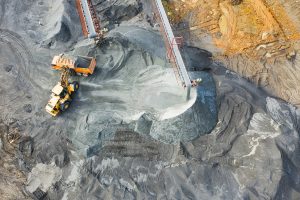
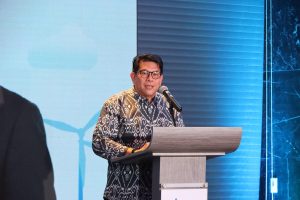
At a regional media briefing held ahead of the 48th ASEAN Summit in the Philippines, Putra Adhiguna, managing director of the Energy Shift Institute, said: “Oil production has been declining while coal production continues to rise,” he said, underscoring the structural challenges shaping Indonesia’s transition pathway.
Electrification, particularly in the transport sector, will be “a very critical part” of reducing reliance on imports, he added.
In recent weeks, Indonesia has stepped up its response, including plans for a large-scale solar expansion programme and renewed electric vehicle (EV) incentives, alongside the formation of a special task force to accelerate the transition.
These developments come as ASEAN countries confront a shared vulnerability: fossil fuel-dependent energy systems that are highly exposed to geopolitical shocks. According to Rex Amancio of the Global Renewables Alliance, the crisis triggered by Middle East tensions has highlighted how supply disruptions and price spikes can ripple across the region.
“This is not just a short-term disruption—it is a structural issue,” Amancio said, noting that governments are increasingly pairing emergency measures such as subsidies with longer-term policies aimed at reducing fossil fuel dependence.
“The shift towards homegrown renewable energy is fundamentally about independence and resilience,” Amancio said.
Across Southeast Asia, early signs of a dual-track response are emerging. While many governments have introduced short-term protections for consumers, several are also accelerating renewable energy deployment, grid upgrades and storage integration to build resilience.
Indonesia’s strategy reflects this shift. Beyond solar expansion, the government is advancing diesel-to-solar replacement programmes in remote areas and strengthening international partnerships, including through the Just Energy Transition Partnership (JETP).
However, implementation remains a key challenge. Putra cautioned that while ambitions are rising, translating them into delivery has proven difficult. “The crucial test will actually be happening within the pilot,” he said, referring to efforts to scale up projects under JETP and other initiatives.
The broader ASEAN picture shows similar tensions between ambition and execution. In the Philippines, demand for rooftop solar has surged sharply as households and businesses seek to shield themselves from rising energy costs.
“We’re not struggling to convince people to adopt solar—we’re struggling now to deliver it,” said Brenda Valerio of New Energy Nexus. Weekly customer inquiries have increased fivefold since the crisis, but installation capacity has lagged due to supply chain constraints, workforce shortages and financing gaps.
Analysts say this mismatch between demand and delivery is becoming a defining feature of the region’s energy transition. While falling renewable costs and rising fossil fuel prices are driving adoption, policy and infrastructure are struggling to keep pace.
The newly launched global energy policy tracker presented during the briefing shows that countries are increasingly shifting from crisis response to structural transformation—focusing on scaling renewables, electrifying end-use sectors and strengthening grids.
For ASEAN, regional cooperation is expected to play a critical role. Greater power system interconnection and coordinated investment in storage and grid infrastructure could help reduce vulnerability to external shocks while supporting long-term decarbonisation.
Still, divergent national contexts—from Indonesia’s fuel subsidies to the Philippines’ market-driven demand—mean that pathways will vary widely across the bloc.
“Energy security may mean different things for different countries,” Putra said, noting that some governments are also turning to biofuels as a short-term solution, raising questions about long-term sustainability trade-offs.
As ASEAN leaders gather for the summit, the central challenge remains how to convert rising momentum into durable policy frameworks that can deliver both energy security and climate goals. The 48th ASEAN Summit and Related Meetings are being held in Cebu, Philippines, from May 6–8, 2026. (nsh)
Banner photo: shutterstock.com