Jakarta — The 21st session of the United Nations Forum on Forests (UNFF21) concluded last week with a renewed call for urgent, scaled-up action to halt deforestation and accelerate progress toward global forest goals, as countries acknowledged that current efforts remain insufficient to meet 2030 targets.
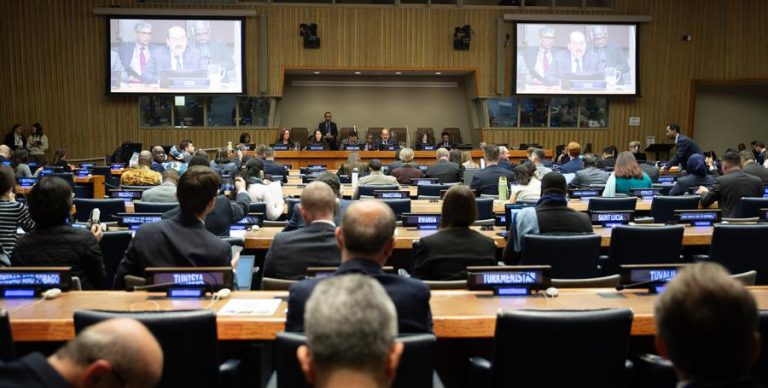
Held at UN Headquarters from May 11–15, the forum brought together around 400 participants from governments, international organisations, and civil society to assess progress on the UN Strategic Plan for Forests (2017–2030) and chart priorities for the next biennium, as the International Institute for Sustainable Development (IISD) summarised on Monday, May 18.
At the opening, UN Economic and Social Council (ECOSOC) President Lok Bahadur Thapa underscored the stakes, describing forests as a “test of our ability to deliver on promises of multilateralism.” Delegates were presented with the Global Forest Goals Report 2026, which found that while progress is moving in the right direction, it is not advancing at the speed or scale required.
The report highlighted persistent challenges, including continued deforestation and forest degradation, despite growing investments in restoration and sustainable forest management (SFM). Global forest area has declined by around 40 million hectares over the past decade, while financing remains far below the estimated USD 300 billion needed annually to achieve forest-related goals.
In response, countries adopted an omnibus resolution outlining actions for 2027–2028, covering areas such as financing, monitoring, stakeholder engagement, and international cooperation. The resolution calls for increased investment from all sources, stronger capacity-building, and enhanced technology transfer to support forest conservation and restoration efforts.
A key focus of discussions was the widening funding gap and declining voluntary contributions to the UNFF Trust Fund, which supports the forum’s work. Delegates noted that resource constraints are intensifying even as the forum’s mandate expands, raising concerns about implementation capacity.
Negotiations also revealed persistent divides between developed and developing countries, particularly on financing responsibilities, technology transfer, and the role of national policies. Despite these tensions, the final resolution was adopted by consensus after last-minute objections were withdrawn.
The forum further emphasised the importance of aligning forest action with broader global agendas, including climate, biodiversity, and land degradation frameworks. Delegates highlighted upcoming opportunities such as the UN Decade on Afforestation and Reforestation (2027–2036) to mobilise coordinated action.
Looking ahead, UNFF21 initiated preparations for the 2030 review of the International Arrangement on Forests and encouraged countries to step up voluntary national contributions and reporting. Inputs from the session will also inform discussions at the High-level Political Forum on Sustainable Development.
As the session closed, participants reiterated that while policy frameworks and solutions are largely in place, the main challenge lies in implementation—requiring stronger political will, financing, and international cooperation to safeguard the world’s forests. (nsh)
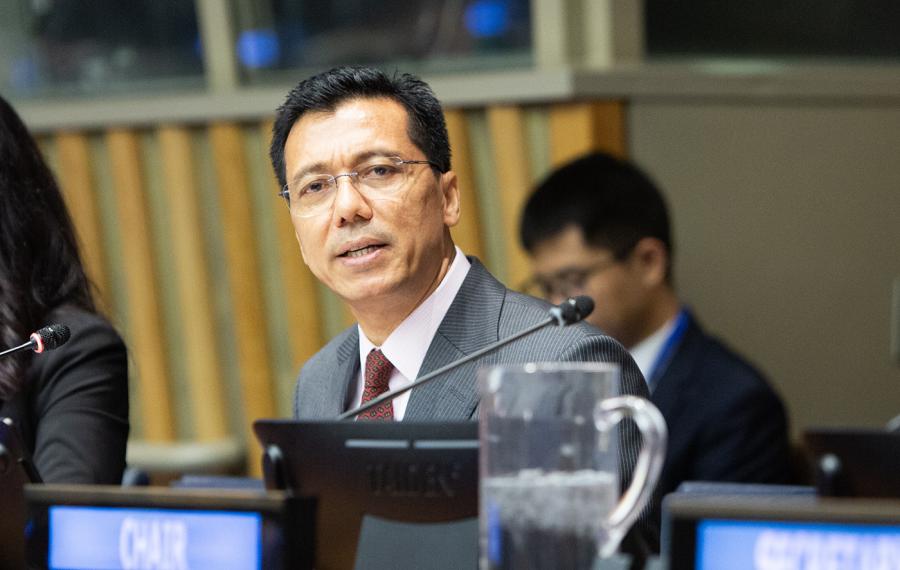
Banner photo: Opening Plenary of the UNFF21. Photo by IISD/ENB | Angeles Estrada Vigil