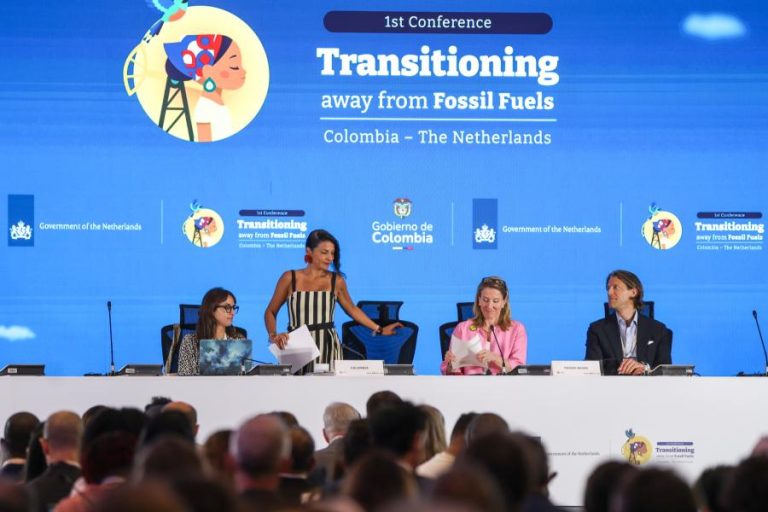
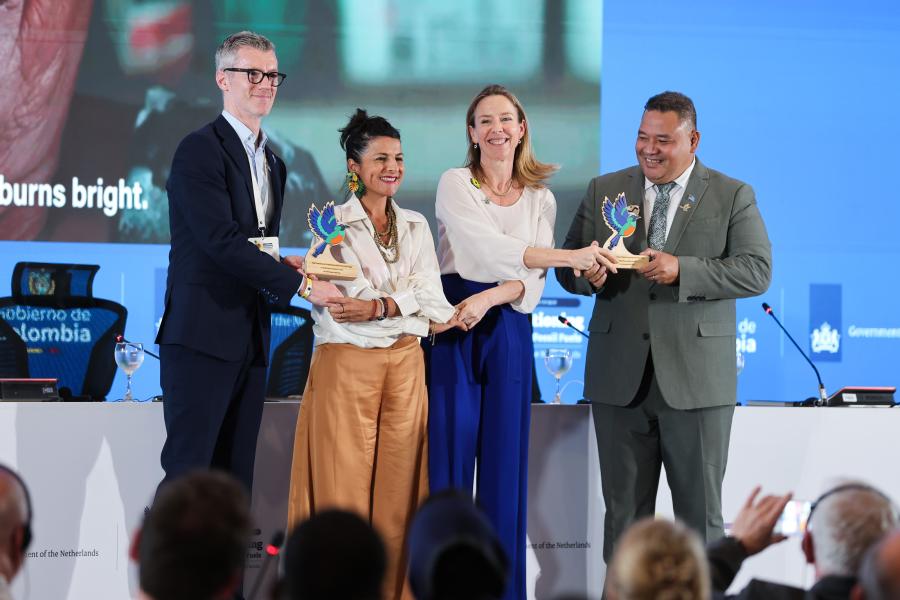
Jakarta — Dozens of countries agreed to strengthen international coordination on phasing out fossil fuels at a high-level conference in Santa Marta, committing to develop aligned national and regional roadmaps, reform trade policies, and address persistent financing barriers to the energy transition.
The meeting, held on April 28–29, 2026 and co-hosted by Colombia and the Netherlands, concluded with a shared push to accelerate cooperation beyond existing climate processes, including those under the United Nations. Participants also highlighted a major gap in current climate plans: emissions from the fossil fuel supply, which remain largely unaddressed.
During the high-level segment on April 28, leaders emphasised scaling up renewable energy deployment, citing economic resilience and energy security benefits amid ongoing global energy disruptions, IISD reported. According to conference outcomes released on April 29, 57 countries supported the creation of a new dedicated diplomatic platform focused specifically on the structural phase-out of fossil fuels—complementing, rather than replacing, existing forums such as COP negotiations.
Experts and policymakers framed the Santa Marta outcome as a shift toward implementation. “The next phase will be defined by implementation,” said Maria Mendiluce of the We Mean Business Coalition, stressing the need for aligned policies and predictable investment environments to enable electrification at scale.
Climate leaders also underscored the urgency of coordinated action. Former Irish president Mary Robinson, and a founding member of The Elders, said the transition must be grounded in justice and accelerated through collective efforts. “This coalition of coalitions can drive these transitions forward with the fierce urgency they demand. The momentum from Santa Marta is heartening – we must keep building on it,” she said.
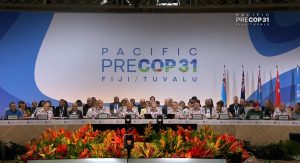
The conference comes amid heightened geopolitical and energy security concerns following the global energy crisis of recent years, which participants said reinforces the need for faster and more coordinated action. The next meeting in the “transitioning away from fossil fuels” process is scheduled for 2027 in Tuvalu, to be co-hosted by Tuvalu and Ireland. (nsh)
Banner photo source: IISD/ENB