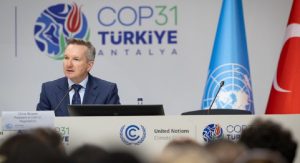
The transition towards the use of electricity generated from clean energy sources is expected to continue even though the UN Climate Change Conference (COP31) in Antalya, Türkiye, concluded without a consensus agreement on the main text. Market shifts, investment in technology and support from the business sector are seen as the key drivers of the acceleration of global electrification.
Anna Freeman, Global Campaign Coordinator for Electrify Now, said in a statement on Monday, November 23, that the failure to reach an agreement amongst the 194 parties to the Paris Agreement does not alter the prospects for electrification. According to her, the transition to electric technology offers economic benefits, enhances energy security and reduces greenhouse gas emissions.
“Consumers are voting with their wallets in favour of electric technologies. In 2024, one in five cars sold were electric. Today, we are headed for almost one in three,” Freeman said.
Similar changes are also taking place in the business sector. As many as 90 per cent of companies expect the majority of their operations to switch to electricity by 2035. This move is being taken to reduce energy costs, boost competitiveness and strengthen the security of energy supply.
She added that the increased demand for electricity resulting from electrification can be met through the expansion of solar and wind power generation. Consequently, increased electricity consumption need not be accompanied by a rise in emissions if the supply comes from renewable energy sources.
The 35×35 electrification target remains relevant for accelerating the reduction of emissions and limiting global warming to below 1.5 degrees Celsius, Freeman said.
The latest special report from the International Energy Agency (IEA) on electrification shows that achieving the 35×35 target has the potential to reduce emissions from final energy use by 40 per cent by 2035. Over the same period, average household energy bills are projected to fall by 15 per cent.
The economic benefits can also be felt by countries that have hitherto relied on fossil fuel imports. Savings on import costs are estimated to reach between 400 billion and 500 billion US dollars per year.
Support for this agenda is beginning to grow. Freeman noted that around 80 national governments have endorsed the 35×35 Global Electrification Pledge. This figure has risen, with more than 100 governments having declared their support for electrification by the end of COP31.
In addition, more than a dozen countries have published new plans or updated their electrification and energy access strategies. These developments demonstrate that the energy transition agenda does not merely depend on political agreements reached at climate conferences, but is also beginning to be translated into national policy.
Support from the private sector has also grown. More than 185 companies, with a combined annual revenue of 1.73 trillion US dollars, have signed a global business declaration. They are urging governments to accelerate electrification and to make clean electricity one of the main pillars of their economic and industrial strategies.
At COP31, the Electrify Now movement also launched the Electrify Now Finance Coalition. This initiative, which will run until COP33 in 2028, aims to help developing countries prepare electrification projects that are viable for investment, reduce financing risks, overcome regulatory barriers and expand access to funding.
Meanwhile, the Electrification Implementation Package, which forms part of the Global Climate Action Agenda, documents the progress of programmes in more than 150 countries and the European Union, 37 cities, and more than 260 companies.
Freeman believes that the next challenge is to ensure that developing countries are not left behind in this energy transition. Access to affordable finance is a key factor in enabling these countries to reap the benefits of electrification, ranging from improved energy services to the development of clean industries.
“It’s now time for system planning, public policy and investment to get in front of the market shifts to unlock the full economic and productivity potential that electrification offers,” she said.
Freeman also emphasised that electrification acceleration needs to be supported by policies and investment capable of reaching all countries, including developing countries and emerging markets.
In the run-up to COP32 in Ethiopia, Electrify Now plans to capitalise on the momentum built up throughout 2026 to accelerate structural change in the energy system and reduce global emissions. (Hartatik)
Banner photo: Image generated by OpenAI’s DALL·E via ChatGPT (2024)