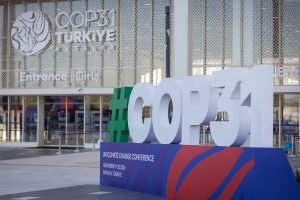
Jakarta – World leaders and climate negotiators are gathering in Antalya for the 31st United Nations Climate Change Conference (COP31), facing mounting pressure to turn climate commitments into concrete action on fossil fuel transition, adaptation finance and protection of vulnerable communities.
The November 9-20 conference comes amid heightened energy insecurity and escalating climate impacts, with developing countries demanding greater financial support to cope with increasingly severe floods, droughts, heatwaves and other climate-related disasters.
Expectations are particularly high among African nations, Pacific island states and other climate-vulnerable countries, which want COP31 to deliver more accessible funding, stronger emissions reductions and practical measures to accelerate the transition to clean energy.
The conference will be jointly led by Türkiye and Australia, with Australia overseeing negotiations and Türkiye managing the Action Agenda. Their ability to coordinate the two tracks will be closely watched as countries seek agreement on contentious climate issues.
The high-level segment on November 11-12 is expected to feature speeches by Brazilian President Luiz Inácio Lula da Silva, UN Secretary-General António Guterres, Australian Prime Minister Anthony Albanese and Turkish President Recep Tayyip Erdoğan.
Fossil fuel transition takes centre stage
One of COP31’s biggest tests will be whether countries can build momentum behind the commitment to transition away from fossil fuels agreed at COP28.
The issue has gained renewed urgency following a year of energy insecurity, highlighting the vulnerability of countries dependent on fossil fuel supplies and the need to strengthen energy security.
Brazil, which presided over COP30, has released a report outlining pathways for countries to advance the transition on both the supply and demand sides. Attention will now turn to how the Turkish-Australian presidency translates those recommendations into international action.
A series of announcements and discussions are expected during the first week, including initiatives by the Powering Past Coal Alliance and the Beyond Oil and Gas Alliance on November 10. A high-level dialogue on fossil fuel transition will follow on November 11, while a ministerial meeting in Santa Marta is scheduled for November 18.
Countries may also announce plans to develop national fossil fuel transition roadmaps.
Africa demands adaptation finance delivery
For African countries, climate finance remains a central priority.
The African Group of Negotiators (AGN) has proposed new agenda items covering delivery of the commitment to at least triple adaptation finance by 2035, the Green Climate Fund and climate-related trade issues.
Nana Dr. Antwi-Boasiako Amoah, the AGN’s new chair, said Africa wanted COP31 to move beyond promises and establish a clear pathway for delivering adaptation finance.
“At COP31, Africa’s priority is clear: turn the COP30 commitment to at least triple adaptation finance by 2035 to a clear delivery pathway,” he said, calling for clarity on the baseline, developed countries’ responsibilities and financing arrangements.
“For Africa, adaptation finance is not just about numbers. It is about protecting our lives and livelihoods, building resilience of our communities and securing sustainable development for all across the continent.”
The European Union, meanwhile, enters the negotiations seeking to defend the Paris Agreement and preparations for the next Global Stocktake.
The EU and its 27 member states provided EUR 32.3 billion in public climate finance in 2025 and mobilised a further EUR 9.3 billion in private finance. However, the bloc has ruled out making new financial pledges at COP31, putting the focus on practical cooperation and investment in clean energy, electricity grids and fossil fuel transition.
Nepal disaster highlights loss and damage urgency
The devastating glacier collapse in Nepal is expected to bring renewed attention to the growing costs of climate-related disasters, particularly in mountain regions.
The disaster has reportedly left more than 1,500 people dead and over 5,600 missing, with reconstruction needs potentially reaching USD 5 billion, equivalent to about a tenth of Nepal’s gross domestic product.
Foreign Minister Shishir Khanal will lead Nepal’s delegation to Antalya, where the country is expected to press for faster and more accessible loss and damage funding.
The Loss and Damage Fund has allocated USD 20 million to Nepal, alongside USD 1.6 million for administrative oversight fees. The disaster is likely to intensify questions about whether existing financing arrangements can respond adequately to the scale and urgency of climate impacts.
For small island states, the priorities are similarly urgent.
Ambassador Ilana Seid, chair of the Alliance of Small Island States, said countries needed emissions cuts that would minimise the extent and duration of any overshoot of the 1.5°C temperature threshold, alongside accessible climate finance for adaptation and loss and damage.
She also called for greater financing for ocean solutions, including clean shipping and coastal protection, arguing that oceans should receive the same recognition in climate policy as forests.
Electrification offers common ground
Electrification could emerge as an area of common ground between the two COP31 hosts, which are pushing for a global target of 35% electrification by 2035 under the 35-by-35 pledge.
The Turkish presidency is expected to announce additional countries, businesses and civil society organisations joining the initiative. An Electrification Implementation Package outlining actions for the year ahead is also anticipated.
Former US Secretary of State John Kerry said electrification offered an opportunity to unite countries around a shared energy transition agenda.
“Electrification is the one thing almost every country that gathers in Antalya can agree on, and that’s a real opportunity,” he said.
But he warned that electrification powered by fossil fuels would perpetuate pollution and worsen ocean warming and acidification.
“Getting electrification right means committing to abundant renewables, including the offshore renewables the world still needs to tap into,” Kerry said.
Wangari Muchiri, founder and chief executive of RE.Think Energy, said the COP28 commitment to triple renewable energy capacity must now be backed by investment, particularly in Africa.
She stressed that achieving the electrification target would require financing not only renewable energy projects but also electricity generation capacity and local supply chains to ensure energy access and economic resilience.
Oceans and Pacific priorities
Ocean protection is another major priority, with a coalition of more than 100 countries seeking to integrate ocean-related commitments into the Paris Agreement through stronger recognition of marine resilience, finance and mitigation.
Türkiye is developing an Antalya Oceans Declaration and a proposed blue package covering offshore renewables, clean shipping and ocean resilience. Australia is also backing a new global task force.
The annual public investment gap for ocean protection and sustainable development is estimated at USD 540 billion.
Karlijn Steinbusch, director of the Med Sea Alliance, urged Türkiye to make ocean protection central to its presidency. Only 9% of the Mediterranean is designated as protected, while just 0.07% is under strict protection.
“Antalya is an opportunity for Türkiye to show the world how diplomacy can still move the needle and help countries deliver on their ocean commitments,” she said.
Pacific island countries are expected to push for stronger ocean protection, accessible climate finance and support for the Pacific Resilience Facility and the region’s transition to 100% renewable energy. They also want the conference outcome to recognise the landmark International Court of Justice Advisory Opinion on Climate Change.
Presidency credibility under scrutiny
The dual presidency will face questions over its climate leadership and the credibility of its domestic energy policies.
Australia has come under criticism over plans to extend coal mining licences, while Türkiye has expanded fossil fuel exploration in Africa. More than 500 Australian academics have warned Prime Minister Albanese that the country’s fossil fuel policies risk undermining its credibility as a COP31 host.
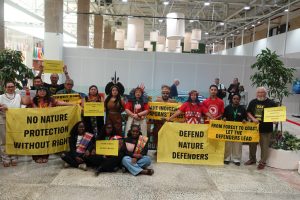
Civil society groups have also questioned the involvement of major oil, coal and mining companies as conference sponsors. Turkish environmental organisations have raised concerns about restrictions on protests and media freedom.
Meanwhile, the two presidencies have said they intend to begin negotiating a political cover decision early in the conference. Potential elements include language on temperature overshoot, energy security, electrification, methane emissions, early warning systems, ocean protection and climate finance.
For developing countries, however, COP31’s success will ultimately depend on whether these discussions translate into financial resources and practical action.
As AGN chair Amoah put it, “Antalya must be defined by delivery rather than another cycle of unfulfilled promises.” (nsh)
Banner photo: © UN Climate Change – Kiara Worth