A number of countries are urging the UN Climate Change Conference, or COP31, to remain focused on tackling the climate crisis, rather than catering to the interests of fossil fuel-producing nations. These calls have grown stronger in the run-up to the drafting of the conference’s final document, particularly regarding commitments to emissions reductions, the energy transition and climate finance for vulnerable countries.
Panama’s Environment Minister, Juan Carlos Navarro, has categorically stated that his country will not approve the COP31 final declaration unless it includes a clear commitment to phase out fossil fuels and guarantees access to climate finance for the countries most affected by climate change.
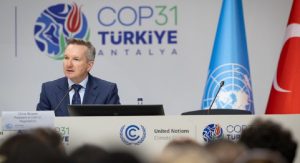
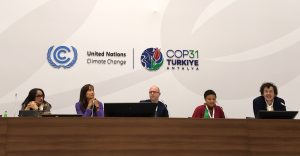
Navarro made the statement at a joint press conference with representatives from a number of countries on Friday, 20 November, ahead of the release of the draft final text of COP31 in Antalya, Türkiye. Representatives from France, Belgium, Panama, Vanuatu, Spain, Côte d’Ivoire, Sweden, Finland and Guatemala also outlined their respective priorities to be reflected in the conference’s final decision.
“We will not approve, nor will we sign, any final document that does not agree with our principles,” Navarro told reporters.
He emphasised that Panama would continue to fight for its demands until the negotiations concluded. In his view, climate finance must be prioritised for poor countries and regions most vulnerable to the impacts of climate change, particularly small island states and Latin American countries.
Navarro also highlighted the responsibility of countries that contribute to emissions for climate damage.
“Those who pollute pay,” he said.
The clash of interests in the COP31 negotiations became increasingly apparent after the United States, China and Russia called for an increase in oil production at a meeting on Wednesday 18 November. In response, Navarro warned that the UN climate forum should not be allowed to become a platform for championing the interests of the oil industry.
“This is the climate change COP. We are not going to change the name to the Conference of the Petroleum Union,” he said.
According to Navarro, the focus of the negotiations must remain on accelerating climate action, rather than on the interests of oil-producing or oil-consuming nations. He even believes that the consensus-based decision-making mechanism at the COP needs to be reviewed, as it risks being exploited by a single country to hinder collective progress.
“Consensus means that the process can be hijacked by one country,” he said
Demand for tangible results
Calls for COP31 to produce more ambitious decisions were also made by the French Minister for the Environment, Monique Barbut. She argued that this climate conference must deliver tangible progress on emissions reduction, climate finance and the acceleration of clean electrification.
Barbut pointed out that the effects of rising global temperatures have become a serious threat to people’s lives, particularly in countries that are highly vulnerable to climate change.
“For many of the people in the world, it’s a question now of survival, and we need to tackle this issue,” Barbut said.
France, he continued, is urging that the COP31 discussions go beyond general commitments to also address emissions from fossil fuels, strengthen efforts to reduce methane emissions, and provide adequate financial support for affected countries.
Barbut acknowledged that developed countries bear a great deal of responsibility as the main cause of the climate crisis. However, it is also considered necessary for developing countries, with their rapidly rising emissions, to contribute to climate finance efforts.
Nevertheless, France will gauge the success of COP31 on the basis of substantive progress in the climate negotiations, rather than solely on the choice of words or specific wording in the agreement text. (Hartatik)
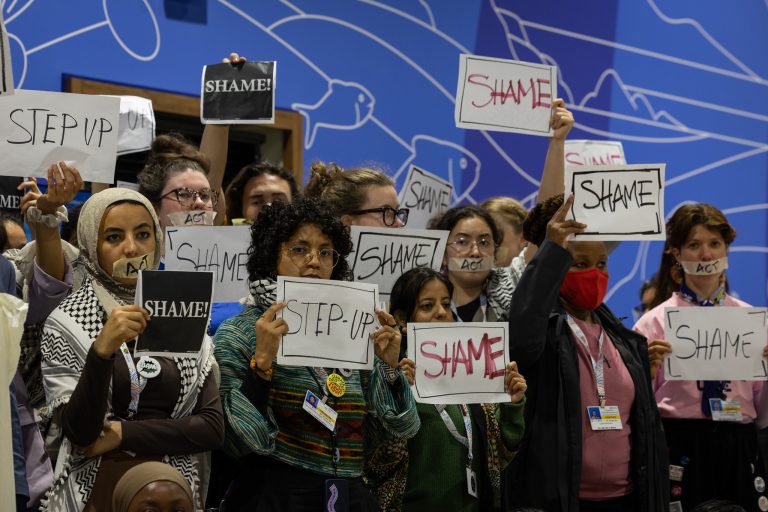
Banner photo: Members of civil society demonstrate before the start of the closing plenary (Photo: © UN Climate Change – Kiara Worth)