The ongoing energy supply crisis triggered by disruptions to shipping through the Strait of Hormuz is likely to leave lasting marks on global energy markets, prompting governments to diversify supplies, strengthen domestic energy production and accelerate electrification, the International Energy Agency (IEA) said on Thursday, November 19.
In its latest World Energy Outlook 2026, released on Thursday, the IEA said the crisis, which has affected energy flows from the Middle East, was widening the range of possible energy futures and forcing governments to reconsider their energy strategies amid growing geopolitical tensions, trade disruptions and climate risks.
The report comes as the global economy grapples with what the IEA describes as the largest energy supply shock in history, following the Middle East conflict and disruptions to shipping through the Strait of Hormuz, a critical route for international oil and gas trade.
“The Hormuz crisis has delivered a huge shock to the system,” IEA Executive Director Fatih Birol said.
“While the energy sector and the global economy have shown considerable resilience, the longer the crisis lasts, the deeper the effects will be. And I don’t see any credible pathway for the energy world to return to the way it was before.”
The report outlines several possible energy pathways rather than making forecasts, highlighting how government decisions in response to the crisis could reshape the global energy mix for decades.
Among the emerging priorities are diversifying energy supplies and trade routes, strengthening domestic energy resources and accelerating electrification to reduce exposure to volatile international fossil fuel markets.
Renewable energy, particularly solar photovoltaics, and nuclear power are expected to benefit from this shift, with both technologies projected to expand across the IEA’s scenarios. Energy efficiency and biofuels could also gain ground.
However, the report warns that energy security concerns could also prolong reliance on fossil fuels. In Asia, countries with significant domestic coal resources may turn to coal to reduce their dependence on imported oil and gas.
In an extreme scenario involving prolonged disruption to the Strait of Hormuz, investments in alternative supply routes and pipelines, alongside efforts to reduce demand, could cut oil flows through the waterway from around 20 million barrels per day before the crisis to 8.5 million barrels per day in 2030 and less than two million by 2035.
Despite this potential shift, the Middle East would remain the world’s largest oil exporter, underscoring its continued importance to global energy security.
Electrification gains momentum
The IEA also highlighted electrification as an increasingly important component of energy security, as electricity demand grows faster than overall energy consumption.
Since 2019, global electricity demand has expanded at twice the rate of overall energy demand, driven by industrial motors, household appliances, air conditioning, electric vehicles, heat pumps and data centres.
The report expects electricity demand to grow even faster through 2035, with electricity approaching 30 per cent of global final energy consumption across all its exploratory scenarios.
The energy crisis has already prompted increased sales of electric technologies in some affected countries, alongside rising trade in solar panels and batteries and a surge in electric vehicle sales.
For Anna Freeman, global coordinator of the Electrify Now coalition, the crisis demonstrates the economic and security risks of continued dependence on fossil fuels.
“The IEA’s latest World Energy Outlook sends a powerful message: energy security and electrification are now two sides of the same coin,” she said.
Countries that move faster to replace imported fossil fuels with domestically generated renewable electricity would be better positioned to protect their economies, industries and citizens from future energy crises, she added.
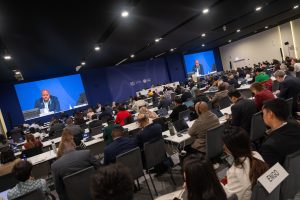
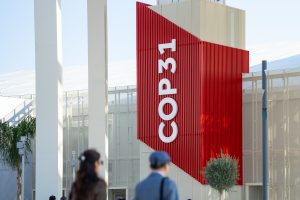
Freeman’s remarks echo calls at the COP31 climate conference in Antalya, Türkiye, for governments to accelerate electrification as a means of reducing emissions while improving energy affordability and security.
The Global Climate Action Agenda’s Electrification Delivery Package has called for a target of 35 per cent electrification by 2035, backed by investments in electricity grids, energy storage and other infrastructure.
The World Business Council for Sustainable Development said businesses were already electrifying vehicle fleets, installing heat pumps and switching industrial processes to clean electricity.
Its president, Peter Bakker, called for faster grid connections, greater storage capacity and more flexible electricity markets, warning that electricity should not cost more than fossil fuels if businesses were to accelerate the transition.
The IEA report also points to growing pressure on energy systems from rising temperatures and changing consumption patterns. In a notable milestone, cooling demand has overtaken heating demand for the first time in history.
Energy access and climate targets at risk
Despite the potential acceleration of clean energy technologies, the IEA warned that the crisis could undermine progress in expanding energy access, particularly in emerging and developing economies.
Electricity access and clean cooking provision improved in 2025, but higher fuel prices and supply shortages in 2026 threaten to slow further progress.
The report also highlights the gap between current climate policies and the goals of the Paris Agreement. Temperature outcomes under pathways based on existing or announced policies range from 2.5 to 2.9 degrees Celsius of warming, significantly above the 1.5-degree target.
Birol cautioned governments against allowing immediate energy security concerns to overshadow longer-term decisions on sustainability and prosperity.
“Countries will pursue different pathways, reflecting their resources, circumstances and priorities. But all have a stake in building a more secure, affordable and sustainable energy system – and in effective cooperation to achieve that goal,” he said.
The IEA stressed that the energy crisis could accelerate the transition to domestic, low-emissions energy sources, but warned governments must avoid replacing one form of energy dependence with another. (nsh)
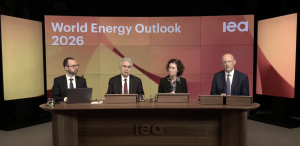
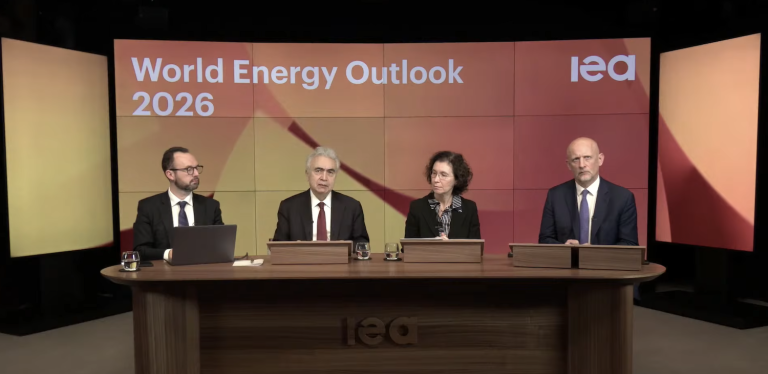
Banner photo: The International Energy Agency (IEA) launched the World Energy Outlook 2026 on Thursday, November 19, 2026. Image: IEA webcast screenshot.