Jakarta – Indonesia must accelerate domestic climate action, particularly in the energy and industrial sectors, to maintain its international credibility as world leaders gather for the COP31 climate summit in Türkiye, an Indonesian energy think tank said.
The Institute for Essential Services Reform (IESR) said on Wednesday, November 4, that updating climate targets would not be enough unless the government translated its commitments into concrete policies and measurable emission reductions.
Indonesia’s climate action remains “critically insufficient” to meet the Paris Agreement goal of limiting global warming to 1.5 degrees Celsius, according to the Climate Action Tracker, an independent climate policy assessment initiative.
While Indonesia has made progress in managing emissions from forestry and land use, emissions from other sectors, particularly energy and heavy industry, are projected to continue rising through 2030, IESR said.
The country’s 2035 emission reduction targets, including those dependent on international financial support, also fall short of the cuts needed to align with global climate goals.
“Indonesia cannot maintain international credibility merely by presenting updated climate targets,” IESR said in a statement.
The think tank called for Indonesia to triple its renewable energy generation capacity by 2030, double the annual rate of energy efficiency improvements and reduce methane and other non-carbon dioxide greenhouse gas emissions by 30% over the same period.
It also urged the government to accelerate solar power deployment to reach 100 gigawatts-peak (GWp) of installed capacity, using utility-scale projects, commercial and industrial rooftop installations, and dedicated renewable power supplies for data centres and industrial estates.
Achieving the target would require consistent regulations, modernised electricity grids and investment-ready projects capable of attracting private capital, it said.
Energy security
IESR also called for a roadmap to electrify transport, households and industrial processes, saying the shift could reduce Indonesia’s exposure to volatile global oil prices and disruptions to imported fuel supplies.
Agus Praditya Tampubolon, IESR’s director of climate programme and just energy transition, said electrification could strengthen economic resilience if additional electricity demand was met with renewable energy.
“The gradual shift to electricity in transport, household, and industrial sectors can alleviate economic pressure during fuel supply disruptions, provided the additional power demand is met by renewable sources,” he said.
Agus urged the government to identify sectors that could transition rapidly while ensuring adequate grid infrastructure and clean electricity supplies.
IESR also proposed a target of meeting 35% of final energy consumption through electrification by 2035.
Reducing dependence on imported fossil fuels could also help protect state finances from international price shocks, particularly when the government uses subsidies to cushion consumers from rising energy costs, the think tank said.
Forest protection
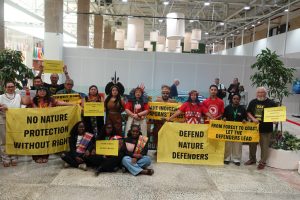
Beyond the energy sector, Indonesia must strengthen forest and biodiversity protection as part of its climate strategy, IESR and civil society partners said.
Decmonth Nuel Pasaribu, a forestry and biodiversity researcher at the Indonesian Centre for Environmental Law (ICEL), said rising temperatures, drought and deforestation threatened ecosystems that serve as natural carbon sinks.
Intact forests, peatlands and mangroves store significant amounts of carbon while providing protection against climate impacts for local communities, ICEL said.
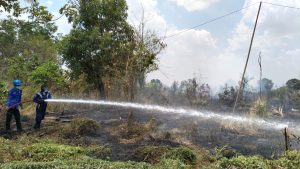
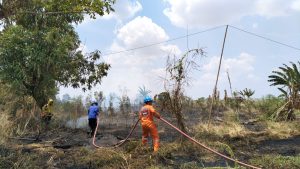
Indonesia’s forest fire management policies should also move beyond emergency response to prioritise prevention, environmental monitoring, law enforcement and more comprehensive tracking of land-use emissions.
COP31 priorities
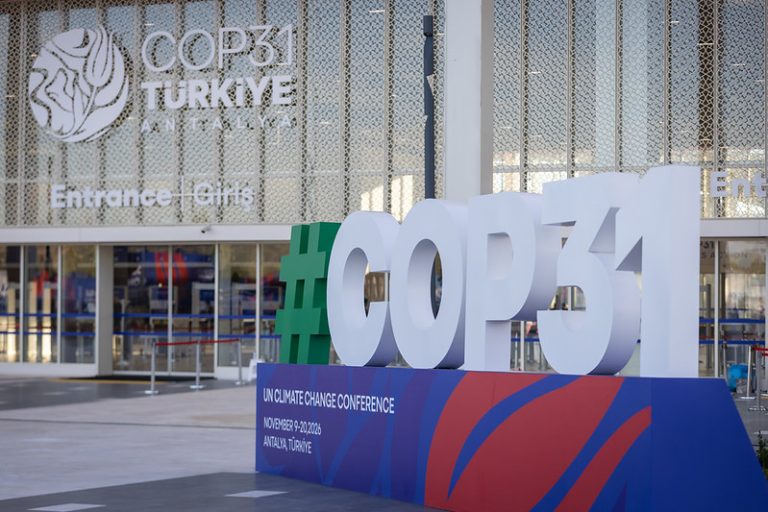
IESR outlined several priorities for Indonesia’s delegation at COP31, which runs from November 9 to 20 in Antalya, Türkiye.
These include establishing a 2035 electrification roadmap, adopting a binding target to cut methane emissions by 30% by 2030, and preparing investment-ready clean energy projects to access international climate finance.
The think tank also called on Indonesia to advance negotiations on a just transition mechanism under the UN climate process to protect workers and vulnerable communities affected by the shift away from fossil fuels.
It urged the government to use the second Global Stocktake process to assess gaps in domestic climate implementation and inform stronger future nationally determined contributions (NDCs).
The first Global Stocktake, completed at COP28 in Dubai in 2023, found that global efforts to address climate change remained insufficient to meet the Paris Agreement’s temperature goals.
IESR said Indonesia’s role at COP31 should be measured not by the commitments it announces but by demonstrable progress in implementing them at home. (nsh)
Banner photo: © UN Climate Change – Kiara Worth