Jakarta – Indonesian civil society organisations have urged the government to translate its international biodiversity commitments into concrete action, warning that weak implementation, inadequate conservation funding and insufficient recognition of Indigenous Peoples’ rights threaten global efforts to halt biodiversity loss by 2030.
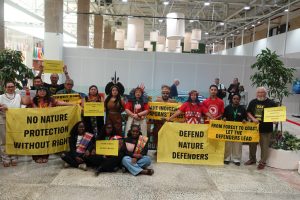
At a media briefing in Jakarta on Tuesday, November 3, the Justice Coalition for Our Planet (JustCOP), a civil society coalition, highlighted concerns over what it described as attempts to weaken commitments and reduce the representation of Indigenous Peoples and local communities in global biodiversity policymaking.
The call followed the 17th Conference of the Parties to the UN Convention on Biological Diversity (COP17 CBD), held in Yerevan, Armenia, from October 19 to 30, which concluded with the adoption of the Yerevan Pathway.
The agreement came amid findings that the world remains significantly off track to meet the 23 targets of the Kunming-Montreal Global Biodiversity Framework (KMGBF) by 2030. The conference highlighted the need to address environmentally harmful subsidies, align national budgets with biodiversity targets and increase financial and technical support.
Although COP17 mobilised nearly USD 2 billion in new funding commitments and adopted the terms of reference for a permanent subsidiary body on Article 8(j), which concerns the traditional knowledge and contributions of Indigenous Peoples and local communities, civil society groups warned that the outcomes could fall short without meaningful implementation.
Cindy Julianty, executive coordinator of the Working Group ICCAs Indonesia (WGII), said the establishment of the permanent Subsidiary Body on Article 8(j) should build on more than two decades of work by the existing Working Group on Article 8(j), rather than provide an opportunity to renegotiate previous achievements.
She stressed that the new body must strengthen Indigenous Peoples’ rights and leadership, including maintaining the Indigenous Co-Chair mechanism.
Marko Mahin, coordinator of the Network of Community-Managed Conservation Area Rights Holders (JPH AKKM), also called on the government to ensure that its implementation of Target 3, commonly known as the 30×30 target, recognises the rights of Indigenous Peoples and local communities.
Under the target, countries aim to conserve at least 30 per cent of terrestrial and inland water areas, as well as marine and coastal areas, by 2030.
Marko said Indonesia should revise its approach through a rights-based framework, ensuring land tenure rights, resolving conservation-related conflicts and applying the principle of free, prior and informed consent (FPIC).
He also called for Indigenous and community conserved areas, known as ICCAs or Territories of Life, to be recognised as a separate pathway for achieving the conservation target rather than being subsumed under state-protected areas or other effective area-based conservation measures (OECMs).
Indonesia still lacks a dedicated Indigenous Peoples law, he added, leaving significant gaps in the recognition of customary rights.
Funding was another major concern raised by the coalition. Linda Rosalina, executive director of TuK INDONESIA, said international bilateral biodiversity funding had declined even as governments continued to support economic activities that damage ecosystems through harmful subsidies.
She urged the government to withdraw incentives for businesses driving deforestation and establish accessible, transparent direct-funding mechanisms for Indigenous Peoples and local communities.
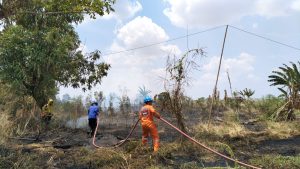
Agung Ady Setiyawan of Forest Watch Indonesia (FWI) warned that international commitments would have little meaning if deforestation and the loss of community land continued domestically.
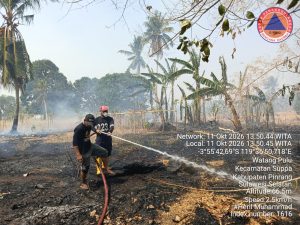
He said around 40 per cent of deforestation in Indonesia occurred legally, while deforestation in 2025 reached approximately 1.06 million hectares. Millions of hectares of areas with high biodiversity value also remain vulnerable to conversion.
Agung said the success of COP17 implementation should be measured by the government’s ability to stop deforestation, maintain habitat connectivity, protect species and guarantee the rights of communities that have long safeguarded forests.
Sadam Afian Richwanudin, senior campaigner at Satya Bumi, meanwhile, criticised what he described as the weakening language of international negotiations.
He said terms such as “encourage” and “promote” had increasingly replaced stronger language requiring concrete action, while references to national regulations could give governments excessive flexibility to avoid fulfilling international commitments and allow destructive extractive industries to continue operating.
Vicky Soerjono, a researcher at Auriga Nusantara, said biodiversity protection must also address the interconnected threats of climate change, deforestation, forest degradation and fires.
He noted that Indonesia had one of the world’s highest numbers of threatened species and called on the government to use the global KMGBF assessment to correct development policies that threaten important ecosystems, rather than treating biodiversity commitments as an administrative reporting exercise.
The coalition also raised concerns over Indonesia’s preparedness to address emerging issues under the biodiversity convention, particularly access and benefit-sharing (ABS).
Giorgio Budi Indrarto of MADANI Berkelanjutan said Indonesia had previously taken a progressive position in discussions on Article 8(j) and the Cali Fund during the COP in Colombia, but its position was questioned again at the Yerevan conference.
He questioned the government’s commitment to establishing a domestic mechanism for access and benefit-sharing, which regulates how benefits from the use of genetic resources are shared fairly.
Although the government has expressed concern that Indonesia might not benefit sufficiently from the Cali Fund, Giorgio said the country still lacked the necessary domestic ABS regulations.
He urged the government to accelerate the preparation of a government regulation on the issue.
Through the media briefing, JustCOP and its civil society partners called for stronger collaboration with journalists to monitor Indonesia’s implementation of its biodiversity commitments following COP17.
They said global biodiversity protection would only succeed if the rights of Indigenous Peoples and local communities became a central pillar of environmental governance, both in international negotiations and on the ground. (nsh)
Banner photo: Cuì Yún Fù/Pexels.com