Jakarta — Indonesia must accelerate industrial decarbonisation to protect its export competitiveness as global markets tighten requirements for low-carbon products, the Institute for Essential Services Reform (IESR) said on Thursday, October 9.
In its latest study, titled “Indonesia Industrial Decarbonization Outlook 2027”, the energy think tank called on the government to make industrial decarbonisation a national development priority, supported by stronger emissions monitoring, energy efficiency, clean energy supplies and incentives for low-carbon investment.
The manufacturing sector contributes around 19.8 per cent of Indonesia’s gross domestic product (GDP), employs 13.86 per cent of the national workforce and generates about 74 per cent of non-oil and gas exports. However, it is also a major source of emissions, producing approximately 382 million tonnes of carbon dioxide in 2023, equivalent to 32.9 per cent of national emissions, according to the study.
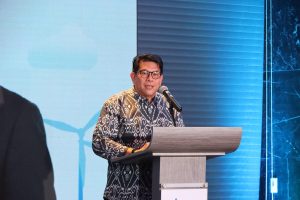
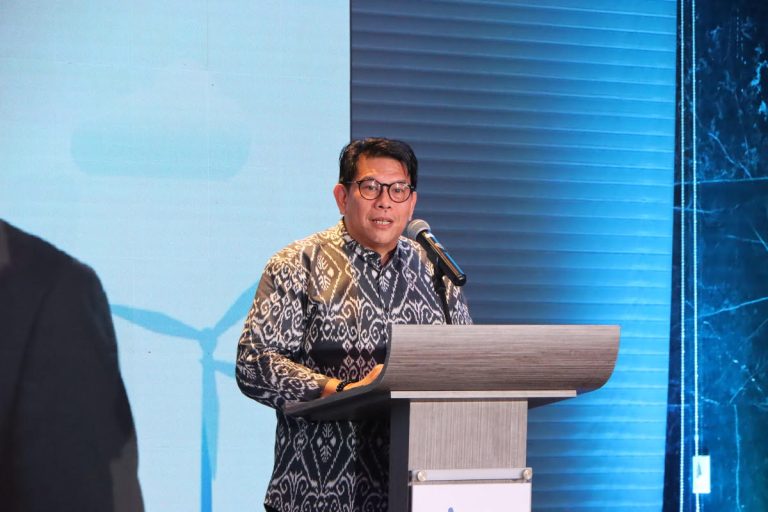
“Industrial decarbonisation is increasingly determining trade competitiveness,” said Fabby Tumiwa, IESR’s chief executive officer, at the study’s launch in Jakarta.
The European Union’s Carbon Border Adjustment Mechanism (CBAM) entered its definitive phase in January 2026, exposing Indonesian exporters to potential carbon costs estimated at USD208.1 million, rising to USD288.4 million if the mechanism’s scope expands, IESR said. The risks primarily affect the iron and steel industry but could extend to other subsectors.
IESR warned that inadequate emissions data could increase exporters’ financial exposure. Indonesia’s blast furnace-basic oxygen furnace (BF-BOF) steelmaking technology produces an estimated 2.08 to 2.33 tonnes of carbon dioxide equivalent (CO₂e) per tonne of product. Without verified emissions data, however, exporters could face EU default values of 8.21 to 10.02 tonnes of CO₂e per tonne.
The think tank called for a more reliable system of measurement, reporting and verification (MRV) to ensure that carbon costs reflect actual industrial emissions.
Efficiency offers cost-saving opportunities
Industrial decarbonisation does not necessarily require expensive technologies, IESR said. Improving energy and material efficiency can reduce emissions while delivering financial savings.
Switching to scrap-based electric arc furnace technology in steelmaking could save around USD90 per tonne of CO₂ avoided, while reducing the clinker content of cement could save USD61 per tonne. Improving efficiency in automotive casting processes could deliver savings of approximately USD49 per tonne of CO₂ avoided, according to the study.
Other promising measures include heat pumps for low-temperature industrial heating and more efficient electric motors, which account for around 72 per cent of electricity consumption in the industrial sector.
However, limited technical capacity, inadequate information and weak investment incentives continue to hinder adoption. Companies often prioritise upfront costs over operating expenses over a technology’s lifetime, Fabby said.
IESR argued that decarbonisation strategies must reflect differences in technological readiness, economic conditions and company capabilities, as well as requirements imposed by export markets and global supply chains.
Policy reforms needed
The think tank said existing policies provide insufficient incentives for industrial decarbonisation. Indonesia’s Green Industry Standards remain voluntary, fiscal incentives for low-carbon technologies are inadequate, and public procurement lacks strong mandatory low-carbon specifications. Industrial facilities are also not yet covered by the emissions trading system, which currently focuses on power generation.
In the short term, IESR recommended four priorities: integrating emissions MRV systems; strengthening and gradually making Green Industry Standards mandatory; incorporating carbon performance targets into the National Industrial Development Master Plan (RIPIN); and accelerating energy efficiency, material and fuel substitution, electrification and rooftop solar installations.
The government should also introduce green public procurement in sectors ready to supply lower-carbon products, including cement, to stimulate market demand.
Over the longer term, industrial transformation will require cleaner electricity supplies, transition financing and the development of technologies such as low-carbon hydrogen and carbon capture, utilisation and storage (CCUS).
IESR said establishing clear long-term targets and providing technical assistance, incentives and access to finance would enable Indonesian industries to cut emissions while maintaining competitiveness, preserving export market access and supporting sustainable economic growth. (nsh)
Banner photo: IESR