Jakarta — Indonesia’s asset forfeiture bill must enable authorities to trace and seize profits derived from corruption and environmental crimes, including those hidden through companies, investments and third parties, the Indonesia Working Group on Forest Finance (IWGFF) said on Wednesday, September 2.
The group said the bill, currently being discussed by parliament, should go beyond confiscating assets and strengthen the ability of law enforcement agencies to follow the flow of money and assets generated by criminal activity.
The draft legislation already provides a framework for tracing, blocking, seizing, confiscating and managing assets obtained directly or indirectly from crimes, including assets transferred to other individuals or corporations or converted into personal wealth.
IWGFF welcomed parliament’s stated commitment to complete deliberations on the asset forfeiture bill by December 15, 2026. It also called for the full inclusion of 13 categories of crimes cited by the head of parliament’s Commission III, four of which involve environmental and natural-resource crimes.
“Follow the money” and “follow the asset” approaches should be central to the legislation, IWGFF said, arguing that enforcement should establish not only who committed a crime but also where the proceeds went, who benefited and what assets were acquired from them.
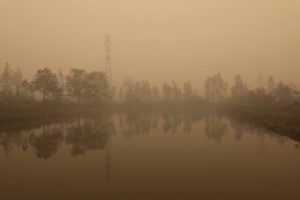
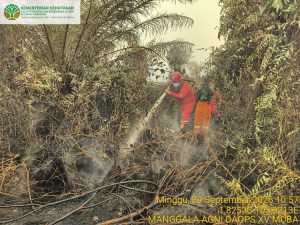
The group said this was particularly important in forestry and environmental cases, where losses can extend beyond lost state revenue and illegal profits to include forest loss, ecosystem damage and the cost of environmental restoration borne by the government and communities.
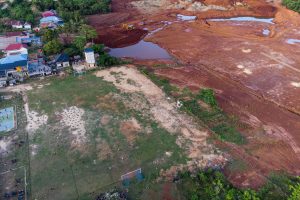
When confiscated assets involve land, forests, mining operations or production facilities, their valuation should therefore take into account their legal status, environmental condition, restoration obligations and associated social risks, it said.
IWGFF also called for stronger coordination among law enforcement agencies, the Financial Transaction Reports and Analysis Center (PPATK), financial regulators and authorities overseeing land, forestry, mining and the environment. It said financial and corporate data should be better connected to help trace assets moved through bank accounts, companies, investments and layered transactions.
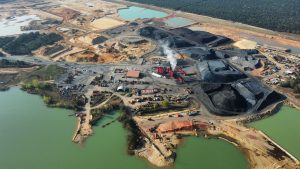
In the mining sector, the group said confiscation mechanisms should cover not only money in bank accounts but also company assets, shares, equipment, land and other wealth obtained directly or indirectly through unlawful activities. Environmental restoration obligations attached to such assets should also be considered.
IWGFF further stressed transparency in the management of confiscated assets. The draft bill provides for the storage, protection, maintenance, valuation, transfer, use and return of assets, as well as an information system containing details such as asset value, status, location, management costs, auctions and court decisions.
“The asset forfeiture bill must be able to sever the link between corruption and the economic gains derived from crime,” IWGFF Director Willem Pattinasarany said. He added that in natural-resource sectors, authorities must pursue not only perpetrators but also the profits that allow criminal activity to continue.
IWGFF forestry and environmental expert Marius Gunawan said environmental integrity should form part of the assessment of confiscated assets, while governance expert Fathi Hanif called for public access to information on seized assets, their valuation, auction or use and ultimate beneficiaries.
The group said the success of the legislation should ultimately be measured not by the amount of assets confiscated, but by how effectively the state cuts off criminal profits, prevents seized assets from being reused for illegal activities and ensures that recovered value benefits the state, communities and the environment. (nsh)
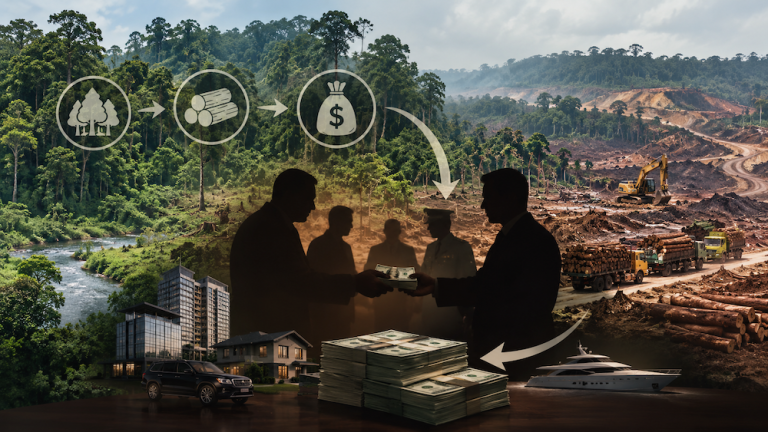
Banner photo: Image generated by OpenAI’s DALL·E via ChatGPT (2026)