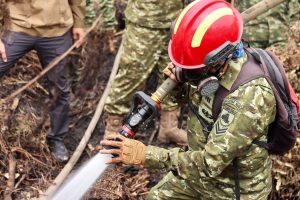
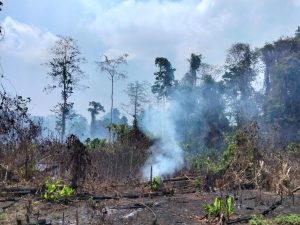
Jakarta — Indonesia should make its response to forest and land fires more inclusive by ensuring evacuation, healthcare and social protection meet the needs of vulnerable groups, while protecting Indigenous knowledge and strengthening long-term prevention, civil society groups said.
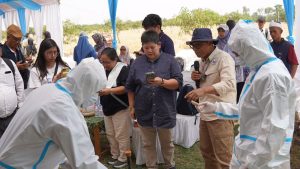
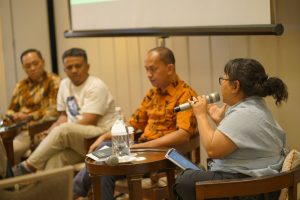
The recommendations came from a public discussion organised by Yayasan MADANI Berkelanjutan, Himpunan Wanita Disabilitas Indonesia (HWDI) and Koalisi Perempuan Indonesia (KPI) on Thursday, September 10, relating to the impacts of the 2026 fire and haze crisis on women, people with disabilities and Indigenous communities.
The groups also called for stronger protection of natural forests and peatlands and greater attention to communities facing the highest risks.
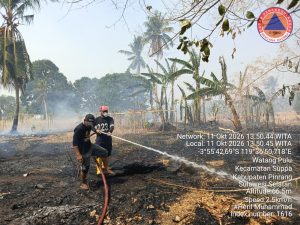
MADANI’s indicative burned area model estimated that 1.32 million hectares of land had burned across Indonesia between January and August, with the largest areas recorded in West Kalimantan, Central Kalimantan and South Papua.
More than half, or 51.14%, of the estimated burned area was located within licensed areas and concessions, covering about 675,000 hectares, MADANI said. Oil palm plantation concessions accounted for the largest share at 246,035 hectares, followed by overlapping permits at 166,208 hectares and forestry concessions at 137,116 hectares.
The discussion highlighted how the fires and haze impose additional burdens on vulnerable communities.
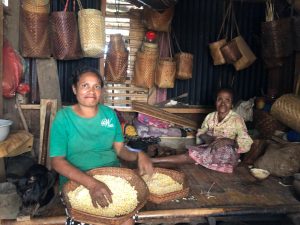
Women face increased household and economic responsibilities, including cleaning ash, caring for sick family members and purchasing masks and medicines, while their incomes can decline. In Ketapang, West Kalimantan, however, more than 140 women in 10 villages are also involved in fire patrols, prevention and education through the “The Power of Mama” initiative.
People with disabilities face particular difficulties accessing safety information and evacuation services. Deaf people, for example, may miss emergency warnings delivered through loudspeakers or television broadcasts without text or sign-language interpretation.
HWDI called for visual early-warning systems, including flashing lights and emergency text messages, as well as disability-friendly health posts.
Indigenous communities also face risks to their livelihoods as fires damage ecosystems, while traditional land-management practices can be misunderstood and potentially criminalised, the discussion heard. Indigenous representatives called for greater participation in decision-making and recognition through passage of the Indigenous Peoples Bill.
The National Disaster Management Agency (BNPB) said it had policies to address the needs of vulnerable groups, including smoke-free shelters, accessible evacuation routes and protection of Indigenous knowledge. The agency acknowledged that a key challenge was ensuring these policies were implemented at the local level, including in remote areas.
The discussion also raised concerns over peatland restoration. Pantau Gambut said the decline in peat fires had coincided with the period when the Peatland Restoration Agency (BRGM) was operating, but its dissolution had left restoration responsibilities spread among institutions with more limited authority and budgets.
Pantau Gambut said only about 1% of sampled burned peatland restoration sites it had observed had returned to forest, with the remainder converted to oil palm plantations or monoculture, alongside the discovery of illegal oil palm plantations in some peatland hydrological areas.
The Center of Economic and Law Studies (CELIOS) estimated economic and health losses from the fires between January and August at 39.29 trillion rupiah to 123.1 trillion rupiah, while 17.3 million people in 12 provinces could be exposed to acute respiratory infections.
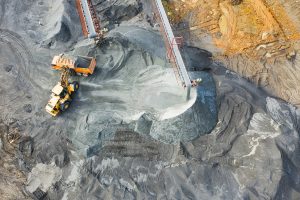
CELIOS called for the fires to be designated a national disaster, evacuation of vulnerable groups, an evaluation of plantation and mining permits, and the creation of an integrated ecosystem recovery team. (nsh)
Banner photo: Image generated by OpenAI’s DALL·E via ChatGPT (2026)