As Indonesia seeks to build a more credible and internationally connected carbon market, the Financial Services Authority’s (OJK) Regulation (POJK) Number 10 of 2026 marks a significant evolution in the country’s carbon trading framework. The regulation revises key provisions of POJK Number 14 of 2023, introducing reforms that strengthen governance, expand the range of tradable carbon units, integrate the market with the new Carbon Unit Registry System (SRUK), and prepare Indonesia for greater participation in global carbon markets. This two-part article examines the regulation’s six major reforms and what they mean for carbon market participants, investors, project developers, and Indonesia’s broader climate ambitions.
By Roffie Kurniawan
In a move to fortify green infrastructure, the Financial Services Authority (OJK) issued Regulation Number 10 of 2026. This new regulation modifies the earlier POJK Number 14 of 2023 concerning carbon trading through the Carbon Exchange. The regulation aligns with OJK’s agenda to support the government’s strategy on carbon economic value instruments and aims to reduce greenhouse gas emissions nationally.
The regulation, enacted on July 6, harmonises legal frameworks with Presidential Regulation (Perpres) Number 110 of 2025. This revision alters some of the initial provisions from Perpres Number 98 of 2021, focusing on Carbon Economic Value Organizing.
Agus Firmansyah, Head of OJK’s Department of Integrated Financial Services Sector Surveillance and Policy, said in a statement on July 9 that the issuance of POJK No. 10/2026 is “part of OJK’s policy to support the government’s strategic agenda in implementing carbon pricing instruments and national greenhouse gas emissions control.”
He said the amended regulation aims to make the carbon exchange “more aligned with national policy, more credible with the Carbon Unit Registry System (SRUK), more liquid with expanded units, and more integrated with government oversight.”
The regulation introduces six transformative components crucial for managing carbon trading. These changes consist of registry system transition; expansion of commodity scope; access to foreign carbon units; integrated reporting obligations; consumer protection enhancement and electronic transition facilitation. Let us explore these changes more in-depth.
Registry system transition
The POJK 10/2026 marked a “substantive transformation” in the carbon trading framework. Previously, carbon units were logged in SRN PPI under the Ministry of Environment and Forestry oversight, capturing climate mitigation activities more broadly. Now, with POJK 10/2026, registering every traded unit in SRUK is mandatory, focusing solely on carbon trades.
SRUK plays an important role, namely serving as a definitive system. SRUK also ensures seamless and reliable transactions by enabling real-time trade traceability. Its alignment with Presidential Regulation 110/2025 revamps national carbon value infrastructures, providing a centralised data backbone. During the three-month transitional grace period while fully implementing SRUK, trades can still utilise the ministry’s electronic systems.
Essential benefits include increased transparency and direct market engagement for all units. In essence, the change moves from a wide-ranging climate registry (SRN PPI) to a specialised trading database (SRUK). This advancement creates a strategic prerequisite for handling carbon trades efficiently—shifting from a generalised “climate database” to a focused “carbon stock market database.”
Expanding the scope of carbon units
The recent enactment of POJK 10/2026 marks a significant shift in Indonesia’s carbon trading landscape by widening the spectrum of carbon units allowed on the Indonesian Carbon Exchange. This policy evolution aims to enhance the country’s climate project monetisation and align with international standards as stipulated by the Paris Agreement’s Article 6.
One of the most notable changes is the expansion of carbon unit types. Before POJK 10/2026, the exchange primarily dealt with emissions units from energy sectors and large industries, which were required to report emissions. The new regulation broadens this scope to include carbon units derived from nature-based sectors such as forestry, mangroves, peatlands, agriculture, and renewable energies like solar and wind power.
Additionally, waste and transportation sectors are now part of this expanded framework. This change is intended to provide a platform for more diverse climate projects across Indonesia to be traded and monetised.
Another major development under POJK 10/2026 is the inclusion of voluntary carbon credits (VCC). Previously, the focus was predominantly on compliance units within the government’s nationally determined contributions (NDC) system. Now, companies that wish to voluntarily pursue carbon neutrality can trade these VCC units on the exchange. This opens up opportunities for businesses to address their carbon footprint beyond mandated requirements.
Moreover, international carbon units have been included in the trading scope. This introduction allows foreign carbon units to be traded on the Indonesian Carbon Exchange through specific mechanisms designed by the Financial Services Authority.
By doing so, it enhances market liquidity and broadens participation in carbon trading, attracting a wider array of sellers and buyers. It is also expected to foster involvement from small and medium enterprises (SMEs), farmers, and forest communities in carbon credit transactions.
Foreign carbon unit trading
The POJK 10/2026 presents new dynamics. Under prior regulations (POJK 14/2023), focus was mainly placed on domestic carbon units. Now, with authorisation for foreign carbon unit trading, Indonesia’s carbon market is set to integrate with global markets, thereby increasing liquidity.
Two distinct recording schemes have been established: one for units already registered with SRUK, allowing them to be traded similarly to domestic ones, while another accommodates those not yet registered through a regulated special mechanism. This approach facilitates foreign units’ entry into the Indonesian market, fostering an interconnected global carbon economy.
This development aligns with Presidential Regulation 110/2025 regarding Carbon Economic Value, promoting integration between Indonesia’s carbon markets and international counterparts. It enables Indonesian companies to acquire foreign credits and vice versa, leading to improved liquidity, competitive pricing, and providing alternative compliance pathways for energy transition challenges.
Additionally, introducing foreign carbon units offers more competitive pricing structures, allowing for effective market competition and innovation in achieving emission targets. These elements prepare Indonesia for cross-border trading activities that are anticipated under Article 6 provisions of future COP meetings.
The governance framework remains robust, ensuring all trades conform with reporting and alignment criteria vis-à-vis Indonesia’s NDC targets to prevent any discrepancies or double counting. Operators are accountable for reporting activities to relevant authorities. In conclusion, POJK 10/2026 substantially broadens the range of tradable carbon units on the Indonesian Carbon Exchange.
By officially permitting foreign carbon unit trades within well-defined regulatory boundaries, it transforms a somewhat insular market into a globally connected one, fostering enhanced participation and gearing Indonesia towards meeting its environmental commitments through diversified avenues.
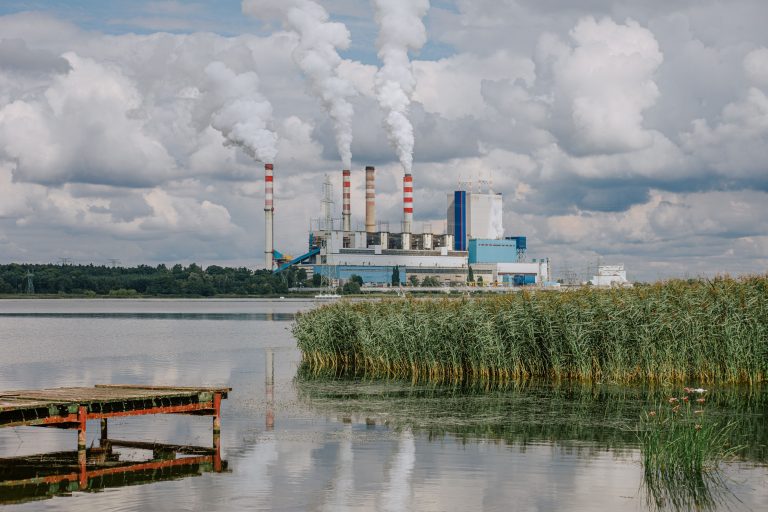
Banner photo: Power plant emitting smoke with a waterfront view of a lake and reeds. Janusz Walczak/Pexels.com