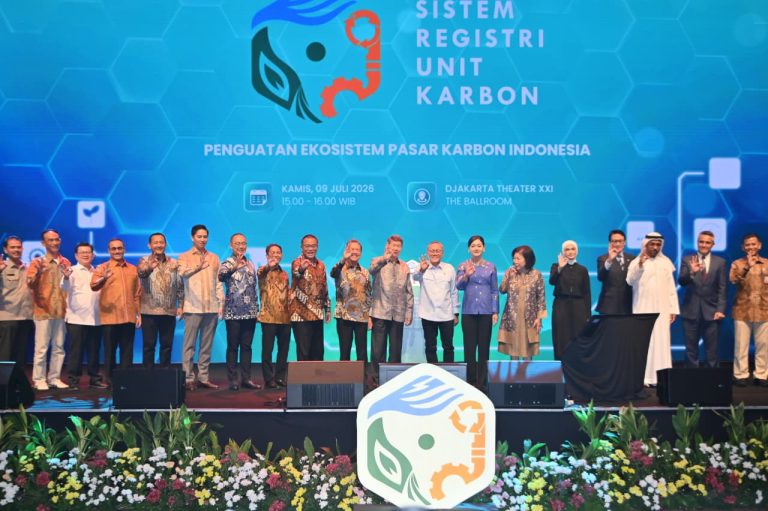
Jakarta — Indonesia has launched a new national Carbon Unit Registry System (Sistem Registri Unit Karbon/SRUK), an international-standard digital platform designed to strengthen the integrity, transparency, and credibility of the country’s carbon market while supporting its climate commitments.
Unveiled in Jakarta on Thursday, July 9, the system will serve as the backbone of Indonesia’s carbon governance by tracking the entire lifecycle of carbon units and ensuring that emissions reductions are accurately measured, verified, and recorded. The platform is intended to prevent double counting and fraud in carbon trading while boosting investor confidence.
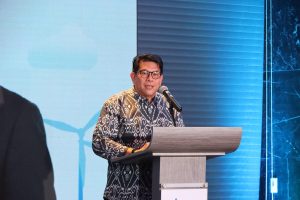
Environment Minister Moh Jumhur Hidayat said the registry reflects the government’s commitment to building a fair and inclusive carbon market in line with President Prabowo Subianto’s development agenda.
“SRUK will become the central hub connecting various carbon economic instruments and stakeholders to ensure that the economic benefits of credible, high-integrity carbon values are felt down to the local level, realising climate justice for all Indonesians,” Jumhur said.
The registry is backed by Environment Ministry Regulation No. 10/2026 on the Carbon Unit Registry System and complements newly issued regulations governing Indonesia’s Nationally Determined Contribution (NDC) implementation and the Climate Village Program (ProKlim), aimed at ensuring local communities benefit from climate adaptation efforts.
The launch drew support from senior government officials involved in Indonesia’s carbon economy. Coordinating Minister for Food Affairs and chair of the National Carbon Economic Value Steering Committee, Zulkifli Hasan, said communities that protect forests and ecosystems should be the first to benefit from carbon revenues.
Presidential Special Envoy for Climate and Energy Hashim Djojohadikusumo praised the government’s cross-sector coordination, saying strong collaboration is essential if Indonesia is to become a major player in the global carbon market.
Meanwhile, Financial Services Authority (OJK) Chair Friderica Widyasari Dewi said a new OJK regulation governing carbon trading through the exchange would help ensure market transparency, integrity, and investor protection.
According to the ministry, every carbon unit registered in the system must undergo rigorous Measurement, Reporting, and Verification (MRV) procedures and independent verification. The registry is also designed to be interoperable with IDX Carbon and international carbon registry systems.
Built using data standards developed by the Climate Data Steering Committee (CDSC), the platform has already received international recognition. CDSC Managing Director Alice Carr described SRUK as a global best practice that aligns with international standards for transparency, accountability, and data quality.
The ministry said the new infrastructure will initially support 49 emissions reduction projects currently in the pipeline under Indonesia’s Greenhouse Gas Emissions Reduction Certification (SPEI) scheme. Covering the energy, waste, forestry, and agriculture sectors, the projects are expected to reduce emissions by an estimated 5.85 million tonnes of CO₂ equivalent annually.
The government expects the registry to strengthen Indonesia’s carbon market, attract greater green investment, create new economic opportunities, and ensure that communities safeguarding forests and natural ecosystems receive a fair share of the benefits from carbon trading. (nsh)
Banner photo: Ministry of Environment