Jakarta — The Indonesian government is doubling down on bioenergy as a key pillar of national energy diversification, with PLN Energi Primer Indonesia (PLN EPI) promoting biomass, biodiesel, biomethane, and waste-to-energy solutions to strengthen energy security and accelerate the transition to cleaner energy.
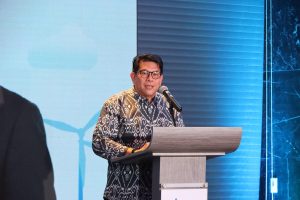
PLN EPI Biomass Director Hokkop Situngkir said bioenergy offers significant potential to reduce Indonesia’s dependence on fossil fuels while supporting national decarbonisation goals, the state-owned company said on Thursday, July 2. Speaking at the ReEnergize Summit 2026 at the University of Indonesia campus, he said Indonesia has abundant domestic resources, including biomass from plantations, agriculture, forestry, and urban waste, but stronger collaboration is needed to unlock that potential.
PLN EPI estimates Indonesia has biomass potential of around 83.4 million tons per year, largely concentrated in Sumatra, Kalimantan, and Java. Under the government’s 2025–2029 electricity supply plan (RUPTL), bioenergy is expected to contribute an additional 0.61 gigawatts (GW) through co-firing, biomass power plants, and biogas projects.
Hokkop said PLN has gradually introduced cleaner fuels across its power fleet, with most diesel power plants already using B40 biodiesel, while coal-fired plants have started co-firing with biomass to cut coal consumption.
“Energy transition must become a solution, not a burden,” Hokkop said, emphasising that the transition should balance cleaner energy development with affordability, energy security, and economic competitiveness.
However, the government’s broader push for bioenergy—particularly its expansion of biodiesel blending to B50—has raised concerns from energy analysts.
A day before the B50 mandate took effect on Wednesday, July 1, the Institute for Essential Services Reform (IESR) urged the government to reassess the economic and environmental risks of the biodiesel policy, warning that it could create significant trade-offs across sectors.
Fabby Tumiwa, Chief Executive Officer of IESR, said biodiesel blending can help reduce diesel imports in the short term, especially during supply disruptions, but should not become Indonesia’s main long-term energy transition strategy.
“The government needs to assess B50 comprehensively, not only from the perspective of reducing diesel imports, but also its impacts on costs, feedstock supply, food prices, smallholder farmers, and the environment,” Fabby said.
IESR warned that higher demand for crude palm oil (CPO) for B50 could tighten supplies for the food sector, raise cooking oil prices, increase inflationary pressures, and create additional land-use pressures.
The institute also noted that the economic rationale behind B50 may have weakened, as global oil prices and import risks have eased, while domestic refinery capacity—including the Balikpapan refinery—has improved. At the same time, elevated CPO prices could increase the cost burden of biodiesel subsidies.
According to IESR’s analysis, expanding biodiesel blending to B60 could reduce emissions by around 88 million tons of carbon dioxide by 2060, although this estimate does not account for emissions from land-use change. By comparison, large-scale electrification of transport could deliver deeper cuts. IESR projects battery electric vehicles could reduce emissions by 46 million tons by 2060, with reductions rising to 210 million tons when combined with vehicle age limits and stronger adoption policies.
IESR argues that Indonesia’s long-term transport decarbonization should prioritise electric vehicles, public transport expansion, fuel efficiency standards, and renewable energy deployment rather than relying heavily on biodiesel.
As Indonesia pushes bioenergy as part of its energy transition strategy, the debate highlights a central challenge: balancing short-term energy security needs with long-term climate, economic, and environmental goals. (nsh)
Banner photo: PLN Energi Primer Indonesia