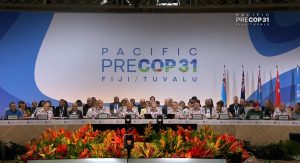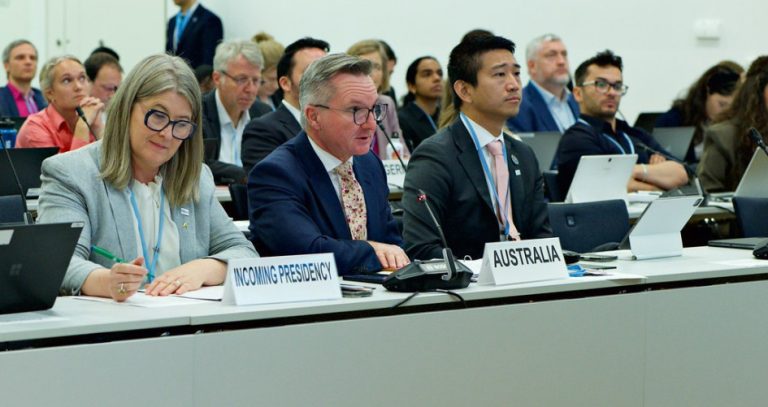
Jakarta — Indonesia presented its progress in climate transparency at the United Nations Framework Convention on Climate Change (UNFCCC) June Climate Meetings in Bonn, where the country presented its first Biennial Transparency Report (BTR1) during the third session of the Facilitative Multilateral Consideration of Progress (FMCP).
Indonesia was among 37 countries presenting their climate progress reports at the session, marking the largest participation since the FMCP mechanism began under the Paris Agreement. The process enables countries to assess progress on climate commitments, exchange lessons, and strengthen trust through transparent reporting.
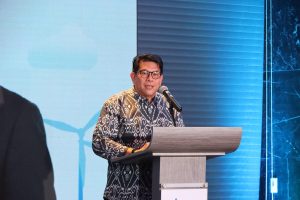
Mitta Ratna Djuwita, Director of Greenhouse Gas Inventory and Monitoring, Reporting, and Verification (MRV) at Indonesia’s Ministry of Environment, said in a recording on the UNFCCC’s YouTube channel that Indonesia’s submission of BTR1 reflected a broad national effort to improve accountability in climate action.
“This is a holistic national effort toward transparency and climate accountability,” Djuwita said.
Indonesia submitted its first BTR on schedule in December 2024 and completed a technical expert review in May 2025, underscoring improvements in its national monitoring and reporting system.
The report showed Indonesia’s total greenhouse gas emissions reached around 1 million kilotons of CO2 equivalent in 2022. The energy sector remained the largest contributor, accounting for 53.42% of total emissions, followed by land use, land-use change and forestry (LULUCF) at 22.58%.
Other major contributors included waste at 10.04%, agriculture at 9.80%, and industrial processes and product use at 4.15%.
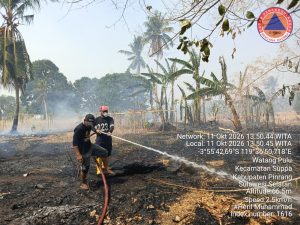
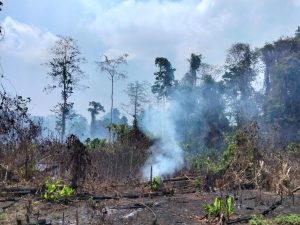
Djuwita noted that while emissions from the land sector fluctuate due to peatland and forest fires, overall emissions excluding LULUCF have continued to rise steadily, largely driven by energy demand and industrial growth.
Indonesia also highlighted progress toward its Enhanced Nationally Determined Contribution (NDC), which raises the country’s unconditional emissions reduction target to 31.89% and conditional target to 43.20% by 2030 compared with business-as-usual projections.
According to the presentation, Indonesia has successfully achieved both targets over the 2020–2022 period. The government credited this progress to stronger data systems, including the National Registry System (SRN PPI), which supports measurement, reporting, and verification of climate actions.
Beyond mitigation, Indonesia presented adaptation measures to address worsening climate risks. Over the past three decades, the country’s average annual temperature has increased by 0.6 degrees Celsius, with record-high temperatures recorded in 2016 and 2023.
To improve resilience, Indonesia has integrated eight adaptation strategies into national development planning. Key initiatives include expanding the Climate Village Program (ProKlim) to 4,000 locations and rehabilitating 3,000 irrigation networks to improve food and economic resilience.
Digital tools such as SIDC for climate vulnerability mapping and Aksara for monitoring climate action progress have also become central to Indonesia’s adaptation strategy.
Despite the progress, Indonesia said significant challenges remain, particularly in climate finance and technical support. Between 2021 and 2022, the country received approximately USD 1.7 billion in climate-related support, but only 46%—or around USD 930 million—was directly aligned with achieving its enhanced NDC targets.
Indonesia called for greater international support to strengthen emissions monitoring systems, expand climate field schools, and improve disaster early warning systems.
At the global level, UN Climate Change described the FMCP session as evidence of growing momentum behind transparency under the Paris Agreement. The Bonn meeting featured 148 questions submitted by 25 countries, with discussions focusing heavily on emissions reduction policies, institutional arrangements, climate finance, and carbon markets.
COP30 President André Corrêa do Lago stressed that transparency is critical to ensuring credible climate action, the UNFCCC said in a statement on Wednesday, July 1.
“Transparency is indispensable to implementation,” he said. “Without transparency, there can be no credible way of assessing whether we are delivering on the commitments we have made.”
Indonesia’s participation reflects its increasingly prominent role in global climate governance, particularly as Southeast Asia’s largest economy and one of the world’s largest greenhouse gas emitters. The country has also positioned itself as a key player in energy transition, forest conservation, and carbon market development. (nsh)
Banner photo: Constantine Sauer/UN Climate Change