Jakarta — Around 655 million people worldwide still live without access to electricity, while nearly 2 billion continue to rely on polluting fuels and technologies for cooking, underscoring the urgent need to accelerate progress toward universal energy access by 2030, according to a new global report released on Wednesday, June 24.
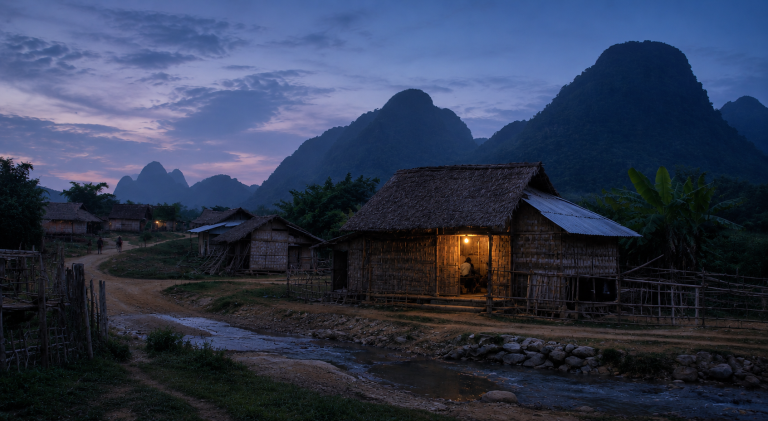
The latest “Tracking SDG 7: The Energy Progress Report” found that progress toward Sustainable Development Goal (SDG) 7 remains uneven, with Sub-Saharan Africa carrying the heaviest burden. The goal aims to ensure universal access to affordable, reliable, sustainable and modern energy.
More than 560 million people in Sub-Saharan Africa still lack electricity, while 970 million do not have access to clean cooking solutions, the report said. The region’s electrification progress has slowed significantly, and the pace must now triple to achieve universal access by 2030.
The report, published by the International Energy Agency, International Renewable Energy Agency, United Nations Department of Economic and Social Affairs, World Bank, and World Health Organization, highlighted that global electricity access stalled at 92 per cent in 2024, with annual growth slowing sharply compared with the previous decade.
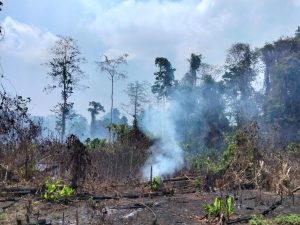
The largest energy gap remains access to clean cooking, with roughly one-quarter of the world’s population still dependent on fuels such as charcoal, wood, kerosene and coal. The report warned that without stronger intervention, 1.8 billion people could still rely on polluting cooking fuels by 2030.
This has serious health consequences. Household air pollution linked to polluting cooking methods is responsible for an estimated 3 million deaths annually, according to the report.
Despite these challenges, the report noted encouraging progress in renewable energy deployment.
Renewables now account for more than 30 per cent of global electricity consumption, while renewable energy-generating capacity reached a record 544 watts per person globally. However, significant disparities remain between rich and poor countries. Low-income countries recorded only 33.6 watts of renewable capacity per person, compared with 1,224 watts per person in high-income economies.
Energy efficiency gains also remain below target. Global progress in reducing energy intensity slowed from 2.4 per cent in 2022 to 1.5 per cent in 2023, widening the gap between current performance and what is needed to meet SDG 7.
Meanwhile, international public financial flows to developing countries for clean energy rose only marginally, from USD24.4 billion in 2023 to USD24.6 billion in 2024.
The report warned that financing remains a major barrier, particularly for the least developed countries. Financial support for clean energy in these nations fell 11 per cent to USD3.7 billion in 2024.
Affordability continues to be another major obstacle. Even where infrastructure exists, many households remain unable to pay for grid connections, wiring, or basic energy services.
The report stressed that stronger political leadership, better policy coordination, and greater investment in affordable clean energy solutions are essential to close the access gap.
Distributed renewable energy systems such as off-grid solar and mini-grids were identified as cost-effective solutions for expanding electricity access, while electric cooking, bioethanol and biogas are gaining momentum as scalable alternatives for clean cooking.
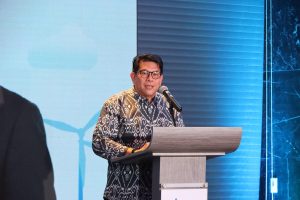
“Recent global energy shocks have made one thing clear: countries with strong renewable energy capacity are better positioned to withstand economic and supply disruptions,” said Francesco La Camera.
The report will be presented to policymakers at a special launch event on July 8, following the High-Level Political Forum on Sustainable Development in New York City, where progress on the Sustainable Development Goals will be reviewed. (nsh)
Banner photo: Image generated by OpenAI’s DALL·E via ChatGPT (2026)