Jakarta — Indonesia is ramping up efforts to position itself as a major player in global carbon markets, with the government pledging to build a carbon trading system that is credible, transparent, and capable of mobilising large-scale climate finance.
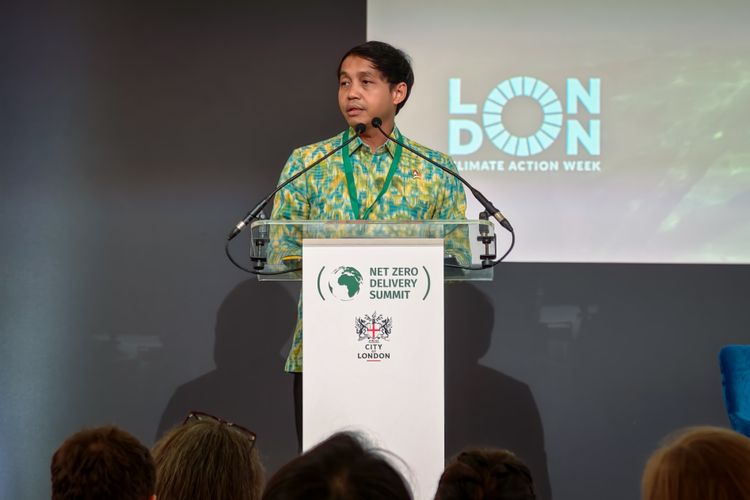
Speaking at the London Climate Action Week on Wednesday, June 24, Forestry Minister Raja Juli Antoni said Indonesia is entering a new phase in carbon market implementation, backed by regulatory reforms and major upcoming carbon credit issuances from the forestry sector.
A major milestone is scheduled for early July, when the Forestry Ministry plans to issue approvals and facilitate the issuance of forestry carbon credits totalling more than 30 million tonnes of CO₂ equivalent on July 6. Officials describe this as one of the largest carbon credit issuances in Indonesia’s forestry sector to date.
Three days later, on July 9, Indonesia will launch its new Carbon Unit Registry System (SRUK), which will serve as the country’s main carbon market infrastructure. The registry is expected to improve transparency, accountability, and traceability for carbon transactions while providing greater certainty for project developers and investors.
The launch will also include registration of several forestry carbon projects under internationally recognised standards, underscoring Indonesia’s ambition to align its market with global expectations.
Indonesia, home to one of the world’s largest tropical forest areas, sees carbon markets as a strategic tool to help fund emissions reductions while protecting forests, peatlands, and mangroves.
The Minister for Forestry emphasised that the main challenge facing climate finance at present is not a lack of ambition or a shortage of capital, but rather the failure to create conditions conducive to the safe and large-scale flow of investment into various climate solutions.
Addressing a high-level session titled “From Fragile to Financeable – De-risking Carbon Credit Markets”, Raja Juli said the biggest challenge in climate finance is no longer a lack of ambition or capital, but the absence of conditions that allow investment to flow safely and at scale into climate solutions.
“Carbon markets have enormous potential to channel investment into emissions reduction, forest protection, ecosystem restoration, and sustainable development,” Raja Juli said. “But to achieve that potential, carbon markets must be built on integrity, transparency, regulatory certainty, and trust.”
The government has recently strengthened its regulatory framework through Presidential Regulation No. 110/2025, followed by Forestry Ministerial Regulations No. 6/2026 and No. 7/2026, which govern carbon governance, environmental integrity, and investment certainty in forestry-based carbon projects.
In meetings with members of The Coalition to Grow Carbon Markets, Raja Juli said Indonesia is moving beyond policy design into practical implementation, signalling readiness to offer tangible climate investment opportunities.
He also urged stronger international cooperation to build more robust carbon markets, including better market infrastructure, stronger liquidity mechanisms, and improved risk-sharing instruments to attract private and institutional capital.
Ahead of COP31, Indonesia is pushing three priorities for global carbon market development: improving market integrity and transparency, strengthening market infrastructure and risk-sharing mechanisms, and ensuring carbon finance delivers measurable benefits to local communities, Indigenous peoples, and forest guardians.
“The future of carbon markets will not be determined solely by the volume of carbon credits traded,” Raja Juli said. “It will be defined by the trust we build, the investment we mobilise, and the climate and development benefits we deliver.” (nsh)
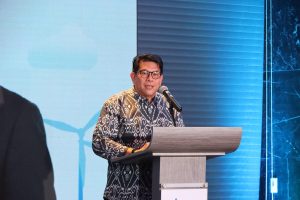
Banner photo: Forestry Minister Raja Juli Antoni (Source: Ministry of Forestry)