Jakarta — The 64th sessions of the Subsidiary Bodies (SB64) under the United Nations Framework Convention on Climate Change (UNFCCC) opened in Bonn on Monday, June 8, setting the stage for negotiations ahead of the annual UN climate conference, COP31, scheduled to take place in Antalya, Türkiye, in November.
Opening the two-week meeting, UN Climate Change Executive Secretary Simon Stiell urged governments to focus on implementing existing climate commitments rather than reopening past agreements.
“We don’t have time to re-open past debates or renegotiate commitments already made,” Stiell said, warning that escalating climate impacts, economic instability and geopolitical tensions are increasing the urgency for action.
He pointed to recent deadly heatwaves, the continuing effects of El Niño, and rising fossil fuel costs linked to conflict in the Middle East as evidence that dependence on fossil fuels is undermining economic stability and energy security. According to Stiell, continued reliance on fossil fuels means “continuing to import inflation and economic instability” while leaving communities vulnerable to climate disasters.
The Bonn meetings, which run until 18 June and are expected to attract more than 7,000 participants, are widely regarded as a key milestone in shaping the agenda and outcomes for COP31. Delegates include government negotiators, civil society representatives, business leaders and investors.
Among the priorities identified by Stiell are advancing negotiations on the Global Goal on Adaptation and the development of the Belém Adaptation Indicators, implementing the outcomes of the first Global Stocktake under the Paris Agreement, developing a just transition mechanism, and progressing climate finance discussions, including work on the Adaptation Fund.
Stiell also called for closer engagement between the UN climate process and the real economy, highlighting the role of governments, companies, investors, cities and civil society in accelerating implementation. He encouraged delegates to use the Global Climate Action Agenda to address challenges such as energy security, food security, urban resilience and methane emissions.
“Tackling the global climate crisis is the hardest, but most important, thing humanity has ever tried to do together,” Stiell said. “It is worth doing, because we have no choice.” (nsh)
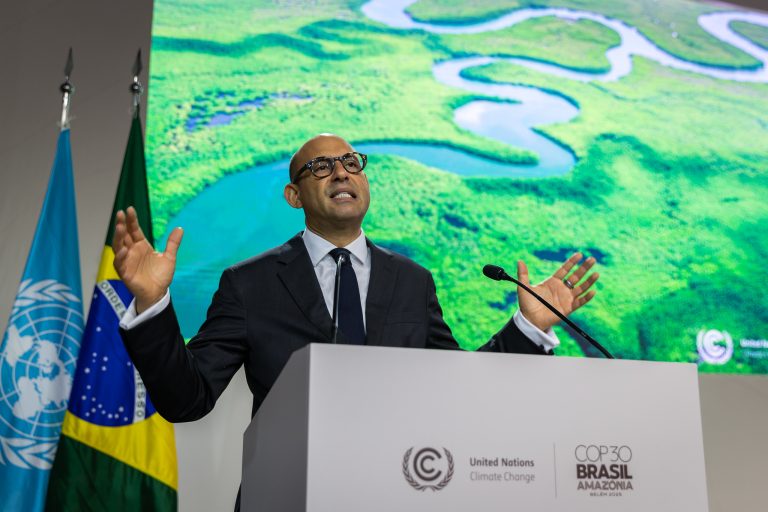
Banner photo: UN Climate Change Executive Secretary Simon Stiell speaks at COP30 in the Brazilian Amazon (Photo: © UN Climate Change – Kiara Worth)