Jakarta — A civil society coalition has submitted its version of a long-awaited Indigenous Peoples Bill to Indonesia’s parliament, urging lawmakers to strengthen protections for indigenous communities and ensure they have a meaningful role in shaping the legislation.
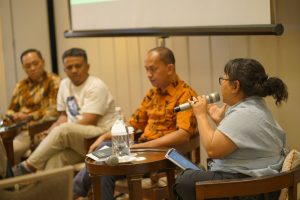
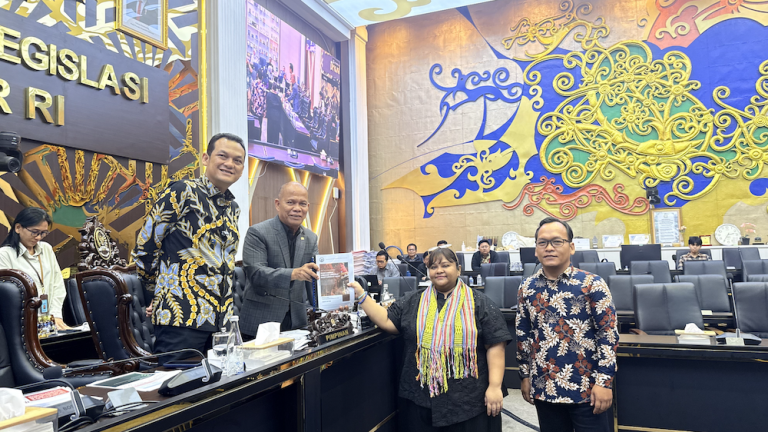
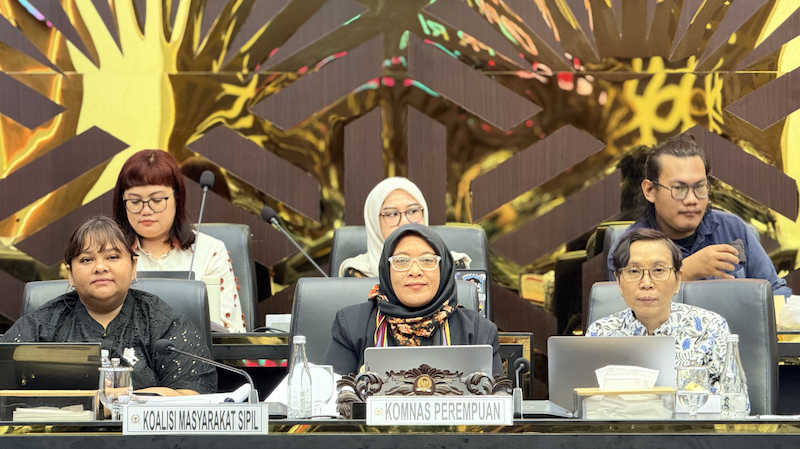
The Coalition to Monitor the Indigenous Peoples Bill (Koalisi Kawal RUU Masyarakat Adat) on Wednesday, September 2, handed its draft to the House of Representatives’ Legislative Body (Baleg DPR RI), highlighting 11 key issues that it says should form the foundation of the proposed law.
The coalition said the bill should go beyond simply recognising the existence of indigenous peoples. Recognition must be accompanied by concrete protection of their rights, including mechanisms to restore rights that have been violated or taken away, it said.
The 11 issues include stronger definitions of indigenous peoples and customary territories; simpler recognition and protection procedures; free, prior and informed consent (FPIC); protections for indigenous women; an Indigenous Peoples Commission; rehabilitation, restitution and compensation; empowerment; corporate responsibilities; and criminal provisions.
The draft also calls for special measures for indigenous communities in certain circumstances and establishes responsibilities for both state and non-state actors to respect and protect indigenous rights.
The coalition said the issues are closely connected. The loss or transfer of customary territories can deprive communities not only of land, but also of food sources, livelihoods, traditional knowledge and the ability to maintain their identity and way of life.
Habel Simanjuntak, an indigenous representative from Tano Batak, said communities have often been forced to repeatedly prove their existence and ownership of customary land, despite having occupied and managed the territories for generations.
He said that to the Batak people “land is not only a place to live or earn a livelihood, but is also connected to our ancestors, history and identity,” calling for authorities to give greater weight to community histories, testimony and customary rules rather than relying solely on formal certificates and documents.
The coalition also stressed the need for specific protections for indigenous women, children and young people. Women often play central roles in maintaining food systems, traditional knowledge, health and family and community life, while younger generations face challenges in preserving their identity, language and traditional knowledge.
Maria Amotey, an indigenous woman from the Wambon community in South Papua’s Boven Digoel, said women must be involved in decisions affecting customary land.
“For us indigenous women in Papua, the forest and customary territory are like a mother who gives us life,” she said, describing how women depend on the forest for food, drinking water, farming, traditional clothing and natural medicines.
The coalition also called for clearer mechanisms to resolve conflicts and restore indigenous rights, saying communities often remain in a weak position when dealing with permits, development projects and investment interests. In some cases, communities face criminalisation while attempting to defend their territories, it said.
Erwin Dwi Kristianto, a representative of the coalition, said the civil society draft was intended to ensure that indigenous peoples’ experiences and needs remain central during the legislative process.
He said current recognition mechanisms remained “layered, conditional and sectoral,” and called for a declarative definition of indigenous peoples, with the state responsible for recording rather than determining their existence, alongside recognition and protection of customary territorial rights.
The coalition urged lawmakers to make the legislative process open and participatory, with indigenous communities involved not merely through consultations but directly in drafting and decision-making.
The coalition comprises civil society organisations, indigenous communities, academics and individuals seeking to advance the passage of the Indigenous Peoples Bill as part of efforts to strengthen democracy and protect citizens’ constitutional rights. (nsh)
Banner photo: The Coalition to Monitor the Indigenous Peoples Bill (Koalisi Kawal RUU Masyarakat Adat) on Wednesday, September 2, handed its draft to the House of Representatives’ Legislative Body (Baleg DPR RI), highlighting 11 key issues that it says should form the foundation of the proposed law. Source: Koalisi Kawal RUU Masyarakat Adat