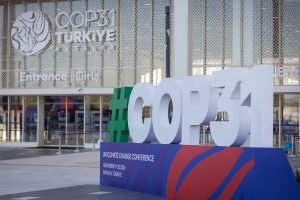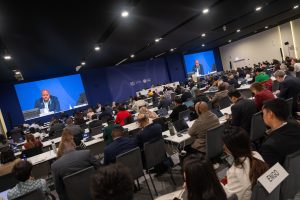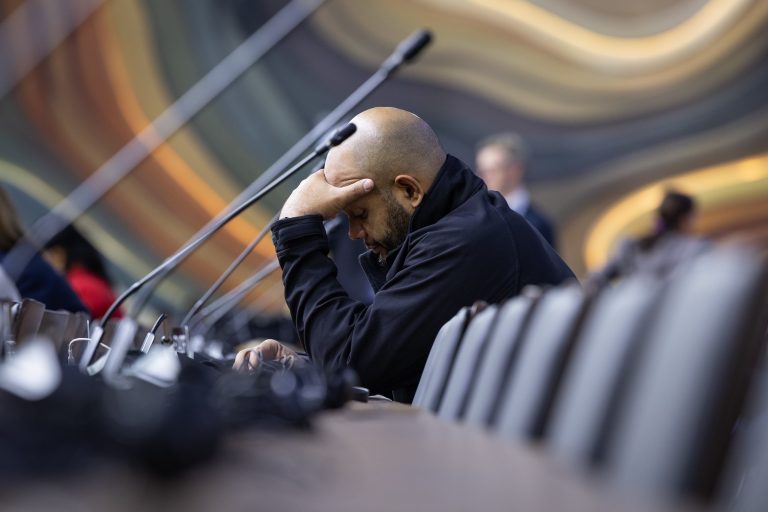
UN Secretary-General António Guterres has expressed deep disappointment after the COP31 climate summit ended on Sunday without consensus on an overarching agreement, warning that powerful fossil fuel interests continue to obstruct efforts to confront the climate crisis.
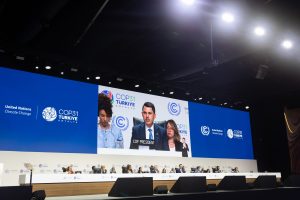
“I am deeply disappointed that COP31 has ended without consensus on an overarching outcome,” Guterres said in a statement on November 22, following more than 44 hours of overtime negotiations in Antalya, Türkiye.
He said the failure to reach agreement should not obscure the scientific evidence or the urgency of climate action, as global temperatures continue to break records, extreme weather intensifies, and greenhouse gas emissions remain too high.
“There may be no consensus in the negotiating room. There is no ambiguity in the science,” he said.
The collapse of negotiations over the proposed Antalya Pact marks a significant setback for multilateral climate diplomacy. The summit became the longest-running UN climate conference in history and the first since COP6 in 2000 to conclude without an overarching high-level decision document.
Nearly 200 countries participated in the negotiations, but deep divisions over fossil fuels and climate finance ultimately prevented agreement.
Guterres said the world was now poised to exceed the Paris Agreement’s 1.5°C temperature limit, warning that the opportunity to keep any overshoot as short and limited as possible was rapidly closing.
“The take-home message from COP31 is clear: the world must do much more to confront the climate crisis – and it must do it now,” he said.
He pointed directly to the influence of fossil fuel interests, arguing that those benefiting from environmental destruction should not dictate the terms of climate action.
“Fossil fuels are driving the climate crisis,” he said, adding that continued dependence on coal, oil and gas was fuelling climate disruption, exposing economies to price shocks and undermining energy security.
“We can’t put out the fire while pouring fuel on it.”
Fossil fuel divisions derail agreement
The central disagreement concerned whether the final agreement should explicitly address the transition away from fossil fuels.
An initial draft of the proposed Antalya Pact included language calling for an immediate transition away from fossil fuels. However, references to coal, oil and gas were subsequently removed following objections from oil-producing countries, including Saudi Arabia, alongside Russia and India.
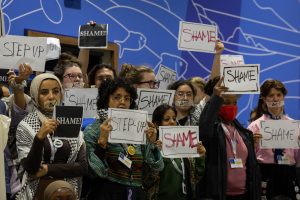
The removal of explicit fossil fuel language triggered strong opposition from climate-ambitious countries, including the European Union, the United Kingdom and vulnerable small island states.
These countries argued that the final draft failed to adequately address the principal driver of climate change and offered insufficient progress beyond the commitment made at COP28 in Dubai in 2023 to transition away from fossil fuels in a just, orderly and equitable manner.
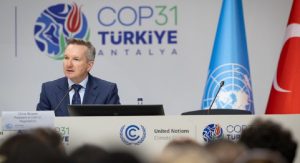
COP31 President of Negotiations Chris Bowen of Australia described the divisions as “unbridgeable red lines”.
The lack of concrete commitments on climate finance, particularly support for adaptation and addressing loss and damage, further complicated negotiations, with developing countries calling for more predictable and substantial financial assistance.
Sierra Leone’s Minister of Environment and Climate Change, Jiwoh Emmanuel Abdulai, said the failure to make meaningful progress was particularly disappointing given the urgent needs of vulnerable communities.
“Nearly 200 countries showed up in Antalya ready to work, so it is deeply disappointing that we failed to make meaningful progress,” he said.
“Beyond these conference halls there are farmers losing their harvests, children unable to learn in extreme heat, and communities losing lives and livelihoods to devastating floods.”
Abdulai said countries had come to COP31 seeking progress, particularly on adaptation finance, stressing that these were urgent needs rather than distant policy objectives.
“We remain committed to the multilateral process – global cooperation is critical and urgent,” he said.
Countries stand firm on climate ambition
Christiana Figueres, former executive secretary of the UN Framework Convention on Climate Change (UNFCCC) and founding partner of Global Optimism, described the failure to reach agreement as deeply disappointing, particularly in the year the world acknowledged that it would temporarily breach the Paris Agreement’s 1.5°C limit.
However, she argued that the rejection of the final draft by more than 130 countries reflected a refusal to endorse an agreement that did not adequately reflect the scale of the climate emergency.
“Today nations stood up for what science and justice demand,” she said.
Figueres also highlighted progress outside the formal negotiations, particularly through the COP31 Action Agenda, which she said demonstrated that the clean energy transition was continuing despite efforts by major oil and gas producers to delay climate action.
She pointed to pledges or signals from countries representing around half of the global economy to increase electricity’s share of global final energy consumption to 35% by 2035.
“The COP process is evolving and COP31 showed that progress can be achieved without consensus in the plenary,” she said.
She argued that the UN climate process remained important as a platform for accelerating solutions, strengthening accountability and ensuring a just transition.
“Now is the time to learn the lessons of Antalya, get back up, and get back to work,” she said.
Pressure to deliver beyond the negotiations
Despite the absence of an overarching agreement, Guterres urged governments to move forward with implementing existing climate commitments, including the COP28 agreement on transitioning away from fossil fuels.
He welcomed countries developing concrete plans and called for progress on roadmaps advanced by the Brazilian COP30 Presidency to accelerate the transition away from fossil fuels and reverse deforestation and forest degradation.
He also called for deep and rapid emissions reductions this decade, with major emitters taking the lead and developed countries delivering on climate finance commitments.
On adaptation, Guterres urged developed countries to fulfil their commitment to lead efforts to triple adaptation finance and ensure funding reaches the communities most in need.
“Put dates and dollars behind that pledge now. Lives depend on it,” he said.
He stressed that countries least responsible for the climate crisis should not be left to bear its worst consequences, describing this as a matter of climate justice.
The ultimate measure of climate action, he said, would be developments beyond the negotiating halls: declining fossil fuel dependence, faster deployment of clean energy, modernised electricity grids, reduced methane emissions, restored forests and increased financial support for developing countries.
“The climate crisis will not wait for governments to find common ground. Neither can we,” Guterres said in a message to civil society, young people, Indigenous Peoples, scientists and frontline communities.
He urged them to continue demanding action and holding governments and companies accountable.
“Keep spreading the facts. Keep demanding action. Keep turning up the heat.” (nsh)
Banner photo: © UN Climate Change – Kiara Worth