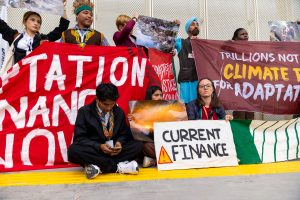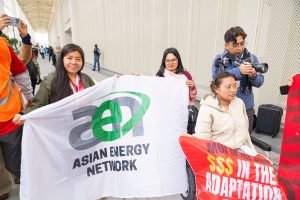
Climate activists and representatives of Indigenous communities from Australia, Nepal, Palestine and Africa have called for greater accountability from governments and corporations over fossil fuel extraction, environmental destruction and the worsening impacts of climate change.
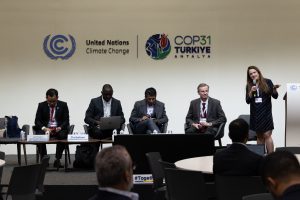
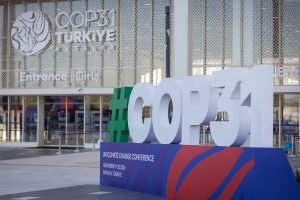
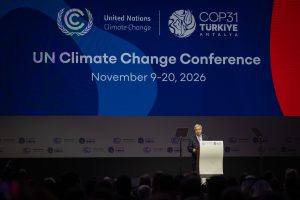
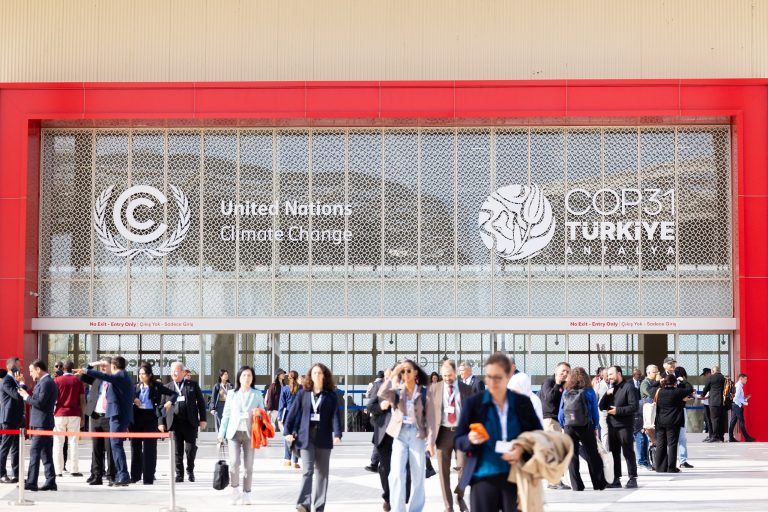
Speaking at a press conference during the UN Climate Change Conference (COP31) in Antalya, Türkiye, on Thursday, November 12, the activists argued that international climate negotiations were failing to address the realities faced by vulnerable communities, particularly those affected by conflict, displacement, environmental degradation and extreme weather.
Swedish climate activist Greta Thunberg opened the press conference by warning that the climate crisis was already a matter of life and death, with its consequences unfolding faster and more severely than predicted.
She described the crisis as fundamentally an issue of injustice, with communities least responsible for greenhouse gas emissions suffering its worst impacts.
“The actions from those in power here are completely detached from reality,” Thunberg said, calling for urgent action to address the escalating crisis.
Rikki Dank, a Gudanji and Wakaya Traditional Owner from Australia’s Northern Territory, highlighted the impacts of fossil fuel extraction on Indigenous lands and communities.
Dank, who is taking the Australian government to the UN Human Rights Committee over fossil fuel exports, said her traditional country was being subjected to fracking, threatening water resources, sacred sites and cultural heritage.
She urged Australian Prime Minister Anthony Albanese to listen to Indigenous communities opposing fracking and the expansion of coal, oil and gas projects.
“Our Prime Minister needs to stop speaking and start listening,” she said.
Dank also cautioned against treating the transition to clean energy as an automatic solution for Indigenous communities, warning that the growing demand for rare earths and critical minerals could reproduce the environmental and social damage associated with conventional mining.
She called for Indigenous peoples and local communities to be involved in shaping solutions to the climate crisis.
Mountain communities demand stronger climate research
Sagar Dhakal, a representative from Nepal, called for greater international support for scientific research and early-warning systems to protect mountain communities from increasingly dangerous climate-related disasters.
Referring to recent disasters in the Himalayas, Dhakal said research had identified a 100-metre crack in a glacier six months before a major disaster, but the warning was only recognised 20 days after the event.
He contrasted Nepal’s experience with Switzerland, where research and monitoring had enabled authorities to evacuate residents from the village of Blatten two days before a potentially devastating glacier-related landslide.
Dhakal said Nepal had suffered significant losses, citing approximately 7,000 people from more than 34 countries affected by the disaster.
He warned that around 90 per cent of glaciers in Nepal were facing the risk of similar disasters, particularly in the Koshi River basin.
Nepal, Bhutan and Kyrgyzstan had jointly pushed for a dedicated mountain and climate change agenda at COP31, but the proposal had not secured agreement, he said.
“We need to work on the science. We need to work on the research,” Dhakal said, urging developed countries and the international community to support vulnerable mountain nations in identifying and preventing future disasters.
Palestinian activists link fossil fuels to conflict
Mohammad Usrof, founder of the Palestinian Institute for Climate Strategy (PICS), linked fossil fuel supply chains to the ongoing conflict in Palestine, arguing that the same economic structures driving climate change were also sustaining violence and environmental destruction.
He said the destruction in Gaza amounted not only to a humanitarian catastrophe but also to ecocide, citing the displacement of approximately 70,000 families following heavy rainfall as people living in makeshift shelters faced increasingly difficult conditions.
Usrof accused several countries of supplying energy resources that sustain Israel’s military and electricity systems, naming Türkiye, Colombia and South Africa among the countries involved in fossil fuel supply chains.
He also highlighted international labour movements against these shipments, saying dock workers in more than 30 countries had mobilised on Oct. 30 to prevent fuel shipments.
Representing the Palestinian Civil Society Coalition, he outlined three demands at COP31: suspending Israel from the UN Framework Convention on Climate Change (UNFCCC) and the wider United Nations system; ending the exploitation of Palestinian energy resources; and imposing a comprehensive energy embargo on supplies destined for Israel.
He also welcomed the withdrawal of Dana Petroleum from a consortium seeking to extract gas from Palestinian waters, describing it as an example of the impact of pressure from workers and civil society.
“There’s no climate justice without Palestinian liberation,” Usrof said.
African communities demand reparations and accountability
Celine Isimbi, an advocate representing African and African-descendant communities, criticised the international climate process for producing political commitments without delivering meaningful improvements for communities experiencing the consequences of climate change and extractive industries.
Drawing on her family’s experience of displacement, she described how conflict, colonial exploitation and environmental destruction had compounded vulnerabilities across generations.
She cited intensifying droughts affecting pastoralist communities in the Horn of Africa, growing food insecurity and increasing displacement, while governments continued to fall short of their financial commitments.
Isimbi also criticised the role of financial institutions, insurers, mining companies and governments in financing and facilitating fossil fuel extraction and militarisation.
She singled out Canada, the United States and the United Kingdom for their historical and continuing roles in supporting extractive industries and fossil fuel operations.
She argued that climate justice required addressing the economic and political systems behind environmental destruction, rather than relying on incremental commitments at international negotiations.
“We are not here begging for scraps,” Isimbi said, calling for the restoration of land, water, natural resources and rights taken from Indigenous peoples and communities of African descent.
She warned against another COP focused on implementation without ensuring that vulnerable communities had access to finance and the ability to make decisions about their own futures.
The speakers collectively urged governments to move beyond diplomatic commitments and address the links between fossil fuel dependence, mining, militarisation, displacement and environmental destruction.
Their interventions highlighted growing demands from civil society for climate action that goes beyond emissions reduction to include human rights, Indigenous sovereignty, accountability and reparations for communities bearing the consequences of the climate crisis. (nsh)
Photo: © UN Climate Change – Kubilay Citfci