by: Roffie Kurniawan
Jakarta — Indonesia is accelerating its national Waste-to-Energy (WtE) framework to tackle escalating urban waste crises, break the deadlock of the national waste crisis, and chart a concrete path toward environmental sustainability while simultaneously injecting critical renewable capacity into the national grid.
After years of being trapped in public discourse and regulatory debates, Waste-to-Energy (WtE) or Pengolahan Sampah menjadi Energi Listrik (PSEL) initiatives have officially transformed from paper blueprints into ground reality.
This progressive leap is marked by the ground-breaking ceremony of the Denpasar Raya PSEL megaproject in Pesanggaran, Pedungan village, South Denpasar, Bali on July 8, 2026, which is being followed by intensive preparations and heavy machinery mobilisation in two crucial metropolitan regions buffering the capital: Bogor and Bekasi.
These modern infrastructures represent a radical intervention necessary to save major Indonesian cities from the ticking time bomb of expanding landfill mountains while accelerating the national renewable energy mix.
The Bali WtE high-profile officiation ceremony was led by Coordinating Minister for Food Affairs Zulkifli Hasan, alongside Minister of Environment Jumhur Hidayat, Minister of Investment and CEO of BPI Danantara Rosan Roeslani, and Bali Governor Wayan Koster. This landmark facility represents the central government’s first major step in realising its national strategic framework for sustainable urban waste transformation.
PT PLN (Persero) has officially agreed on long-term cooperation through the signing of a Power Purchase Agreement (PPA) to absorb the clean energy generated by the Denpasar Raya Waste-to-Energy (PSEL) project in Bali.
The signing of the 30-year strategic contract was carried out commercially alongside the project’s physical ground-breaking ceremony. The agreement was signed by the board of directors of PT PLN (Persero) together with PT Daya Energi Bersih Nusantara (Denera) as the green investment holding under BPI Danantara, and PT Weiming Nusantara Bali New Energy as the Waste-to-Energy Project Developer and Management Agency (BUPP) of Bali.
On that occasion, Chief Investment Officer (CIO) of Danantara Indonesia, Pandu Sjahrir, emphasised the operational readiness of this ecosystem governance. “The signing of the Power Purchase Agreement (PPA) with PT PLN (Persero) along with today’s physical inauguration serves as a strong sign that the commercial foundations and long-term energy off-taker schemes are secure, ready to drive the realisation of fully integrated waste management in Indonesia,” he said.
Apart from serving as a main pillar to save the Island of the Gods’ tourism ecosystem from an environmental crisis, this national pilot project is targeted for completion and expected to enter its full commercial operation phase by the end of 2027.
By establishing PT Daya Energi Bersih Nusantara (Denera) under the Indonesia Investment Authority (BPI Danantara), the government has created a structured investment platform. This mechanism has successfully bypassed convoluted bureaucratic pathways, provided legal certainty for investors, and consolidated cross-sector commitments among ministries, local governments, and PLN as the guaranteed energy off-taker.
Backed by this secure business ecosystem, trillion-rupiah investments from global multinational consortia can flow smoothly into physical execution.
As the national pilot project, the Denpasar Raya PSEL in Pedungan Village, Bali, carries the responsibility of proving the efficiency of WtE technology in tropical climates.
Representing an investment of Rp3 trillion, this facility is engineered to process 1,200 to 1,500 tons of waste daily. Physical progress in Bali is crucial; its full commercial operation is projected to reduce up to 80% of the waste volume overloading the Suwung Landfill (TPA), while feeding clean electricity to roughly 100,000 households across the island.
The momentum in Bali has triggered a positive domino effect in West Java. In Bekasi City, the Phase 1 PSEL project managed by PT Wangneng Bekasi Environment Nusantara is currently finalising its macro-engineering designs and spatial planning alignments.
Given the social complexities and high volume of daily municipal waste in Bekasi, the local government and developers are applying extreme diligence to ensure that physical ground-breaking proceeds smoothly.
This 1,000-ton daily capacity facility plays a vital role in reducing chronic reliance on the overcapacity Bantargebang landfill system.
Concurrently, the Bogor Raya PSEL project led by PT Weiming Nusantara Bogor New Energy presents a unique model of cross-administrative waste management integration. Combining the waste streams of both Bogor Regency and Bogor City, this project is fast-tracking integrated land acquisition and Environmental Impact Assessments (AMDAL).
The ground-breaking schedule for Bogor is designed to align closely with Bekasi, establishing a compact environmental restoration corridor in the suburban Jakarta area.
Eliminating pollution concerns with European standards
A significant hurdle in implementing thermal-based waste projects in Indonesia has been community resistance regarding air pollution, particularly the release of toxic substances like dioxins and furans.
To address these localised environmental anxieties, the Phase 1 WtE developers in Bali, Bekasi, and Bogor have committed to deploying advanced moving grate incinerator technology. This method ensures complete waste combustion at temperatures exceeding 850 degrees Celsius, destroying hazardous chemical compounds before they can form.
Furthermore, all modern PSEL facilities are strictly mandated to incorporate multi-layered Air Pollution Control Systems (APCS).
These advanced filtration systems comply with the European Industrial Emissions Directive (EU IED) standards, which represent some of the most rigorous environmental safety limits globally. Integrated with real-time emission monitoring connected directly to the Ministry of Environment, the system provides high levels of atmospheric safety for residential areas surrounding the facilities.
Upstream dynamics and financial viability
While downstream development shows clear progress, the long-term viability of the national WtE program depends heavily on upstream structural reforms. Modern incinerators require waste with a stable calorific value to maintain optimal electrical output.
However, typical municipal waste in Indonesia remains highly organic with high moisture levels due to inconsistent waste-sorting habits at the household level. Therefore, physical construction must be paired with massive public education campaigns focusing on separating organic and inorganic materials at the source.
From an economic perspective, sustainability hinges on transparent tipping fee or gate fee arrangements paid by municipal governments to the facility operators. The central government continues to advocate for local fiscal reforms to guarantee that environmental management receives adequate budgetary support.
Sustained synergy between municipal waste processing fees and green electricity sales to PLN will ensure healthy investment returns for international developers, guaranteeing these facilities operate reliably for decades.
Table 1: Developers of First Phase WtE projects
| Location Name | Developers |
| PSEL Denpasar Raya (Bali) | Zhejiang Weiming Environment Protection Co., Ltd. |
| PSEL Kota Bekasi | Wangneng Environment Co., Ltd |
| PSEL Bogor Raya | Zhejiang Weiming Environment Protection Co., Ltd – which forms a consortium firm called PT Wangneng Bekasi Environment Nusantara |
| PSEL Wilayah Yogyakarta | Cakra Energi Lestari Consortium – consisting of PT Pertamina Power Indonesia (Pertamina NRE) and global partner Tianjin TEDA. |
Source: Danantara
Table 2: Developers for Second Phase WtE projects
| Project Location | Selected Developers |
| Medan Raya | SUEZ-IAN Consortium (SUEZ Insan Asia) |
| Bekasi Regency | Consortium Everbright Cemerlang Energy (Everbright Harmoni) |
| Lampung Raya | Bumi Biru Indonesia (SUS Indoplas) |
| Serang Raya | Masa Depan Energi Indonesia (Chandra Waste Energy BZGE) |
| Semarang Raya | Veolia Environmental Services Asia Pte Ltd (Veolia) |
| Surabaya Raya | Consortium Mentari Citra Lestari (Bakrie Power SUS) |
| Bogor Raya 2 | MPM-CEVIA Consortium (Mega Power CEVIA) |
| Yogyakarta Raya | (Cakra Energi Lestari Consortium (Pertamina NRE Tianjin CITICC) |
Source: Danantara
The tangible progress demonstrated by the ground-breaking in Bali and the advanced construction preparations in Bekasi and Bogor proves that Indonesia has transitioned from rhetoric to execution in handling its waste emergency.
Backed by international engineering standards, firm institutional support from Danantara and Denera, and solid commitments from global private sectors, Waste-to-Energy has become a strategic pillar bridging environmental clean-up with energy security. The physical executions over the coming years will establish a new benchmark for urban environmental governance across the archipelago.
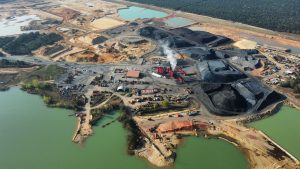
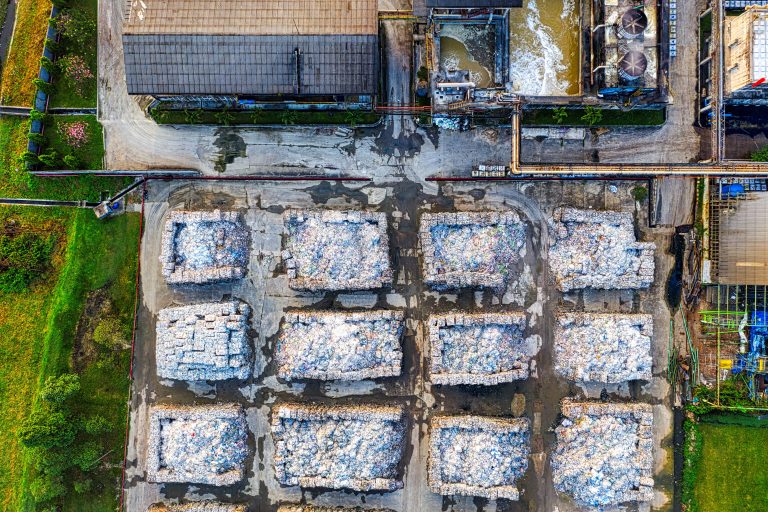
Banner photo: Aerial shot of a waste processing plant in Serang, Banten, Indonesia showcasing industrial operations. Tom Fisk/Pexels.com