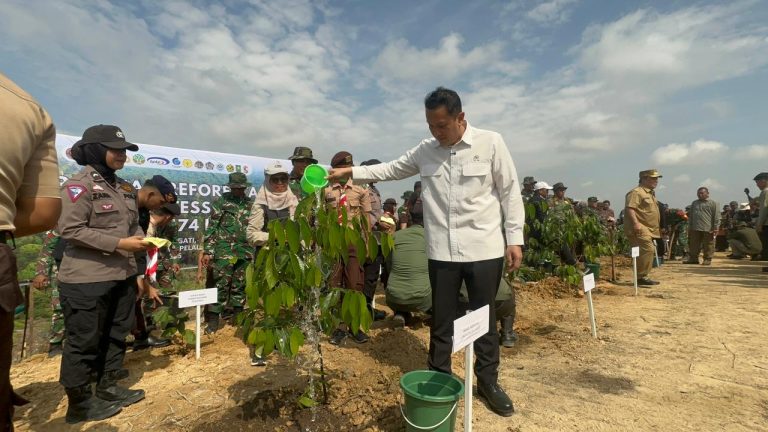
Jakarta – The Deputy Minister of Environment and Deputy Head of the Environmental Control Agency (KLH/BPLH), Diaz Hendropriyono, said the ministry has committed its resources to the restoration of Tesso Nilo National Park (TNTN), emphasising the use of scientific data and strategic funding to revive the degraded landscape.
Speaking during the launch of a reforestation program in Pelalawan, Riau, on Tuesday, March 3, the Deputy Minister announced that KLH/BPLH will provide Environmental Service (JLH) maps to help authorities prioritise areas with high ecological value for rehabilitation.
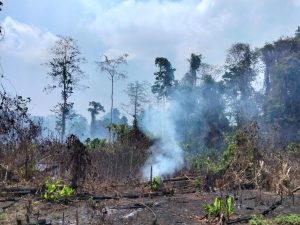
The Deputy Minister further noted that the ministry is prepared to facilitate access to funding through the Environmental Fund Management Agency (BPDLH) to ensure the long-term viability of the reforestation efforts. This commitment comes as a response to the dire state of the park, where it is estimated that more than 90 per cent of the original 81,000-hectare area has suffered serious degradation.
A critical habitat under pressure
The restoration initiative, also spearheaded by Minister of Forestry Raja Juli Antoni, identifies Tesso Nilo as a national priority due to its role as a vital habitat for the Sumatran Elephant. The government has set an immediate target to restore 2,574 hectares in 2026, with a broader goal of reaching 66,704 hectares by 2028. A key component of this plan involves the gradual removal of illegal palm oil plantations and their replacement with forest species that provide food and cover for wildlife.
The urgency of these restoration efforts is underscored by a series of recent wildlife tragedies in the Tesso Nilo ecosystem. On Thursday, February 26, a wild elephant calf was found dead in the park’s Lancang Kuning Resort, the Ministry of Forestry said. Preliminary findings suggest the animal died from an infection caused by a snare.
Two weeks prior, an adult male Sumatran elephant was found shot dead and missing its tusks in a nearby industrial forest concession that serves as a critical buffer zone and movement corridor for the park’s elephant population. The 40-year-old male elephant was brutally killed by a “professional cross-province syndicate”. The Riau Regional Police said on Tuesday that they had arrested fifteen people in relation to the case.
The environmental group Jikalahari has labelled the incident a “systemic failure” of wildlife protection because the poaching occurred within an industrial forest concession. The NGO remains sceptical of the government’s reforestation program, describing the response as “reactive” and calling for mandatory compliance audits for corporations holding permits in critical wildlife corridors
Collaborative governance
Minister Raja Juli Antoni emphasised that success depends on the synergy of 11 ministries and agencies, alongside local government and law enforcement. Beyond ecological planting, the government intends to strengthen park governance through restorative justice, legal enforcement against illegal land use, and the persuasive relocation of communities to ensure the area remains “clear and clean” for conservation.
As Deputy Minister Diaz Hendropriyono concluded, the support from KLH/BPLH represents a firm commitment to “re-greening” the park and restoring the natural balance of one of Sumatra’s most essential ecosystems. (nsh)
Banner photo: Ministry of Environment