Indonesia Presents New and Renewable Energy Achievements to the World Bank
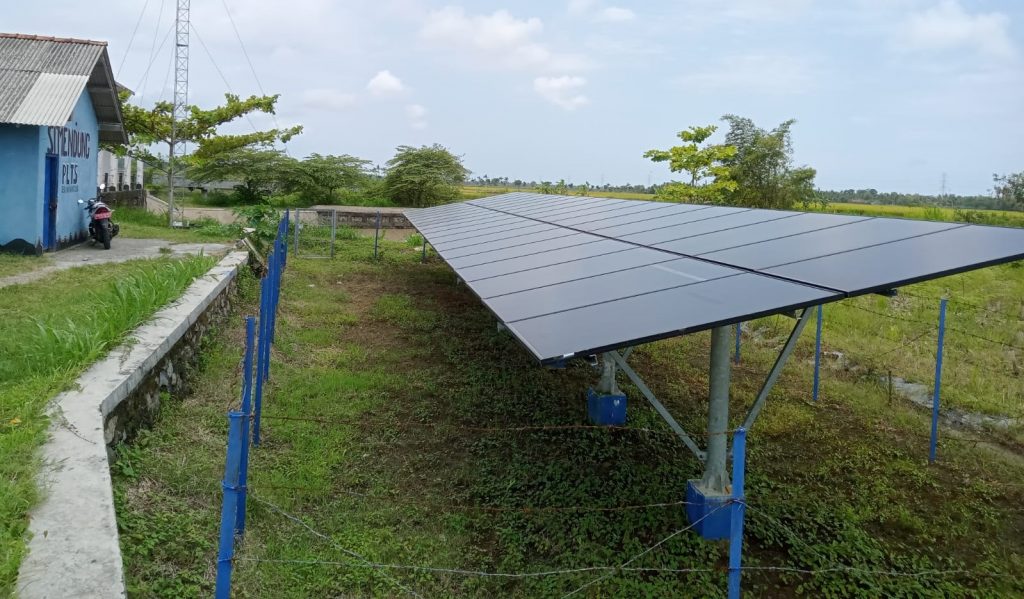
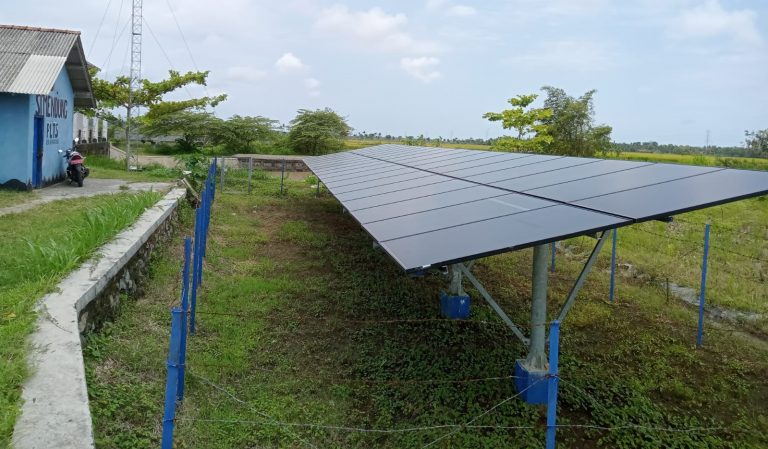
Photo: Solar power plants began to be massively used as an energy source for water pumps for irrigation of agricultural areas in Central Java. Solar irrigation, a pilot project of the ESDM Office of Central Java Province in Kaliwungu Lor Village, Ngombol District, Purworejo Regency started operation in early 2021. (Hartatik) JAKARTA – In a G20 event, Indonesian Minister of Energy and Mineral Resources (ESDM) Arifin Tasrif said that the new and renewable energy mix (NRE) at the end of 2021 has reached 11.7 percent, a release from the ministry said Wednesday (16/2). The World Bank Managing Director for Operations, Axel van Trotsenburg and Vice President for East Asia and the Pacific, Manuela Ferro attended the meeting to discuss energy transition in Indonesia, a major issue at the G20 Indonesia Presidency. Tasrif shows a roadmap to Net Zero Emission (NZE) in 2060. “The Indonesian government already has an energy transition roadmap and is committed to achieving the target of 23 percent of new and renewable energy in the 2025 energy mix. Of this target, only 11.7 percent has been achieved by the end of 2021,” he said. Furthermore, Tasrif said that currently his ministry has ratified a ministerial regulation related to roof solar generation (PLTS) to achieve this target. In addition, there is an additional target of 3.6 GigaWatt (GW) rooftop solar panels installed by 2025. In the energy transition roadmap, additional power plants post 2030 will only from NRE power sources. From 2035, power generation will be dominated by renewable energy in the form of solar power, wind and ocean currents. “As a tropical country, many areas in Indonesia have maximum solar radiation. In addition, there is great potential for wind, water and ocean current energy,” added Tasrif. Hydrogen will also be used gradually starting in 2031 and massively in 2051. Then nuclear power will be included in the generation system starting in 2049. Furthermore, other efforts to achieve the energy mix include the construction of 10.6 GW of NRE power plants, including the replacement of coal powered diesel plants into renewable energy power plants, and the utilization of biofuel up to 11.6 million kiloliters. At the end of the meeting, Arifin added that he would continue to maintain good relations with the World Bank to achieve the planned energy transition targets. (Hartatik)
oleh: Shakira Nuha Fella Nouf Gorontalo — Over the past two years, malaria cases in Indonesia have surged by 69 per cent. According to data from the Ministry of Health ...
Jakarta — Philippine mango farmers and agriculture officials have visited Indonesia to learn sustainable pest control methods and mango processing techniques as the two countries seek to improve productivity and ...
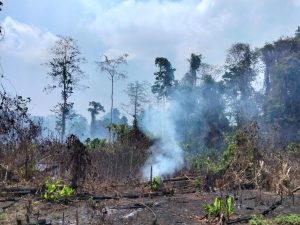
By Roffie Kurniawan Jakarta — Indonesian President Prabowo Subianto has urged ministers to contain forest and peatland fires as thick haze disrupts schools and threatens public health across Indonesia and ...
Jakarta — Indonesia showcased agricultural products and food innovations at the Food and Agriculture Organization’s (FAO) global “From Seeds to Foods” exhibition in Rome, highlighting the country’s agricultural biodiversity, traditional ...
by Nabiha Shahab Mama Lota does not particularly like eating one of the traditional legumes she grows in her garden. Yet every planting season, she continues to sow its seeds ...
Jakarta — For Indonesia’s commercial and industrial (C&I) companies, the transition to cleaner energy is increasingly a business decision shaped not only by sustainability targets, but also by energy costs, ...
Jakarta — Indonesian civil society groups have urged the government to give legal force to its national biodiversity strategy, warning that weak implementation and environmentally destructive investments threaten the country’s ...
Jakarta – Indonesia has called for stronger international cooperation to turn global climate commitments into concrete action as countries prepare for the UN climate conference, COP31, in Türkiye next month, ...
Jakarta — Indonesia must accelerate industrial decarbonisation to protect its export competitiveness as global markets tighten requirements for low-carbon products, the Institute for Essential Services Reform (IESR) said on Thursday, ...
by Nisa Novita and Israr Albar* Indonesia is burning again. The recurrence of severe fires during the 2026 El Niño should force a reassessment of how the country defines successful ...
Jakarta — The Institute for Essential Services Reform (IESR) has backed West Java Governor Dedi Mulyadi’s decision to temporarily halt construction of an artificial intelligence data centre in Jatiluhur, Purwakarta, ...
by Roffie Kurniawan Indonesia expects growing data-centre investment to increase electricity demand in the coming years, adding pressure to expand generation and grid infrastructure while providing more renewable power sought ...