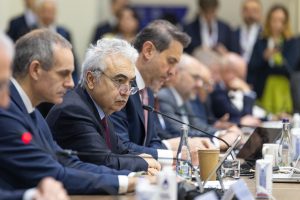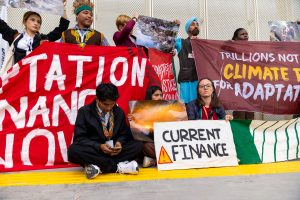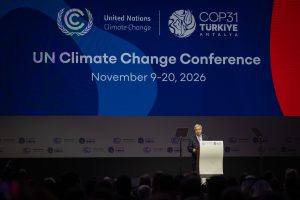
Developing countries need more affordable, accessible and coordinated climate finance to break the cycle of debt, disasters and high borrowing costs that undermines their ability to build climate resilience, United Nations climate chief Simon Stiell said on Friday, November 13.
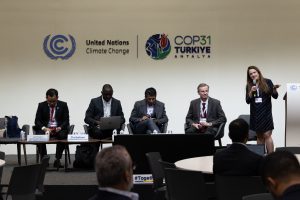
Speaking at a high-level ministerial dialogue on climate finance at COP31, the UN Climate Change Executive Secretary called for a shift from financing individual projects towards supporting broader economic transformation in developing countries.
He warned that climate-vulnerable nations were caught in a downward spiral in which the threat of floods, fires, storms and droughts raises borrowing costs even before disasters strike. When disasters occur, falling revenues and rising recovery expenses add to debt burdens, leaving governments with fewer resources to invest in resilience.
“Climate finance can help countries break free,” Stiell said, stressing that financing must strengthen national institutions, improve investment conditions, and attract more capital at lower costs.
He outlined four priorities for improving climate finance delivery, starting with making financing terms responsive to countries’ debt sustainability and economic circumstances.
While private finance, loans, and guarantees remain essential, he said grants and highly concessional financing would remain critical for least developed countries, small island developing states, and other vulnerable economies.
He also called for broader efforts to address debt pressures so that governments are not forced to choose between debt repayments and investments in climate resilience.
Second, Stiell urged international financial institutions and climate funds to simplify access procedures and reduce administrative burdens that require developing countries to navigate fragmented funding programmes and complex requirements.
Third, climate finance should align with national development priorities and strengthen existing domestic institutions, including national treasuries, local governments, development banks and financial institutions, rather than bypassing them.
He also emphasised the need to strengthen countries’ capacity to access and deploy funding effectively, alongside continued development and transfer of technologies for low-emissions and climate-resilient development.
Fourth, Stiell called for closer coordination among governments, climate funds, development banks, financial institutions and investors to align finance, technology and capacity-building with national priorities.
He cited a financing sequence in which early grant support could strengthen institutional capacity and develop investment pipelines, followed by concessional finance and risk-sharing instruments to help projects scale up.
The call comes as countries work towards the climate finance goals agreed at COP29 in Baku: developed countries taking the lead in providing at least USD 300 billion annually by 2035, alongside efforts by all actors to scale up financing for developing countries from all sources to USD 1.3 trillion a year.
Stiell said the Baku-to-Belém Roadmap provides a pathway towards these targets but cautioned that meeting financial commitments alone would not necessarily address countries’ actual needs.
“This must be a new chapter of climate finance,” he said, urging the ministerial dialogues, established in 2013, to drive a more coordinated approach that ensures climate investments support long-term development and resilience. (nsh)
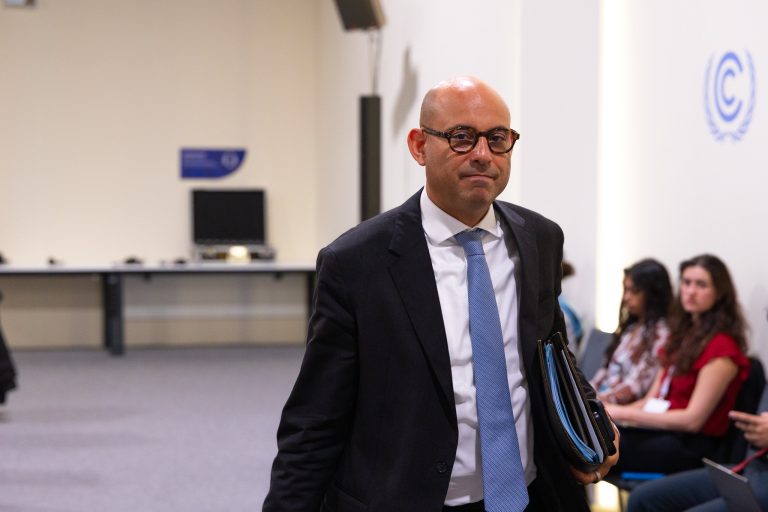
Banner photo: UN Climate Change Executive Secretary Simon Stiell. (Photo: © UN Climate Change – Kubilay Ciftci)