A total of 180 companies, with combined revenues of nearly USD 1.7 trillion, have called on world leaders at COP31 to accelerate electrification as part of efforts to reduce dependence on fossil fuels.
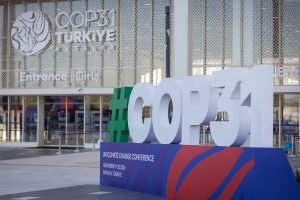
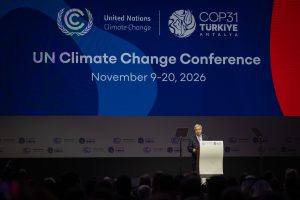
This call from the business community was delivered by the UN Executive Secretary for Climate Change, Simon Stiell, at COP31 in Antalya, Turkey. He urged governments to capitalise on the momentum of developments in electric vehicle technology and renewable energy to accelerate the global economic transition towards a cleaner energy system.
According to Stiell, electrification is one of the practical solutions for tackling the energy crisis whilst mitigating the impact of fluctuations in fossil fuel prices on households, businesses and the government budget.
“180 companies with combined total revenue of almost USD 1.7 trillion are calling on COP to ‘seize the electric advantage’.”
He believes the world now faces a choice between accelerating the transition to an electricity-based economy or continuing to face the vulnerabilities arising from dependence on fossil fuels.
Stiell stated that efficient electrification technology, backed by clean energy, can reduce pollution whilst keeping energy costs down. According to data from the International Renewable Energy Agency (IRENA) that he cited, around 90 per cent of large-scale renewable energy projects currently have lower costs than their fossil fuel-based alternatives.
Furthermore, it is estimated that up to 75 per cent of global energy needs could already be met through electrification using currently available technology.
“Because clean energy is cheap energy. 90% of large renewable projects are now cheaper than fossil fuel alternatives,” he said.
Although clean energy is developing at an ever-faster pace, Stiell points out that the global transition is still proceeding unevenly. A number of countries still require greater support to be able to utilise this technology and expand access to electricity for their populations.
To accelerate this transition, the COP31 Presidency is promoting the 35×35 Global Electrification Pledge, which aims to increase the share of electricity in global final energy consumption from the current level of around 23 per cent to 35 per cent by 2035.
COP31 President Murat Kurum said that this target forms part of efforts to reduce countries’ vulnerability to fluctuations in the global energy market, particularly for those countries that rely on fuel imports.
He revealed that fuel-importing countries faced additional costs of around 330 billion USD between March and August as a result of the energy market crisis.
According to Kurum, expanding electrification in the transport, buildings and industrial sectors could help reduce dependence on imported fuel whilst strengthening national energy self-sufficiency.
“The crisis in energy markets, a crisis felt around the world, has shown us all how dependence on imported fuels exposes countries to price volatility and supply disruptions,” said Kurum.
He hopes that COP31 will result in concrete steps to accelerate this transformation, rather than merely producing political commitments. In his view, the government needs to combine political will with investment to build a more reliable energy system, cleaner transport and production processes with lower emissions.
Meanwhile, COP31 Chief Negotiator Chris Bowen believes that the target of increasing electrification to 35 per cent by 2035 is a major challenge that requires significant acceleration.
He explained that the share of electrification in global energy consumption rose from 17 per cent in 2005 to 19 per cent in 2015, and now stands at around 23 per cent.
Given this upward trend, achieving the 35 per cent target will require the pace of global electrification to be accelerated to more than four times the current rate.
Bowen emphasised that increasing electrification is one of the key prerequisites for ensuring the world retains the chance of limiting the global temperature rise to 1.5 degrees Celsius.
The COP31 Presidency is therefore urging countries to join the global electrification commitment and to include this agenda in the final decision of this year’s climate conference. (Hartatik)
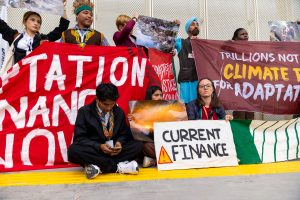
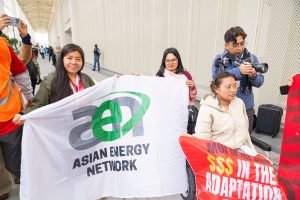
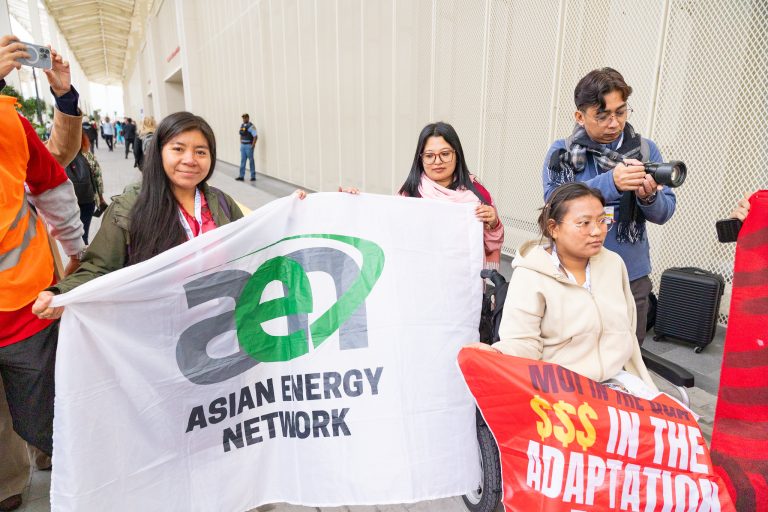
Banner photo: Members of civil society demonstrate in the corridors (Photo: © UN Climate Change – Kubilay Ciftci)