Jakarta – Developing countries will need an estimated USD 305 billion annually by 2035 to adapt to intensifying climate impacts, but international public finance is falling far short, according to a new United Nations Environment Programme (UNEP) report, launched on Wednesday, November 4.
The “2026 Adaptation Gap Report: Ready? Not.” finds that international public adaptation finance from developed to developing countries reached between USD 28.2 billion and USD 31.7 billion in 2024, an increase of just USD 1 billion from the previous year.
Even if countries fulfil the COP30 aspiration to triple adaptation finance by 2035, the additional funding would cover only 20 to 29 per cent of developing countries’ estimated needs, the report says.
The warning comes as global warming is projected to exceed the 1.5-degree Celsius threshold, increasing the urgency of measures to protect communities, infrastructure and economies from climate-related disasters.
“The world is not ready to adapt to current climatic conditions, never mind what overshoot of 1.5°C will bring,” UNEP Executive Director Inger Andersen said during a press conference on Wednesday.
She urged countries to accelerate efforts to meet the COP30 Global Mutirão aspiration to triple adaptation finance by 2035, stressing that even this target would fall short of what developing countries require.
The report’s estimate of USD 305 billion in annual adaptation needs is based on assessments of nationally determined contributions, national adaptation plans and model-based estimates. It largely excludes the private sector’s own adaptation requirements, which could almost double the figure.
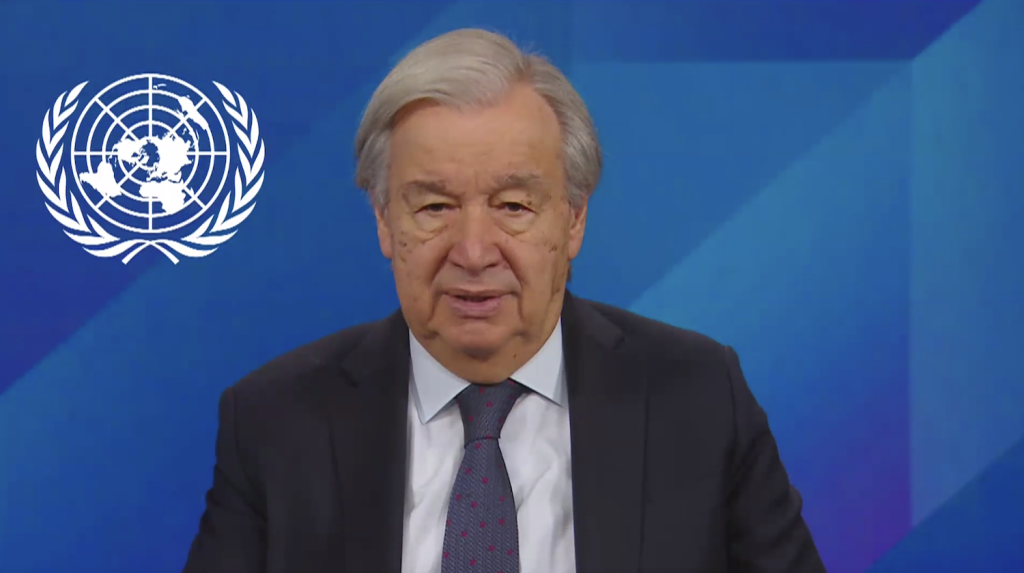
UN Secretary-General António Guterres said the financing gap was already exposing developing countries to mounting risks, with consequences extending beyond economic losses.
“For every dollar developing countries need to adapt, they receive just 10 cents,” Guterres said in a statement accompanying the report’s launch.
“That gap is not measured in money alone. It is measured in lives, livelihoods, and lost futures,” he added.
Guterres called on developed countries to deliver their financial commitments, while urging development banks to scale up support and ensure that vulnerable countries have faster and simpler access to funding.
He also called on governments to translate adaptation plans into practical measures, including safer housing, resilient infrastructure, secure food and water supplies, and early warning systems, with local communities taking the lead.
Finance growth slowing
The report finds that international public adaptation finance increased by only USD 1 billion between 2023 and 2024, while the pace of growth is slowing despite the need for much faster investment.
The increase falls short of the progress required to meet the Glasgow Climate Pact target of doubling adaptation finance from 2019 levels to approximately USD 40 billion by 2025.
UNEP estimates that flows currently stand between USD 28 billion and USD 32 billion. The target could still be achieved, partly because multilateral development banks are likely to have significantly increased their financing in 2025. However, progress will also depend on whether declining official development assistance affects bilateral adaptation funding.
Under the COP30 Global Mutirão decision, countries called for efforts to at least triple international adaptation finance by 2035. Depending on the baseline used, this would increase annual flows to between USD 85 billion and USD 120 billion.
However, after accounting for inflation, the increased funding would cover only 20 to 29 per cent of developing countries’ estimated adaptation needs.
The outlook is somewhat better for least developed countries and small island developing states. Tripling finance to these groups could cover between 49 and 83 per cent of their estimated needs.
South-South and private financing
The report also identifies some positive developments in adaptation financing.
Financial flows between developing countries, including contributions through multilateral development banks and direct South-South cooperation, increased from USD 3.8 billion in 2019 to USD 9.6 billion in 2024.
Private sector financing is also growing, although much of it addresses companies’ own adaptation needs or is ultimately paid for by developing countries themselves. UNEP estimates that private finance may reduce the funding gap for more public-oriented adaptation measures by only 15 to 20 per cent.
Beyond financing, governments are taking steps to strengthen the institutional arrangements needed to turn adaptation priorities into action.
These include adopting climate change framework laws, establishing platforms for policy learning, improving coordination across government sectors and levels, and creating dedicated mechanisms to mobilise and manage climate finance.
Andersen said these institutional improvements were important but insufficient to address the scale of the challenge.
She stressed that adaptation must become a priority as countries prepare for increasingly frequent and intense climate impacts, including heatwaves, wildfires, storms, agricultural failures and floods.
Loss and damage funding falls short
The report also highlights the growing gap between climate-related losses and damages in developing countries and the financial support available to address them.
The first funding round of the Fund for Responding to Loss and Damage generated requests worth USD 2.8 billion, around eight times its initial funding envelope of USD 342 million.
UNEP said the scale of the requests demonstrated substantial unmet demand, although the global financing gap for loss and damage remains unknown.
Complex application procedures and limited institutional capacity also make it difficult for vulnerable countries to access available support.
The report calls for stronger assessment capacity, adequate and predictable financial and technical assistance, simpler access procedures and meaningful participation by affected communities in shaping responses.
Guterres said the Loss and Damage Fund must receive meaningful resources to respond when adaptation and protection measures fail.
“We know who is most at risk. We know what works. What is missing is the money and the political will,” he said.
He warned that the consequences of delaying investment would become increasingly costly as global temperatures rise.
“The choice is simple. Invest in adaptation today or pay for catastrophe tomorrow,” he said.
Andersen urged governments to intensify their efforts at the upcoming UN climate negotiations at COP31 in Türkiye and beyond, arguing that meeting the tripling aspiration would be only a starting point for addressing developing countries’ needs. (nsh)
Banner photo: Image generated by OpenAI’s DALL·E via ChatGPT (2024)