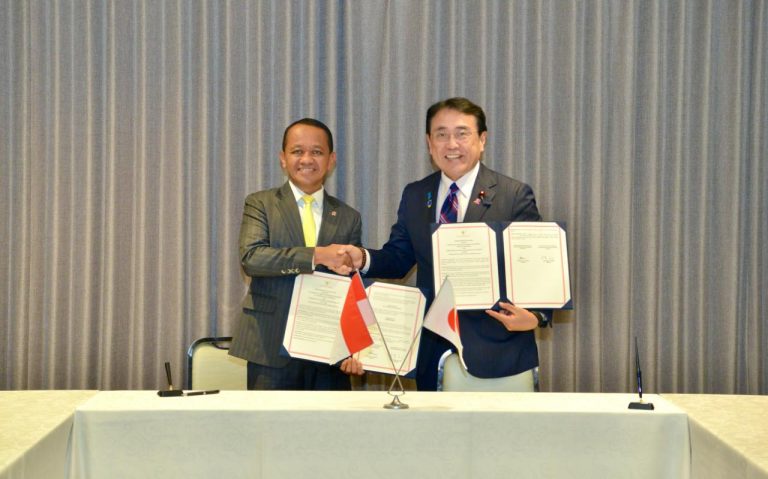
Jakarta — Indonesia and Japan have signed agreements to strengthen cooperation in critical minerals and nuclear energy development, as part of efforts to enhance energy security and support the energy transition in the Asia-Pacific region, the Ministry of Energy and Mineral Resources said Sunday, March 15.
The agreements were signed during the Indo-Pacific Energy Security Ministerial and Business Forum (IPEM) in Tokyo on Sunday. Indonesia’s Minister of Energy and Mineral Resources, Bahlil Lahadalia, met with Japan’s Minister of Economy, Trade and Industry Ryosei Akazawa, where both sides agreed on two Memoranda of Cooperation covering critical minerals supply chains and nuclear energy technology.
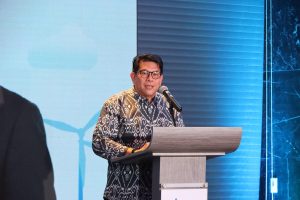
Bahlil said the partnership would open opportunities for Japanese companies to collaborate in managing Indonesia’s strategic mineral resources, which are increasingly important for clean-energy technologies.
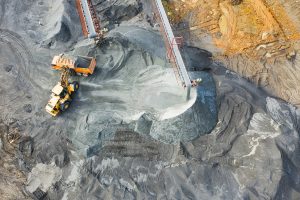
“We know that Indonesia holds 43% of the world’s total nickel reserves, and we are also one of the largest producers of bauxite, tin and copper. There are also rare earth metals, so if we can make use of them, I think that would be a good thing,” said Bahlil.
The cooperation on critical minerals aims to strengthen secure and reliable global supply chains while supporting the development of low-carbon technologies. Meanwhile, collaboration in nuclear energy will focus on technology development and utilisation while maintaining high safety standards, drawing on Japan’s experience in advanced nuclear technology.
Akazawa emphasised that stronger international cooperation is essential amid geopolitical uncertainty and global energy challenges. He also welcomed Indonesia’s support for LNG exports to Japan and reaffirmed Japan’s commitment to ongoing energy projects in Indonesia, including the Legok Nangka waste-to-energy plant.
“Amid the current global crisis, it is important for us to strengthen cooperation to safeguard energy security. Japan itself has built up strategic energy reserves as a precautionary measure,” said Akazawa.
Both countries are expected to continue discussions on broader energy cooperation, including LNG and coal supply chains, as well as projects under the Asia Zero Emission Community (AZEC) framework. These include initiatives such as the Sarulla geothermal power plant and other energy-transition projects aimed at strengthening regional energy security and decarbonisation efforts. (nsh)
Banner photo: Ministry of Energy and Mineral Resources