by: Nopri Ismi and Finlan Aldan
This report is the result of collaborative reporting with the support of the Pulitzer Reporting Grant.
The sacrificed communities
The second part examines the broader social cost of Bangka Belitung’s tin economy, revealing how people are repeatedly positioned as expendable within a system driven by extraction. As illegal and semi-legal mining expands, workers face unsafe conditions, economic precarity, and deadly accidents, while villages experience cycles of boom, bust, and abandonment. This section also exposes how the state’s partial crackdowns and corruption prosecutions have failed to break dependence on tin, instead deepening hardship for those at the bottom of the supply chain.
Following the exposure of the tin corruption case, our investigation in February-March 2025 revealed that the entire village economy across the province had slowed down significantly. From the northern tip of West Bangka Regency to the southern tip of South Bangka Regency, market stalls closed, and kiosk owners complained about the lack of buyers.
“The village is dying, many of the side dishes sold are stale,” said Ferawati, one of the owners of a rice stall in Lubuk Besar Village, Lubuk Besar Subdistrict, Central Bangka Regency—one of the villages that looks like a city because it was built by the tin economy.
Quoting the recently published book “Senja Kala Tata Kelola Timah di Bangka Belitung” (The Twilight of Tin Management in Bangka Belitung), in 2023, the contribution of the mining sector was only 7.64%, which is the lowest figure since 2015. This extractive sector contribution ranks fourth in the Regional Domestic Product (RDP) of Bangka Belitung, following the manufacturing, agriculture, and trade sectors.
The Head of the Bangka Belitung Manpower Office, Elius Gani, revealed that a number of palm oil companies owned by tin owners had been shut down and their accounts frozen.
“Compared to last year, when 38 workers were laid off, currently 1,527 people have been laid off. This is due to the closure of smelter companies as a result of tin management reforms,” he said, as quoted by Investor.id.
Sandy Pratama, a social and political scientist from the University of Bangka Belitung, said that tin had caused a ‘chronic addiction’ among the people of Bangka Belitung. Whenever there was a contraction in the tin industry, such as in cases of corruption, it would immediately be felt by the community.
“The market is quiet when tin prices fall, and revives when tin prices are high,” he said.
Bangka’s chronic addiction to tin is nothing new. Since the metal was removed from the list of national strategic commodities in 1998, following the collapse of the New Order regime, private companies have been allowed to participate in the tin supply chain, from mining and smelting to export.
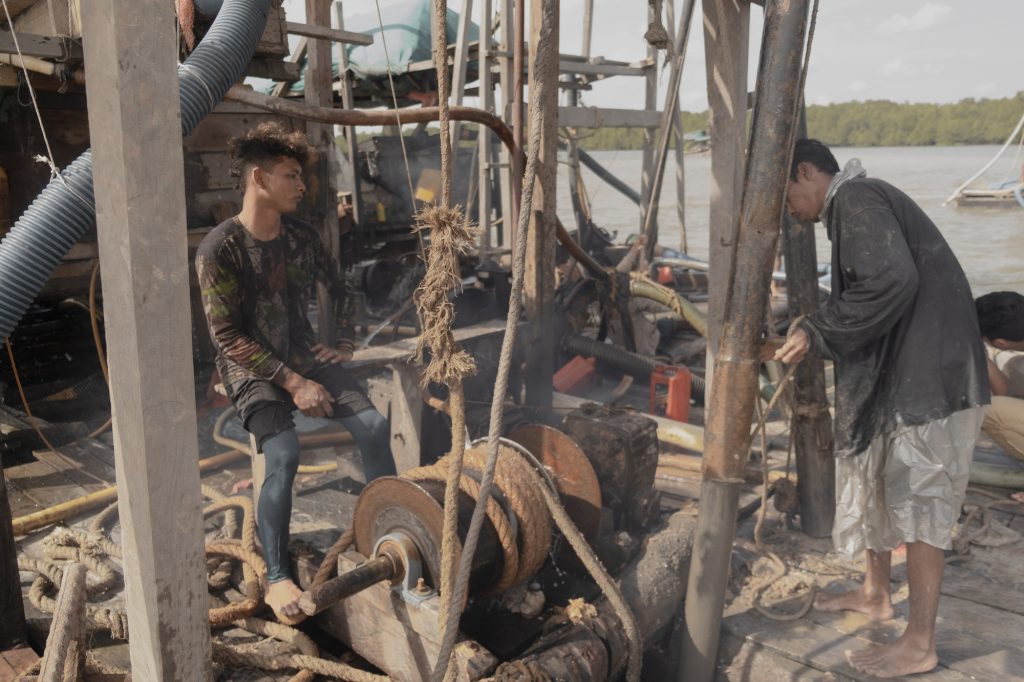
This permit allows companies to sustain illegal supply chains through mining activities outside the concession area. Workers are recruited from the local village population or migrants, the majority of whom come from South Sumatra. Both groups share the same goal: to seek their fortune in the tin mines. However, instead of profits, they find themselves trapped in uncontracted employment relationships, with low wages and a high risk of accidents.
Based on data compiled by Walhi Bangka Belitung Islands, between 2021 and 2024, 38 people died as a result of mining accidents and 22 people were injured. Thousands of unreclaimed pits have also claimed victims. There have been 23 cases of drowning in pits. Of the 17 victims who died, 14 were children and teenagers aged between 7 and 20 years old.
“Stories about people being buried in landslides, trapped in machines, or running out of oxygen while diving for tin are commonplace. What else can we do? This is the only job that supports us,” said Johan, a miner in Bakit Village.
In 2018, the International Tin Association estimated that more than 50,000 people in Bangka relied on jobs directly related to tin mining. These workers were connected to a long-established network, ranging from small-scale miners, small collectors, large collectors, smelters, PT Timah and private corporations.
Due to their close involvement in illegal mining operations, historian Erwiza Erman even referred to their presence as a “shadow state” in her scientific article published in 2007.
In 2024, this shadow state was exposed to the public. A crackdown was carried out on an alliance between former executives of PT Timah, a state-owned company, the former Head of the Bangka Belitung Energy and Mineral Resources Agency, and several private companies. The key figures were subsequently prosecuted. The state losses resulting from this case are estimated to have reached Rp300 trillion.
However, after more than a year, Bangka residents such as Ani, who make a living from tin mining, feel that their lives have not improved, but have even worsened due to the drastic decline in tin prices.
Like many of her peers, Linda did not complete her formal education and could not apply for jobs that required a school certificate. Even vacancies for food stall attendants only accepted applicants who had at least a high school diploma.
Furthermore, job vacancies for women are filled with physical selection criteria: maximum age limits, minimum height requirements, and “attractive appearance”. This educational and physical discrimination forces them to work as domestic helpers.
Ironically, Linda feels that job opportunities outside the mine are dwindling after tin sand prices plummeted following the exposure of tin corruption cases. When the tin industry slumped, other related industries also slowed down, resulting in few job openings. In addition, it has become increasingly difficult for parents to save money for their children’s education.
“The main thing is tin. If tin prices fall, all sales will be slow. Even petrol is hard to come by!” Ani said bluntly.
The gainers
Three centuries of tin mining have significantly altered the landscape of Bangka Island. Along the coast, communities lament the destruction of their seas, while workers in the mining circles are trapped in the economic instability of tin mining, which threatens their lives yet keeps them hooked. The conflict between the two sides continues unabated. The people remain the victims.
Then, who nurtured this industry until it became inseparable from the land of Bangka?
Illegally mined tin is circulating and finding its way into furniture used by people around the world daily. This is because the majority of tin produced in Bangka Belitung is intended for export.
The disclosure of corruption cases between 2015 and 2022 shows that illegal tin mined by TI workers was mixed with legal tin, particularly that produced by PT Timah.
In several PT Timah concessions, mining activities that should have been carried out by the state-owned company were instead occupied by TI mining companies. To return the tin supply to PT Timah, the company devised a strategy involving transactions with private smelters that smelted tin sand from TI miners.
Tin originating from these illegal activities then entered PT Timah’s export supply chain between 2015 and 2022, although the exact amount is unknown.
It should be noted that six companies were found to be directly involved in the tin mining trade corruption case during the period 2015-2022, namely PT Timah Tbk, PT Stanindo Inti Perkasa, PT Sariwiguna Binasentosa, PT Refined Bangka Tin, PT Tinindo Inter Nusa, and CV Venus Inti Perkasa.
We successfully traced the source of the illegal tin supply chain in Bangka Belitung through documents belonging to the Bangka Belitung Islands Provincial Industry and Trade Office in 2022.
This document shows the dominance of seven countries as importers from the six companies involved in the corruption case, namely South Korea, China, Japan, India, Singapore, Taiwan and Malaysia.
The total export value from these seven countries reached nearly US$455 million, or around 6.75 trillion rupiah based on the average exchange rate in 2022. This figure accounts for a quarter of the total value of national tin exports in 2022. Illegal tin contributes to this trillion-rupiah windfall, although the exact amount is unknown.
Of these seven countries, 41 corporations conducted direct transactions with companies involved in corruption cases. The largest buyer was Toyota Tsusho Corporation, a subsidiary of the Toyota Group and sister company to Toyota Motor, the world’s largest automotive manufacturer.
The Japanese company obtained tin from PT Timah Tbk, PT Refined Bangka Tin, and PT Stanindo Inti Perkasa. The total transaction value reached US$96 million, or around 1.4 trillion rupiah.
In addition to Toyota Tsusho, other big names are listed in the document. Among them are TCC Trading Corporation, a South Korean trading company; The Tinplate Company of India Limited (TCIL), a subsidiary of the giant Tata Group; and MIND ID Trading, a national trading company that handles the distribution of metals produced by MIND ID, the parent company of Indonesian mining companies.
We have attempted to contact the companies mentioned in the document. As of the publication of this article, only POSCO International Corporation has responded to our questions.
The largest trading company in South Korea focuses on businesses in the energy, steel, food, and component materials sectors, such as electric vehicle components and secondary battery materials.
Shim Won Bo, Head of Public Relations at POSCO International Corporation, said that during the tin corruption period (2015-2022), the company only sourced tin exclusively from suppliers certified by MAP (Responsible Minerals Assurance Process), after verifying their compliance status.
The company has consistently implemented measures to establish responsible procurement practices, including working with customers on responsible mineral policies and supporting responsible mineral management by suppliers.
In 2023, the Company established its ‘Responsible Mineral Management Guidelines’, which serve as a policy framework across the Company for managing mineral transactions.
“The company remains committed to maintaining responsible mineral management processes to prevent transactions with suppliers that may hurt the environment or society,” he said.
Tin that is potentially mined illegally reaches not only direct importers, but also subsequent buyers. This is because many companies resell tin that they purchase from Indonesia.
We managed to trace the source of Bangka Belitung’s illegal tin supply chain through publicly accessible Specialised Disclosure Forms (Form SD). These documents contain lists of metal raw material suppliers for multinational companies, mainly in the energy and manufacturing sectors, operating in the United States.
From there, we were able to trace multinational companies that received tin from the six smelters implicated in the corruption case. We focused on companies that exported tin during the period of the corruption case, namely 2015–2022.
There are big names that list the identities of the six smelters above in their SD Forms. Some of them are Intel, LG Display, Ford, and Canon.
This means that there is a possibility that tin produced illegally during the period of corruption has entered Intel computer processors, LG televisions, Ford cars, and Canon cameras used by people around the world, including Indonesia.
As mentioned, these four companies emphasised that they did not transact directly with the listed smelters, but rather through other companies acting as intermediaries. Unfortunately, the names of these intermediary companies were not listed in Form SD.
We attempted to contact Intel, LG, Ford and Canon regarding the involvement of tin smelters implicated in corruption cases in their supply chains. However, at the time of writing, we have not received a response from any of the four companies.
We have also attempted to contact PT Timah through the Head of Corporate Communications at PT Timah, Anggi Siahaan, to request confirmation. Finally, on Monday (29/9/2025), we also attempted to contact Anggi via WhatsApp message and telephone, but as of the publication of this article, there has been no response from the relevant party.
We also contacted PT Timah through Anggi Siahaan, Head of Corporate Communications at PT Timah, but received no response.
Then on 20 October, we went to the PT Timah office in Central Jakarta for confirmation. We were unable to enter, so we simply handed the letter requesting an interview to the receptionist.
“Just leave the letter with me. I’ll give it to him later,” said the company security guard.
It was not until 27 October 2025 that this state-owned company replied to our letter, through Rendi Kurniawan, the company secretary.
In the letter, the company only responded in general terms. Rendi said that PT Timah’s supply chain is a series of interconnected activities, ranging from exploration, production, processing, smelting and refining to marketing.
He claimed that the company was committed to ensuring the suitability of environmental studies (analyses of environmental impact/environmental impact assessments) and environmental management/monitoring plans (RKL-RPL).
The company has been implementing this integrated mining system for a long time to ensure that every product produced is conflict-free.
The company also ensures that all tin metal production raw materials come from areas that are certified clean and clear (CnC) in accordance with regulations, as verified by independent surveyors.
“PT Timah Tbk has also undergone a responsible minerals assurance process (RMAP) assessment and meets all RMI (responsible mineral initiative) standards and protocols,” said Rendi.
He also claimed that the company initiated and implemented operational sustainability strategies, including its subsidiaries. The goal, said Rendi, was to integrate economic aspects, environmental preservation, occupational health and safety (OHS), human resource development and community empowerment.
PT Timah, he said, has a mining business permit (IUP) and legal authority to carry out mining in accordance with the provisions of the law. Rendi said that the company is committed to the environment. Environmental reclamation and rehabilitation, he said, are an integral part of the entire operational process.
The reclamation programme implemented by the company is not merely ceremonial, but part of an environmental management plan that is integrated with production activities.
Reclamation, he said, should be progressive and sustainable, including in marine areas, through collaboration with experts and coastal communities.
“This effort ensures that the artificial structures placed there truly function in supporting the ecosystem.”
Regular monitoring to assess the effectiveness of reclamation, including monitoring the growth of marine ecosystems after the placement of artificial reefs. The results of this process form the basis for future evaluation and refinement.
In a scientific article by Maia et al. (2019), it is stated that 60% of Indonesia’s tin is produced by TI miners. When converted, TI mines produce around 27% of global tin production.
This means that around a quarter of the world’s tin production comes from small-scale miners, many of whom have no choice but to engage in illegal activities to earn a daily living.
After the corruption case was uncovered, illegal activities in the tin mining industry continued. The country proudly presented itself as a hero after successfully foiling attempts to smuggle 50 tonnes of illegal tin sand throughout 2025.
PT Timah also does not seem to be greatly affected by this corruption case, as the main focus of the case is on the abuse of authority and bribery by its employees, not on illegal mining.
Following the ruling in March 2025, PT Timah’s financial and production reports showed a slight decline, but are now beginning to improve and are expected to continue to increase in line with demand for electronic equipment, semiconductors, chips, digitalisation and artificial intelligence.
In fact, in recent months, PT Timah has continued to strive to restore the company’s image. Starting from curbing illegal trade by launching a partnership scheme with the community, to conducting operations to crack down on illegal mining in their IUPs recently.
According to Sandhy Pratama, the uncovering of the tin corruption case should be appreciated.
“However, this is nothing more than replacing a ‘new carriage’ in the tin supply chain. The proof is that smuggling and illegal mining are still ongoing, and appear to have become more widespread after this corruption case”.
Read the first part of this report.
Read the third part of this report.
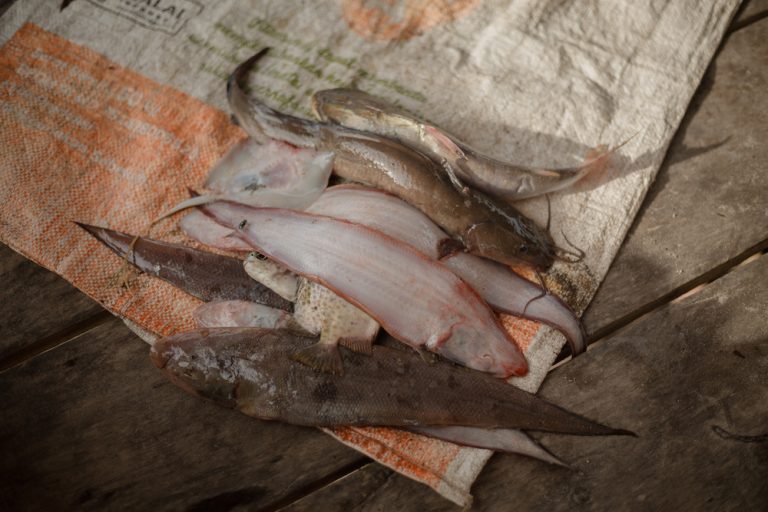
Banner photo: The overnight catch harvested by Rustam, Ridwan, and their colleagues after deploying their nets. Photo by Nopri Ismi.
Update: Feb 6, 2026; 08.43: moving sponsor detail to top of article.