Only One of the Targeted 12 Waste Power Plant is Operational
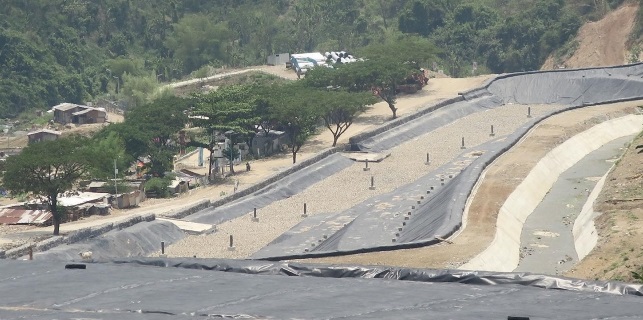
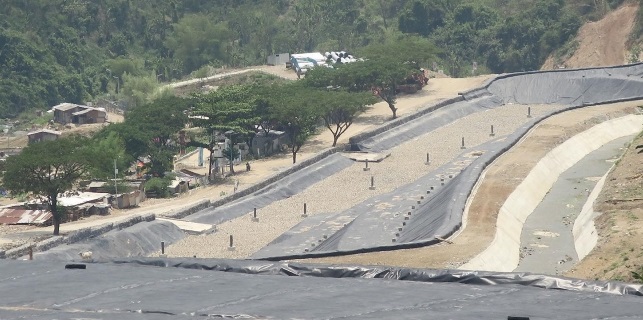
Photo: An area of 10 hectares has been prepared for the construction of a Waste Power Plant (WPP) with incinerator technology at the Jatibarang landfill, Semarang, Central Java. (Hartatik) JAKARTA – The government targets 12 Waste Power Plants (WPP) to be operational by 2022. In a release Wednesday (16/2), Assistant Deputy Energy for the Coordinating Ministry for Maritime Affairs and Investment, Ridha Yasser said that his ministry continues to oversee coordination with local governments and related ministries/agencies to accelerate the realisation of the 12 WPP infrastructure. He said, waste power plants are currently a priority solution to dispose of waste quickly on a large scale. However, this target is still far from realisation, since until now only Benowo WPP in Surabaya has been fully operational since 6 May 2021. The plant can process waste into electrical energy up to 1,000 tons and convert it into 10 MegaWatts (MW) of electricity. While a better constructed WPP in Surakarta has only reached 20% of progress of completion. The planned waste processing plant in Jakarta still has funding constraints due to the withdrawal of one of its investors. Other plants in Palembang and Tangerang municipalities are in their preparation stages. Yasser said that agreeing on the incentives is one of the obstacles that needs to be solved quickly. Distribution of these incentives is regulated in Presidential Regulation No. 35/2018 regarding the management of the development and investment of waste processing systems in cities that are included in the waste emergency category. Currently, the progress of the waste power plants development in 12 cities is also monitored by the Committee for the Acceleration of Priority Infrastructure Provision (KPPIP). KPPIP was established in 2015 with a mandate to accelerate the implementation of infrastructure projects in Indonesia and become a centre of excellence for accelerating infrastructure programs. KPPIP also said that a common issue faced by WPP is the tipping fee (waste processing service fee), which arises due to the large volume of waste to be processed in WPP. (Hartatik)
Jakarta — For Indonesia’s commercial and industrial (C&I) companies, the transition to cleaner energy is increasingly a business decision shaped not only by sustainability targets, but also by energy costs, ...
Jakarta — Indonesian civil society groups have urged the government to give legal force to its national biodiversity strategy, warning that weak implementation and environmentally destructive investments threaten the country’s ...
Jakarta – Indonesia has called for stronger international cooperation to turn global climate commitments into concrete action as countries prepare for the UN climate conference, COP31, in Türkiye next month, ...
Jakarta — Indonesia must accelerate industrial decarbonisation to protect its export competitiveness as global markets tighten requirements for low-carbon products, the Institute for Essential Services Reform (IESR) said on Thursday, ...
by Nisa Novita and Israr Albar* Indonesia is burning again. The recurrence of severe fires during the 2026 El Niño should force a reassessment of how the country defines successful ...
Jakarta — The Institute for Essential Services Reform (IESR) has backed West Java Governor Dedi Mulyadi’s decision to temporarily halt construction of an artificial intelligence data centre in Jatiluhur, Purwakarta, ...
by Roffie Kurniawan Indonesia expects growing data-centre investment to increase electricity demand in the coming years, adding pressure to expand generation and grid infrastructure while providing more renewable power sought ...
by: Roffie Kurniawan Indonesia will revise its national electricity supply business plan, or RUPTL, to accommodate a proposed 100 gigawatt-peak solar expansion over the next two to three years, as ...
The region must strengthen grids and clean energy capacity to incorporate AI for efficiency, experts say. But in China, the technology is no silver bullet for decarbonising energy systems by ...
Jakarta – PT Pertamina Geothermal Energy Tbk (PGE) has started drilling its second well for the development of the 55-megawatt (MW) Lumut Balai Unit 3 geothermal power plant in South ...
by Nabiha Shahab After decades of demands for a stronger legal framework to address land inequality and agrarian conflict, the House of Representatives approved the Agrarian Reform Regulation Bill on ...
Jakarta — Forest and land fires in Indonesia were estimated to have caused about 1,700 deaths from air pollution in August, while pollution from power generation, industry, transport and other ...